

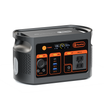
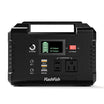

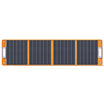
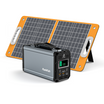
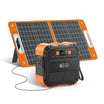

Short answer: a basic tent-camping kit should be priced in layers: the portable power station, an optional compatible solar panel, required cables, and weather-safe storage or placement. On the FlashFish U.S. Shopify catalog checked September 14, 2026, the A101 station variant was listed at $69.99, the E200 station variant at $99.99, and the E200 plus TSP60 panel variant at $169.98. Prices, bundles, taxes, shipping, and availability can change, so verify the selected variant at checkout.
The cheapest listing is not automatically the lowest-cost useful kit. A station that does not match the charger's connector, output standard, continuous wattage, or energy requirement may add replacement costs without solving the camping need. Build the equipment list first, then compare complete configurations.
Define a basic tent-camping load
Start with low-draw essentials such as phones, rechargeable lights, a camera battery charger, or other devices whose labels and manuals you can inspect. Keep cooking, heating, cooling, medical, and other high-consequence or high-draw equipment outside the "basic" budget until it receives its own compatibility and safety review.
For every planned device, record watts, expected hours, connector, and whether it must run or only recharge. Multiply watts by hours for a transparent watt-hour estimate. Real delivery will be lower than a simple capacity-to-load division because conversion and operating conditions matter, so retain a reserve.
Three current FlashFish budget paths
| Path | U.S. listing checked Sep. 14, 2026 | What to verify before choosing |
|---|---|---|
| A101 station variant | $69.99 | Whether 97.68Wh capacity, 120W continuous AC output, and the documented ports fit the exact low-draw list |
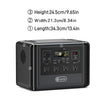
| E200 station variant | $99.99 | Whether 151Wh capacity, 200W continuous AC output, its output waveform, and available ports fit the devices |
| E200 + TSP60 panel variant | $169.98 | Station-panel compatibility, included cables, campsite solar rules, weather, shade, and realistic charging conditions |
These are catalog observations, not permanent sale claims. The A101 product listing also showed an A101 plus TSP60 variant at $209.99, while the standalone TSP60 product listing showed $109.99. A bundle name does not prove that it includes every cable or accessory needed for a particular campsite; verify the variant contents on the live page.
Budget category one: the station
Capacity and continuous output answer different questions. Capacity helps frame the energy budget. Continuous output screens whether devices can run at the same time. Startup demand, charging protocols, AC waveform requirements, and the number of usable outputs may also affect the choice.
The local FlashFish product database documents A101 at 97.68Wh and 120W continuous AC output. It documents E200 at 151Wh and 200W continuous AC output. Those numbers explain why the two station-only variants sit in different planning classes; they do not establish runtime or compatibility for a specific camping device.
Budget category two: solar charging
A panel is optional when the station can be charged before the trip and the energy budget comfortably covers the stay. Solar becomes a planning tool for longer trips or repeated daytime use, but its value depends on compatible input specifications, included connectors, site rules, orientation, season, shade, temperature, and weather.
The TSP60 record identifies a 60W foldable monocrystalline panel. Panel wattage is a laboratory-style rating, not a promise of constant field output or a station's charging rate. For example, the E200 product record lists a 40W maximum solar/DC input, so pairing it with a nominal 60W panel does not mean 60W will enter the station.
Budget category three: the parts people forget
- Manufacturer-specified charging cables and adapters
- A dry, stable placement that keeps ventilation clear
- Cable organization that does not create a trip path
- A non-powered backup for lighting or communication
- Taxes, shipping, and campsite-specific equipment fees, if any
How to compare a low-price kit without buying twice
- Write the essential device list and remove speculative appliances.
- Verify each device label, charger, connector, and manual.
- Calculate simultaneous watts and estimated watt-hours separately.
- Choose a station class with an explicit operating reserve.
- Add solar only after confirming input compatibility and campsite conditions.
- Compare the exact variant, included parts, return terms, and checkout total.
FAQ
Is a portable power station under $100 enough for tent camping?
It can be enough for some verified low-draw lists, but price does not answer the load question. Check capacity, continuous output, ports, charging method, and the actual hours each device will operate.
Do I need a solar panel for a weekend trip?
Not necessarily. If the pre-charged station covers the verified energy plan with reserve, a panel may add cost and setup without being essential. Longer stays and repeated daytime use can make compatible solar charging more relevant.
Why can two variants on one product page have different prices?
One may be a station-only configuration and another may include a panel or other bundle component. Read the selected variant name and included-items list rather than relying on the lowest price displayed.
Should I choose by watt-hours or watts?
Use both. Watt-hours frame the energy budget; continuous watts screen the simultaneous load. Ports, protocols, startup demand, waveform guidance, and operating conditions remain separate checks.
Next step: Check the current FlashFish A101 product details and price.


Leave a comment
Laman ini dilindungi oleh hCaptcha dan tertakluk pada Dasar Privasi dan Terma Perkhidmatan hCaptcha.