




To compare a supplied installment quote with a portable power station's cash price, match the exact order, add every scheduled payment and any mandatory charge not already included, then list contingent charges and missing terms separately. Include a down payment only once. A monthly amount without the payment count, final-payment details, and fee treatment is insufficient to establish total payable.
This is a worksheet for reconciling documents you already have. It is not a current product quote, a recommendation to borrow, or a statement that FlashFish offers financing. No reader-specific lender disclosure or cash quote was supplied for this article, so all dollar amounts below are hypothetical arithmetic.
Make the two sides describe the same purchase
Write the exact model, regional version, quantity, included accessories, currency, and quote date at the top of the worksheet. Compare the final cash order total with the same goods on the payment quote. A station-only order and a station-plus-panel package are different purchases, even when their monthly figures look similar.
The FlashFish U.S. Payment Methods page directs customers to the options shown for the current checkout and to review the final order total. That page does not establish an installment offer for a particular buyer. Keep the actual quote and its terms as the evidence for any payment schedule.
Taxes, shipping, discounts, or optional accessories can appear in more than one document. Label whether each amount is included in the cash total, included in the financed amount, or payable separately. Do not add an item twice merely because it appears twice on paper.
Calculate the documented schedule
Scheduled total payable = down payment + sum of remaining disclosed payments + mandatory charges payable separately. In this worksheet, the remaining payments exclude the down payment. If a disclosure already includes that first payment in its payment count, split it out before using the formula.
Use the actual amount of each payment when the schedule varies. Multiplying the advertised monthly amount by the number of months works only when every payment is that amount and no other required payment is omitted. Check for a different final payment or an upfront charge.
Then calculate the difference between that documented scheduled total and the matching final cash total. Call it the scheduled difference under the stated assumptions. This arithmetic does not calculate APR, identify a statutory finance charge, predict approval, or establish that the payment plan is affordable.
Keep required, conditional, and unknown amounts separate
| Item | Evidence to copy | How to treat it |
|---|---|---|
| Exact cash variant and order | Dated final total for the same goods, quantity, and currency | Use as the cash comparison baseline |
| Installment count and amounts | Full supplied schedule, including any different final payment | Add each scheduled payment once |
| Down payment | Amount and whether it is included in the listed count | Separate it without duplicating it |
| Mandatory fees | Documented amount and whether already included | Add only required amounts payable outside the schedule |
| Contingent charges | Quoted trigger and amount or calculation rule, if supplied | List separately; do not assume the event occurs |
| Total payable | Reconciled required payments under the stated assumptions | Compare with the matching cash total |
| Unknown terms | Missing payment count, unclear inclusion, or absent charge amount | Mark incomplete; request clarification |
A blank fee field is not evidence of a zero fee. Likewise, do not invent a late charge or its trigger when the supplied document does not state one. Record the gap. A partial subtotal can still help organize the paperwork, but label it partial instead of presenting it as a final comparison.
Three hypothetical calculations
These fictional amounts are not FlashFish prices, lender offers, or examples of actual customer terms.
Hypothetical example 1: equal payments, complete schedule
A fictional cash order totals $200. A fictional disclosure lists four payments of $50, including the first payment, with no separate mandatory charge. The scheduled total is 4 × $50 = $200, and the scheduled difference is $0. This conclusion depends on the expressly stated fee assumption; it does not infer any terms for a real offer.
Hypothetical example 2: a separate required charge
The matching fictional cash order is $200. Another fictional schedule requires $40 down and four later payments of $45, plus a $6 mandatory charge outside those payments. The total is $40 + $180 + $6 = $226. The scheduled difference is $26. Any separately disclosed contingent charge stays outside this scheduled total unless its trigger is part of the scenario being evaluated.
Hypothetical example 3: a monthly amount with missing terms
A fictional advertisement says $25 per month but provides no payment count or final-payment amount. Total payable is unknown. Do not assume eight payments simply because the cash order is $200. Request the full schedule before comparing the two totals.
Check product fit before comparing ways to pay
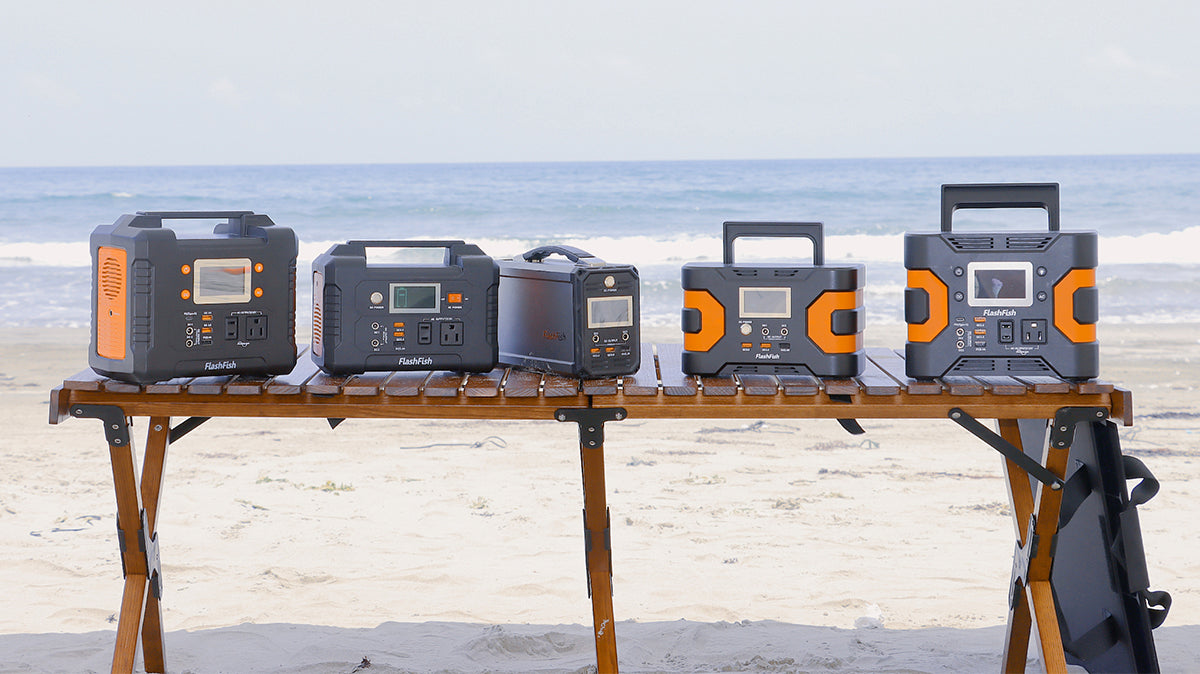
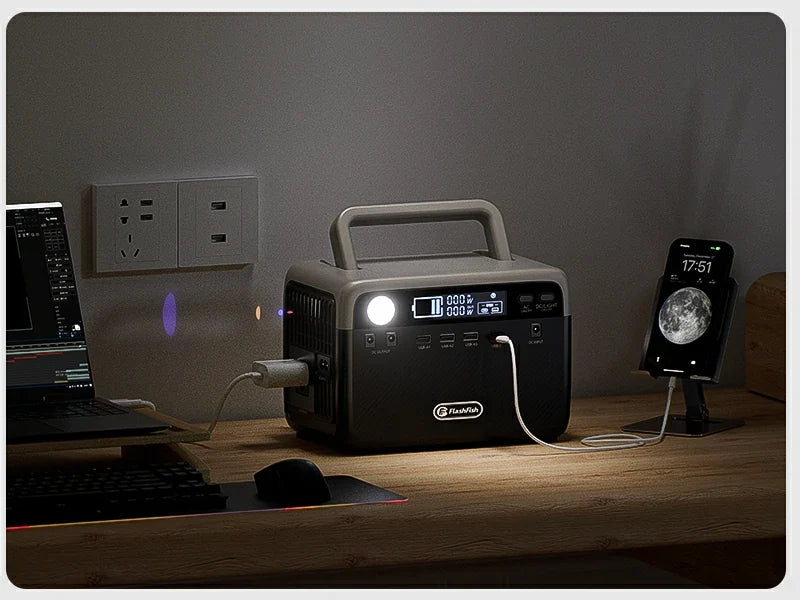
The documented nominal capacities are 151Wh for E200 and 179.2Wh for E103. These are different models, so use the same exact model on both sides of a payment comparison. A lower monthly figure for E200 is not evidence that it meets an E103 buyer's device requirements, and the higher nominal capacity alone does not establish E103 compatibility or runtime.
Confirm the receiving device's requirements and the exact regional station specifications separately. The available E103 reference manual describes 230V AC; it must not be used to approve a U.S. electrical pairing. No price, stock status, financing eligibility, or borrowing recommendation follows from these nominal capacities.
FAQ
Is the smallest monthly amount the lowest total cost?
The monthly amount alone cannot answer that. Compare the entire documented schedule and separate required charges for the same order.
Should I count the down payment twice if it appears in two places?
No. Determine whether it is part of the payment count and count the obligation once. Ask for clarification if the documents are ambiguous.
Can this worksheet establish APR or payment eligibility?
No. It reconciles stated dollar amounts. Obtain the actual provider's disclosure for its terms; this article supplies no legal interpretation or offer qualification.
Resolve the missing line before deciding
Start with one exact E200 or E103 order and its matching supplied quote. Finish the table, identify every assumption, and request any missing schedule or charge detail. Once product fit and the documented totals are clear, you can evaluate the purchase with the actual terms in front of you.
Next step: Check the current FlashFish E200 product details and price.


Deixar comentário
Este site é protegido por hCaptcha e a Política de privacidade e os Termos de serviço do hCaptcha se aplicam.