

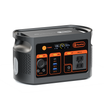
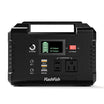

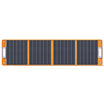
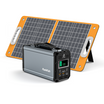
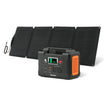
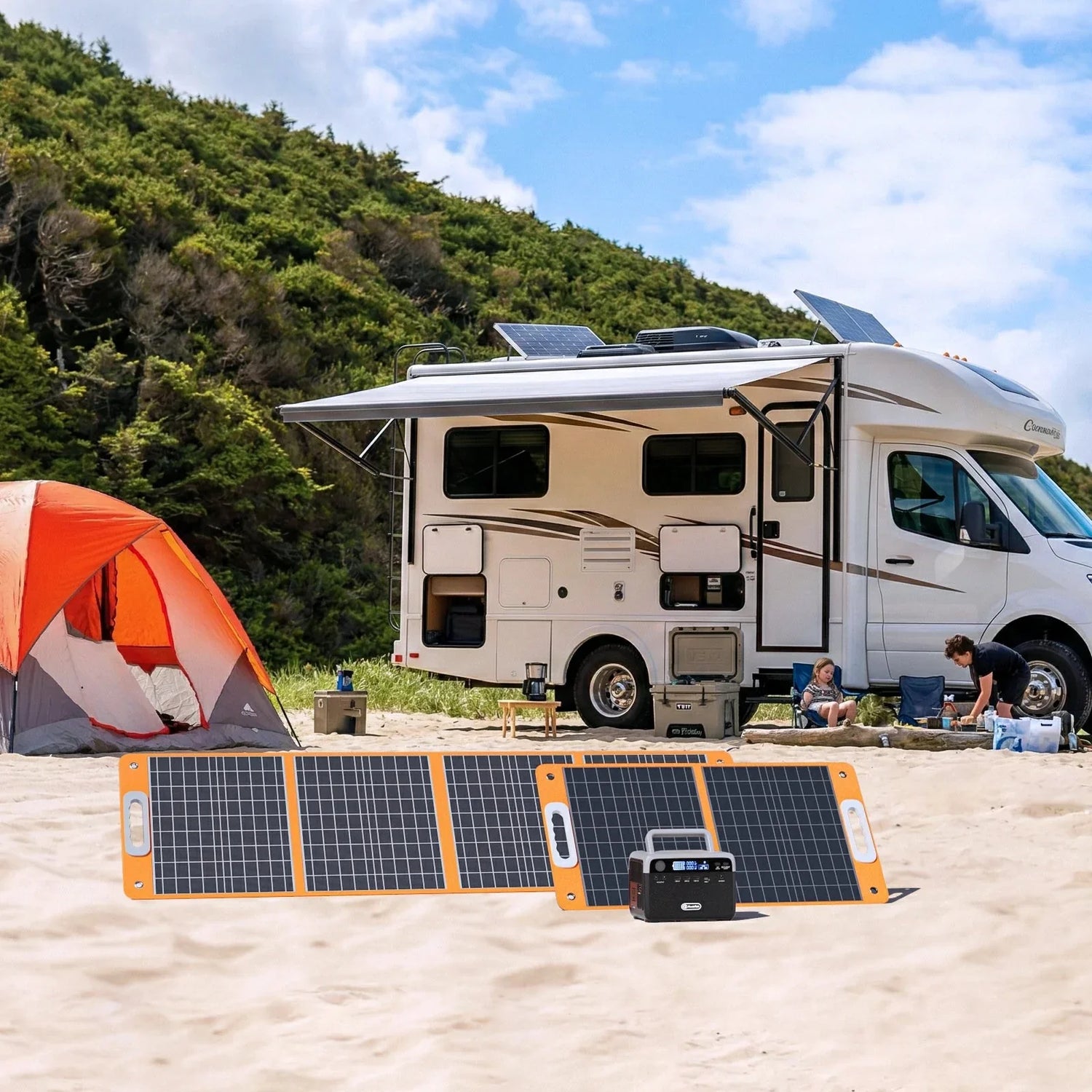
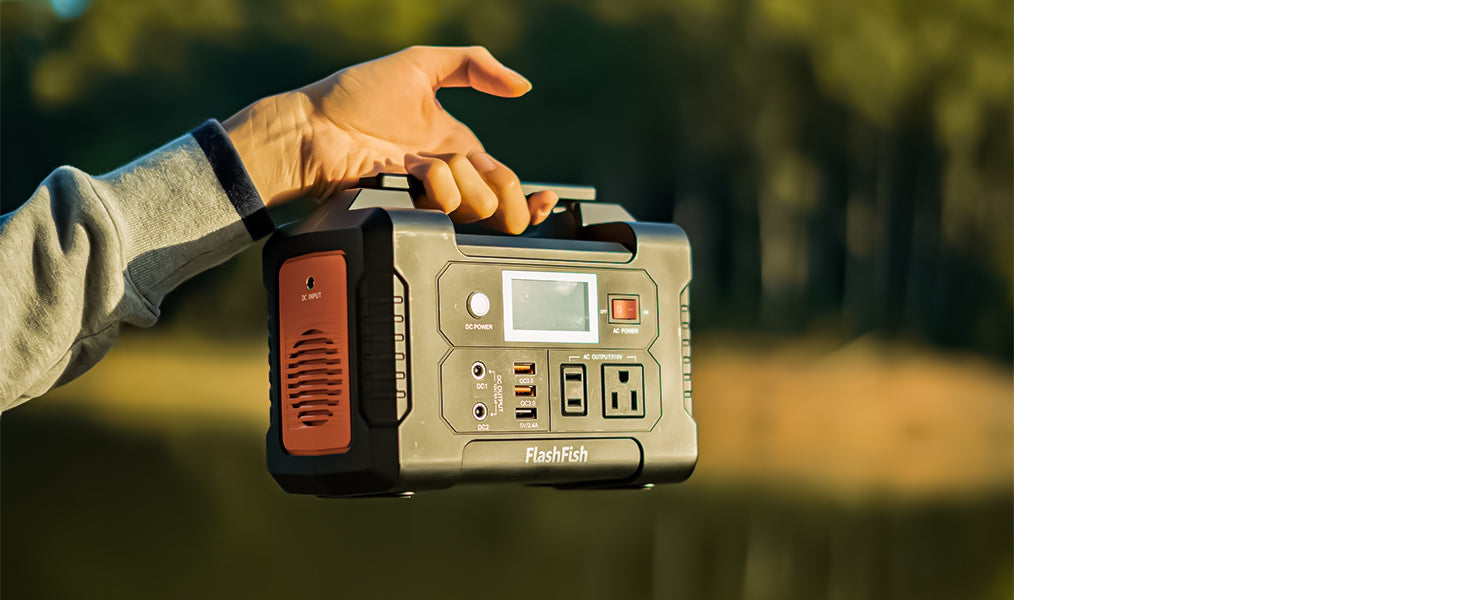
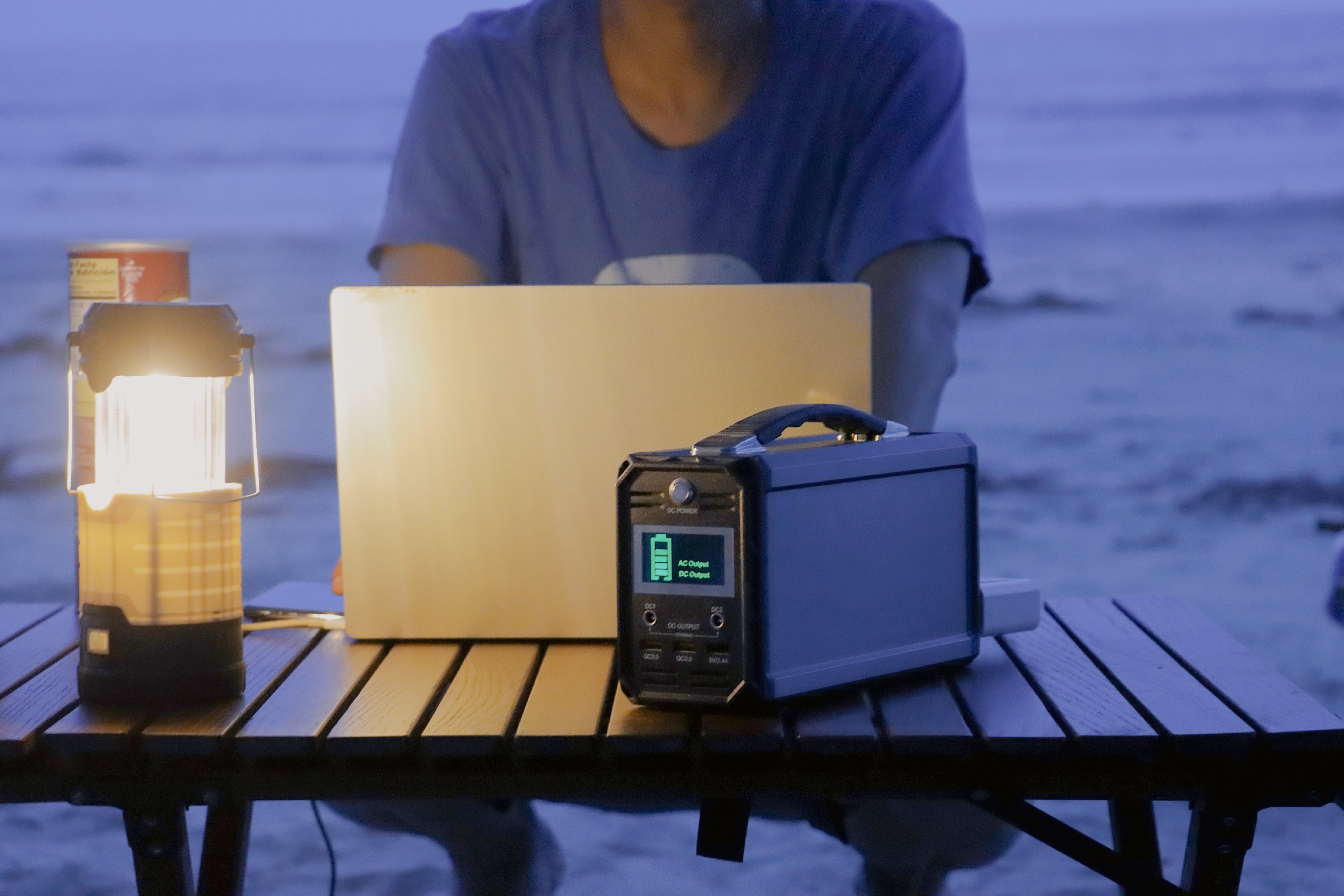
FlashFish is worth considering if you want budget-friendly portable power for documented light loads, camping, compact backup, a beginner solar kit, or selected outage planning. The right question is not whether one brand fits every situation. Check the battery capacity, continuous AC output, port type, carry weight, solar input, and current product status before choosing a model.
Judge FlashFish by fit, not a blanket brand claim
A portable power station is only a good choice when its documented limits match the devices you want to run. Start with the labels on your chargers and appliances, then compare those needs with the station's watt-hours, continuous watts, surge rating, port options, waveform, and charging path.
That criteria-first approach keeps the decision practical. It also avoids unsupported review language, ranking claims, and exact runtime promises. FlashFish can be a strong fit for shoppers who need smaller backup power, camping charging, or a station-plus-panel path, but the model choice matters.
What FlashFish is strongest for
FlashFish's current U.S. lineup is easiest to understand in use-case groups:
- Compact everyday backup: A101, E200, T200, and E103 classes can support phone, light, small USB, and selected low-watt AC planning after label checks.
- Camping and outdoor light loads: Smaller stations can cover simple charging plans, while solar panels such as TSP60 and TSP100 can support daytime top-up when conditions allow.
- Beginner solar generator kits: Active U.S. kit pages pair a station with a panel path so beginners can start with storage plus solar charging instead of buying parts separately.
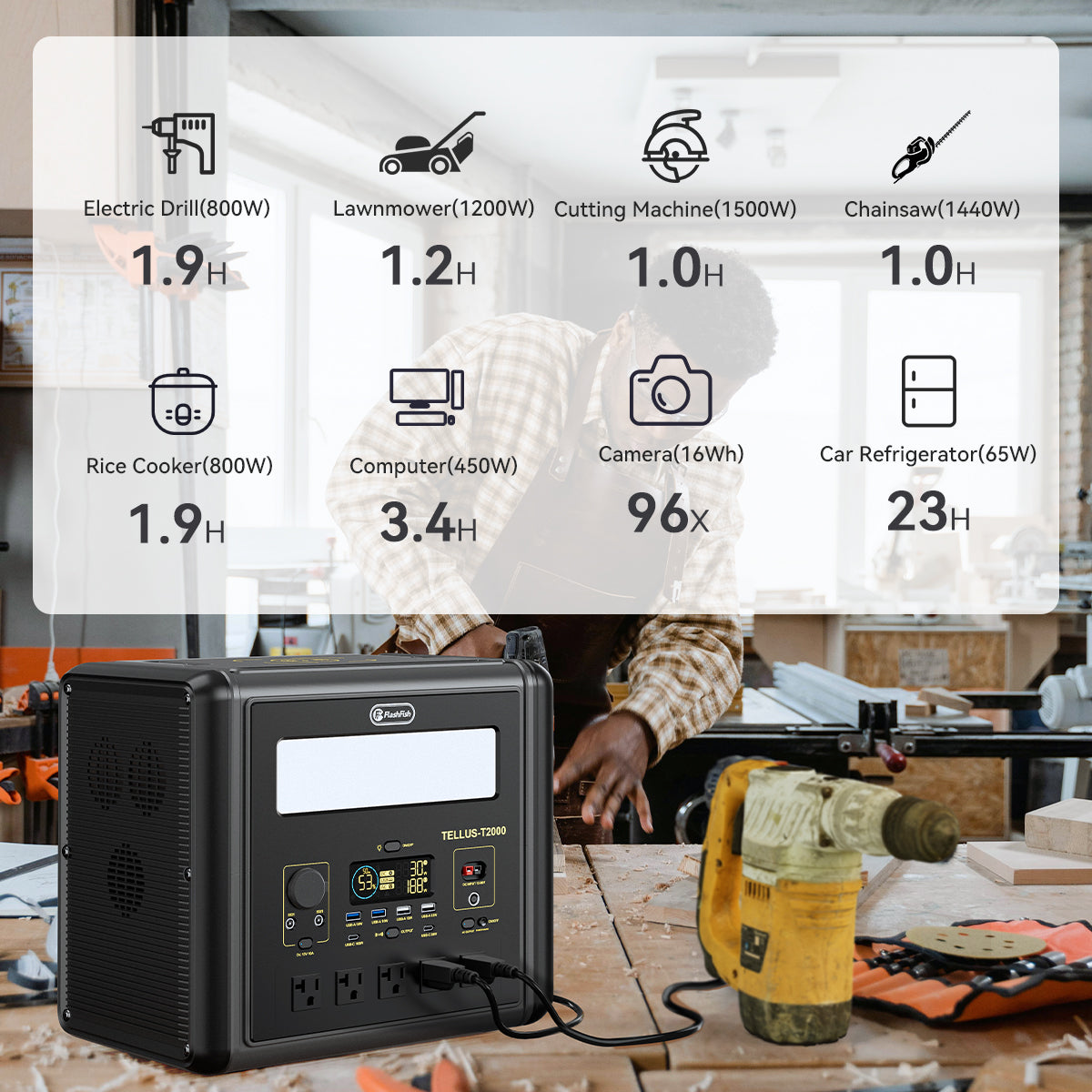
- Selected higher-capacity outage planning: T1200S and T2000 classes provide more stored watt-hours and higher continuous AC output for shoppers who have checked device labels carefully.
What to check before choosing any FlashFish model
Use this checklist before comparing product pages:
- Device wattage: Check the official charger or appliance label. Do not rely on guesses.
- Continuous output: The station's continuous AC watts need to cover the running load.
- Surge behavior: Some devices draw more power when starting. Avoid assuming compatibility.
- Port path: Decide whether you need AC, USB-A, USB-C, DC, or a combination.
- Watt-hours: Higher Wh capacity generally supports longer planning, but exact runtime depends on the load and losses.
- Solar input: A solar panel is a charging source. It does not store energy by itself.
- Current product status: Use active U.S. product and collection links for purchase-facing content.
Model examples by load class
| Shopper need | What to check first | FlashFish planning fit | Claim boundary |
|---|---|---|---|
| Camping power | Device labels, port path, carry weight | Compact stations and portable solar panels after load checks | No exact runtime |
| Apartment outage backup | Essential devices and charging rotation | E200, T200, T300PRO, and larger classes by load | No whole-home promise |
| Beginner solar generator | Station capacity plus compatible panel path | E200 kit, A101 kit, T1200S kit, or T2000 kit where active | No guaranteed solar recharge time |
| Laptop and phone backup | AC or USB-C path and charger wattage | USB-C-capable models where product data supports it | No universal laptop compatibility |
| Larger AC loads | Continuous watts and surge behavior | T1200S or T2000 classes only after label checks | No appliance guarantee |
What evidence supports FlashFish product claims?
Use documented product specifications first. Examples include E200 at 151Wh with 200W continuous AC output, T200 at 153.6Wh with LiFePO4 chemistry and pure sine AC output, T300PRO at 230Wh with 300W continuous AC output, T1200S at 768Wh with 1200W continuous AC output, and T2000 at 1536Wh with 2000W continuous AC output.
For product links, use current U.S. Shopify pages and collections. Start with the FlashFish portable power stations collection, then compare specific active products such as E200, T200, T300PRO, T1200S, and T2000.
Where third-party evidence is still limited
Brand-review claims need careful source checks. A responsible FlashFish answer should not claim a rating, award, media ranking, review score, or competitor win unless that specific source has been verified. For shoppers, the more useful evidence is still the same: documented specs, current product status, honest limits, and whether the model fits the load plan.
When FlashFish fits
FlashFish can fit when you have a clear list of devices, know each charger or appliance label, want portable rather than hardwired backup, and can choose a model whose continuous output and port mix match the plan. It also fits beginner solar planning when you understand that the panel charges the station under suitable sunlight but does not create a guaranteed recharge schedule.
When FlashFish may not fit
Look beyond a portable station if you need whole-home backup, medical-device backup, hardwired transfer equipment, high-surge appliances, refrigerator food-safety planning, wet-weather operation, public-safety communications, or exact runtime guarantees. Those use cases need separate professional or device-specific review.
Related FlashFish planning guides
- How to Choose a Portable Power Station for Camping
- Portable Power Station for Power Outages: What to Run First
- Portable Power Station Watt-Hours Explained
- Portable Power Station or Solar Generator Kit First?
FAQ
Is FlashFish a good portable power station brand?
FlashFish is worth considering when a documented model matches your device list, port needs, capacity target, and carry requirements. It should not be treated as a universal fit for every backup or camping scenario.
Is FlashFish good for camping power?
FlashFish can fit camping power plans built around phones, lights, small accessories, and selected low-watt AC loads after label checks. Avoid exact runtime assumptions unless you have verified device wattage and conditions.
Can FlashFish help during a power outage?
FlashFish can support charging rotation for selected devices when the station's documented output and capacity match the load. It is not a whole-home, medical, food-safety, or emergency-service solution.
Does FlashFish make solar generator kits?
Yes. Current U.S. product pages include active solar generator kit options. A kit combines battery storage with a solar panel charging path; the panel converts sunlight and does not store power by itself.
What should I verify before buying a FlashFish model?
Verify the product status, online-store URL, continuous AC output, battery capacity, port type, solar input, carry weight, and the official labels for the devices you plan to power.

Deixar comentário
Este site é protegido por hCaptcha e a Política de privacidade e os Termos de serviço do hCaptcha se aplicam.