

Can You Charge a USB-C Device Directly From a FlashFish TSP100 Solar Panel?
Short answer: The FlashFish TSP100 manual documents a PD USB-C output of up to 65W. A USB-C device may be considered for that direct-output path only after you confirm the device's USB-C input and use an appropriate cable. The panel converts available sunlight; it is not a battery and does not store power for later.
That distinction matters because the TSP100's 100W label describes its DC panel output, not a promise that a USB-C device will receive 100W or charge at a particular rate.
Check before connecting
- Confirm that the device is designed to accept power through its USB-C port.
- Use a cable appropriate for the device and its USB-C power input.
- Place the panel where it can receive suitable sunlight; angle, temperature, weather, and charging conditions can affect conversion.
- Read the USB-C port rating separately from the panel's 18V/100W DC rating.
What the TSP100 labels mean for this decision
| Planning check | TSP100 documented fact | What you must verify | Do not infer |
|---|---|---|---|
| Direct USB-C path | One PD USB-C output rated up to 65W. | Your device's USB-C input and cable. | A guaranteed charge rate or compatibility with every USB-C device. |
| Panel DC path | 18V DC output with a 100W maximum. | A power station's accepted input, connector, polarity, and approved cable. | That the DC rating is the USB-C port rating. |
| Available energy | The panel converts sunlight to electricity. | Your need for power when sunlight changes. | That the panel stores power for later. |
Why the 100W panel label is not a USB-C promise
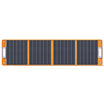
A portable solar panel can offer more than one output path. For the TSP100, the DC path is intended for portable-power-station planning, while the USB-C port is a separate direct-device path. When the question is about a USB-C device, start with the documented USB-C maximum of up to 65W, not the panel's 100W DC maximum.
The phrase "up to"is a maximum port specification, not a prediction of what a particular device will receive. The device input, cable, and sunlight conditions remain part of the decision. If any of those are unknown, pause rather than treating a matching connector as proof of a suitable setup.
When this direct USB-C path fits and when to pause
This path may fit when you have a USB-C device, can verify that it accepts power through USB-C, have an appropriate cable, and understand that the panel depends on current sunlight.
Pause and check further if the device needs an unverified adapter, if you need guaranteed charging performance, or if you need power after sunlight is no longer available. A solar panel is a converter, not stored energy.
Choose the right FlashFish resource for the next question
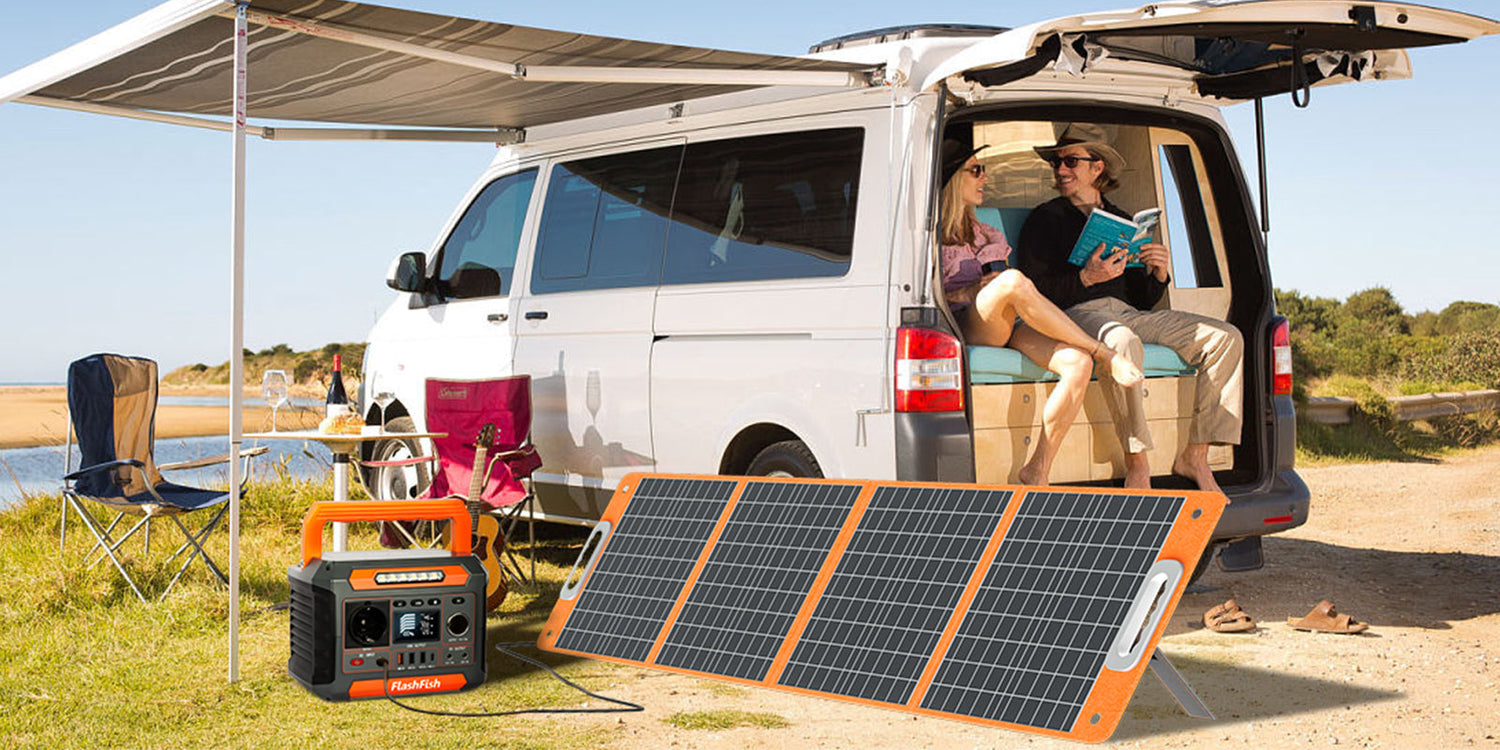
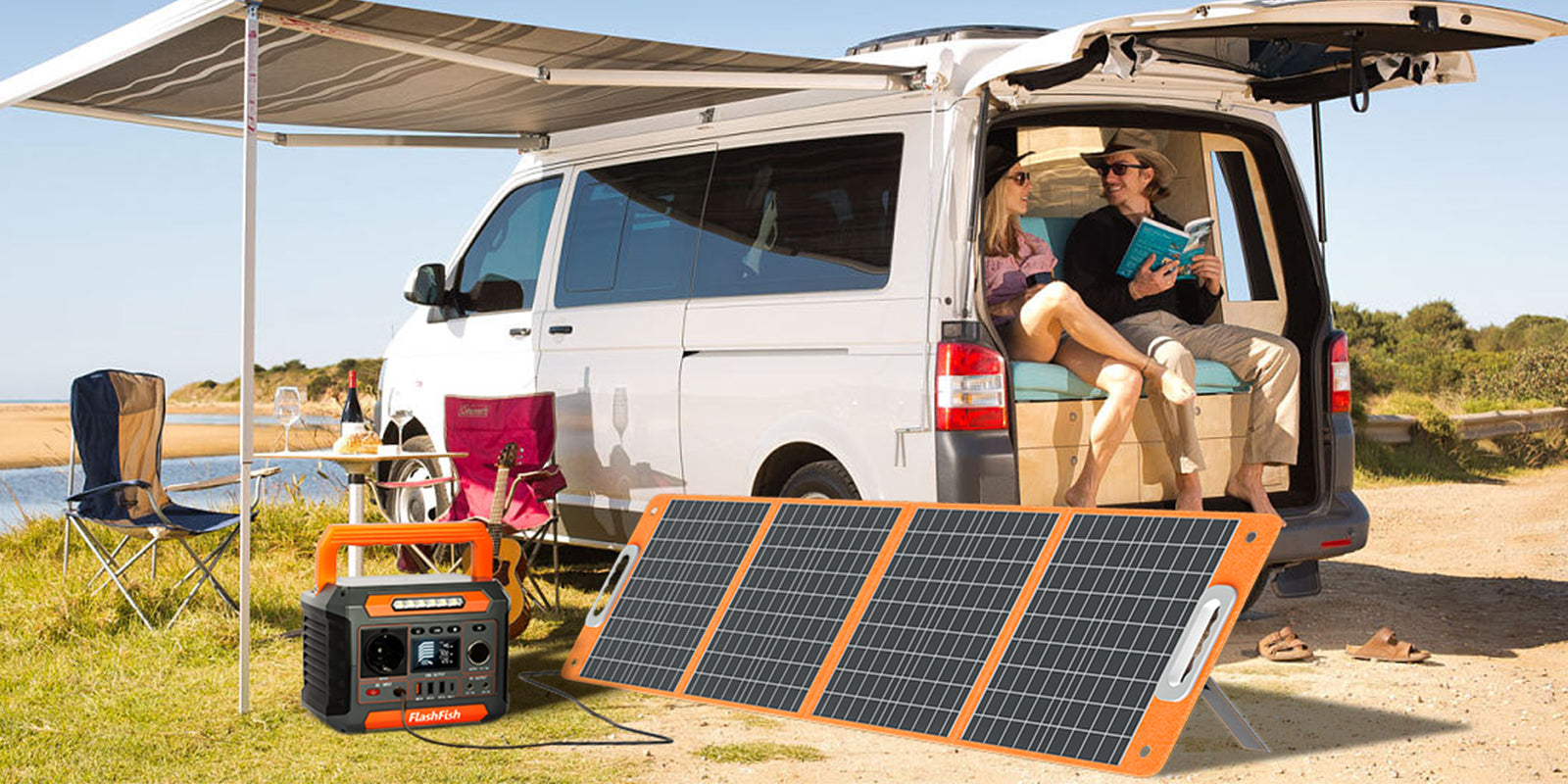
For the product's documented output paths, see the FlashFish TSP100 portable solar panel. If you are comparing the two panel sizes specifically for direct USB planning, review the FlashFish TSP60 portable solar panel as a separate product path. For a broader overview of the TSP100, read What Is FlashFish TSP100 Used For?
FAQ
Does the TSP100 have a USB-C output?
Its manual documents one PD USB-C output rated up to 65W.
Does a 100W panel mean every USB-C device receives 100W?
No. The 100W figure is the panel's DC maximum. The USB-C port is documented separately at up to 65W, and device input, cable, and sunlight conditions still matter.
Can a solar panel store power for later?
No. The TSP100 converts sunlight to electricity; it does not store power.
What should I check on a USB-C device first?
Confirm that its USB-C port accepts power and that you have an appropriate cable for that input.
Why can results change in different sunlight?
The panel's conversion depends on conditions such as sun angle, temperature, weather, and charging conditions.

Deixar comentário
Este site é protegido por hCaptcha e a Política de privacidade e os Termos de serviço do hCaptcha se aplicam.