


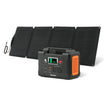
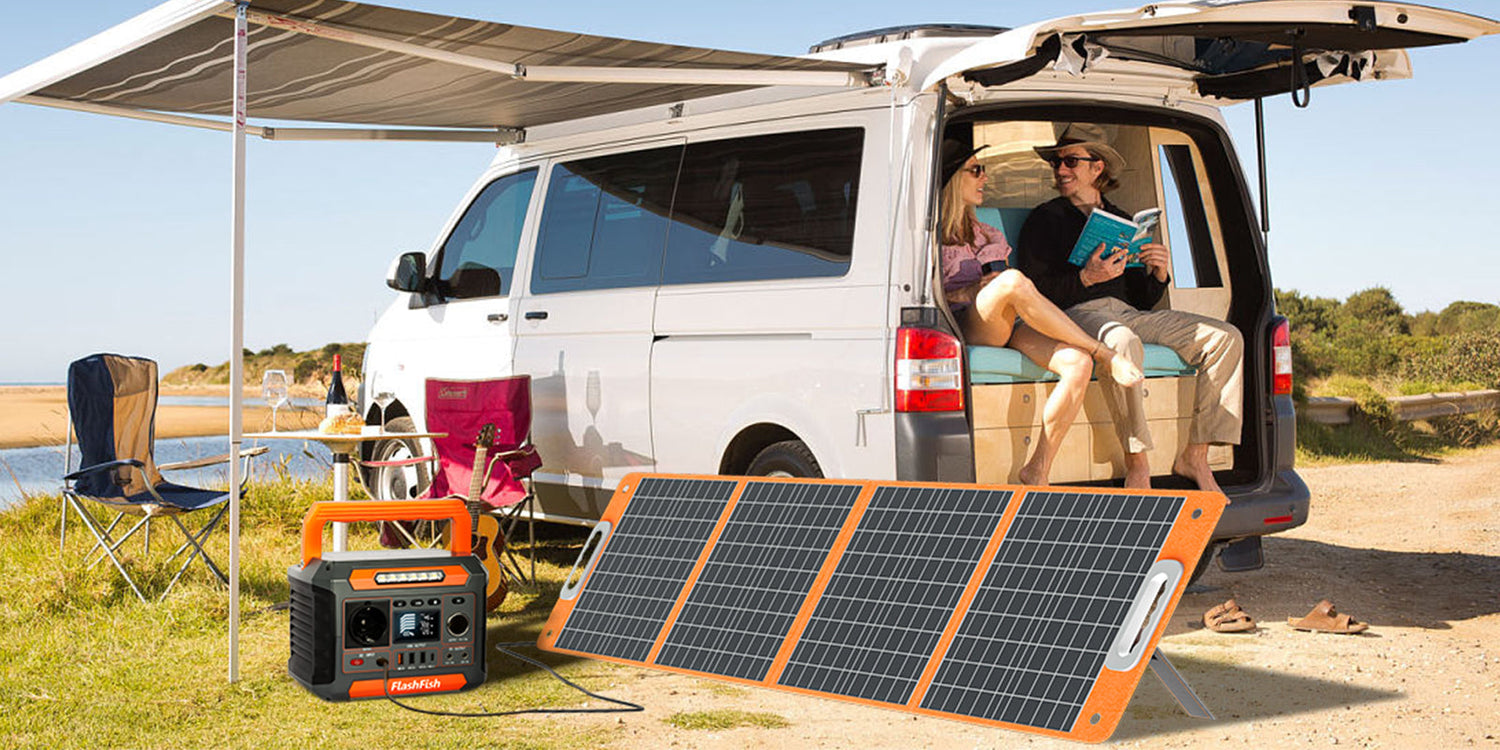
FlashFish TSP100: When to Use DC Output or USB-C
Short answer: Use the FlashFish TSP100 USB-C path only for a verified USB-C device path. Use its DC path only after the intended power station's manual confirms accepted voltage, current, power, connector, polarity, and approved cable. These are two separate planning checks.
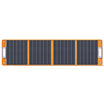
The TSP100 manual lists 18V, 5.6A, and 100W maximum for its DC output, plus PD USB-C up to 65W. Those numbers identify different output paths; neither is a blanket compatibility promise.
One panel, two different output decisions
| Output path | TSP100 documented source | What you must verify | Use-case boundary |
|---|---|---|---|
| USB-C device path | PD USB-C output up to 65W. | The device's USB-C power input and an appropriate cable. | This is a direct-device check, not a power-station input check. |
| DC-to-power-station path | 18V / 5.6A / 100W maximum DC output. | The station's accepted voltage, current, power, connector, polarity, and approved cable. | A panel label or connector appearance does not confirm station compatibility. |
| Power after sunlight changes | The panel converts sunlight to electricity. | Whether stored power is needed for your use. | The panel does not store power. |
Use the DC path only with a station-specific check
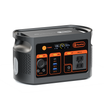
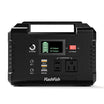
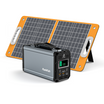
The DC output is the path to evaluate when the receiving equipment is a portable power station. Before connecting, consult that station's original manual for its allowable solar-input voltage, current, and power, as well as its connector, polarity, and approved cable requirements.
Do not choose a DC connection from the TSP100's 18V/5.6A/100W maximum alone. A match in headline wattage, or a cable that appears to fit, does not establish that the station accepts the connection.
Use the USB-C path only with a device-specific check
For a device that accepts power through USB-C, the relevant TSP100 specification is the PD USB-C output rated up to 65W. Verify the device's USB-C input and use an appropriate cable. "Up to"is a maximum port rating, not a prediction of delivered power or charging time for a specific device.
Why panel wattage cannot cross from one path to the other
The TSP100's DC rating and USB-C rating describe separate routes. The DC route calls for a power-station manual check. The USB-C route calls for a device-input and cable check. Treating the 100W DC figure as a USB-C result, or treating USB-C availability as station approval, can lead to the wrong planning decision.
When this guide fits and when to pause
This guide fits when you know whether you intend to power a USB-C device directly or plan a DC connection to a portable power station and can verify the receiving equipment.
Pause and check further when the station manual, connector, polarity, approved cable, or device input is unknown. Also pause if you need stored power: sunlight conditions such as angle, temperature, weather, and charging conditions affect conversion, and the panel itself does not store energy.
Continue with the right FlashFish resource
See the FlashFish TSP100 portable solar panel for the documented product path. The FlashFish TSP60 portable solar panel is a related panel option, but it also needs the same receiving-device checks. For a station-specific planning framework, read How to Pair a FlashFish Solar Panel With a Power Station.
FAQ
Does TSP100 have both DC and USB-C outputs?
Its manual documents an 18V DC output and a PD USB-C output up to 65W.
Can I choose a power-station connection from the panel wattage alone?
No. Check the station's manual for accepted voltage, current, power, connector, polarity, and approved cable.
What should I check before using DC with a power station?
Verify the station's input limits and the exact connector, polarity, and approved cable requirements in its original manual.
What should I check before using USB-C with a device?
Verify that the device accepts power through USB-C and use an appropriate cable.
Does the panel store power when the sun changes?
No. It converts sunlight to electricity and does not store power.

Deixar comentário
Este site é protegido por hCaptcha e a Política de privacidade e os Termos de serviço do hCaptcha se aplicam.