
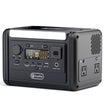
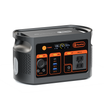
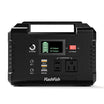

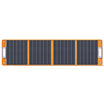
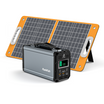
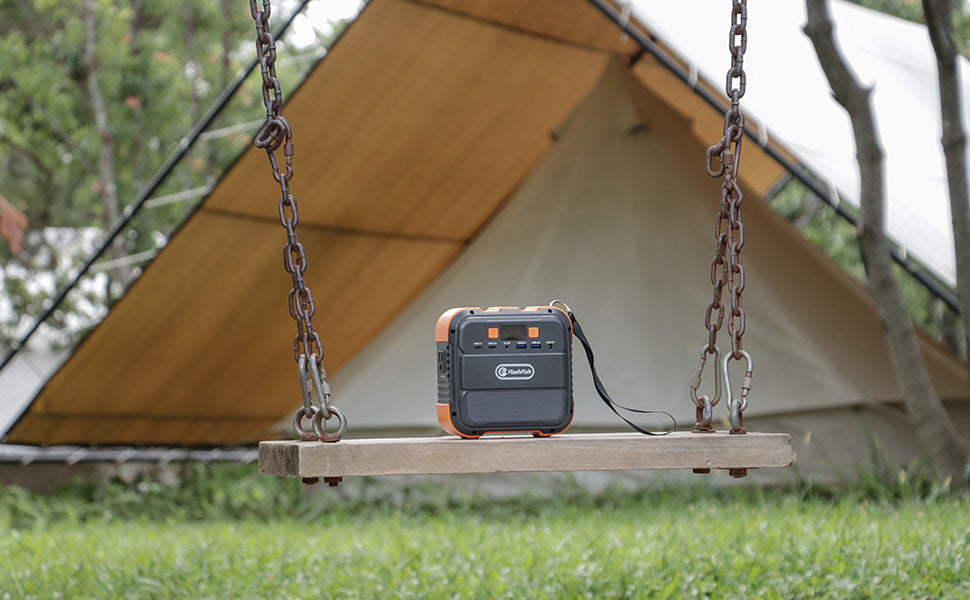
The FlashFish A101 + TSP60 Solar Generator Kit is best approached as two separate planning tools: a portable power station and a foldable solar panel. The kit listing identifies 120W, 98Wh, and 60W figures, but those labels do not promise a result for a particular device or a particular day. Before first use, match the output path and your device label to the station documentation, then verify the exact kit documentation for any connection details.
Start by separating the labels
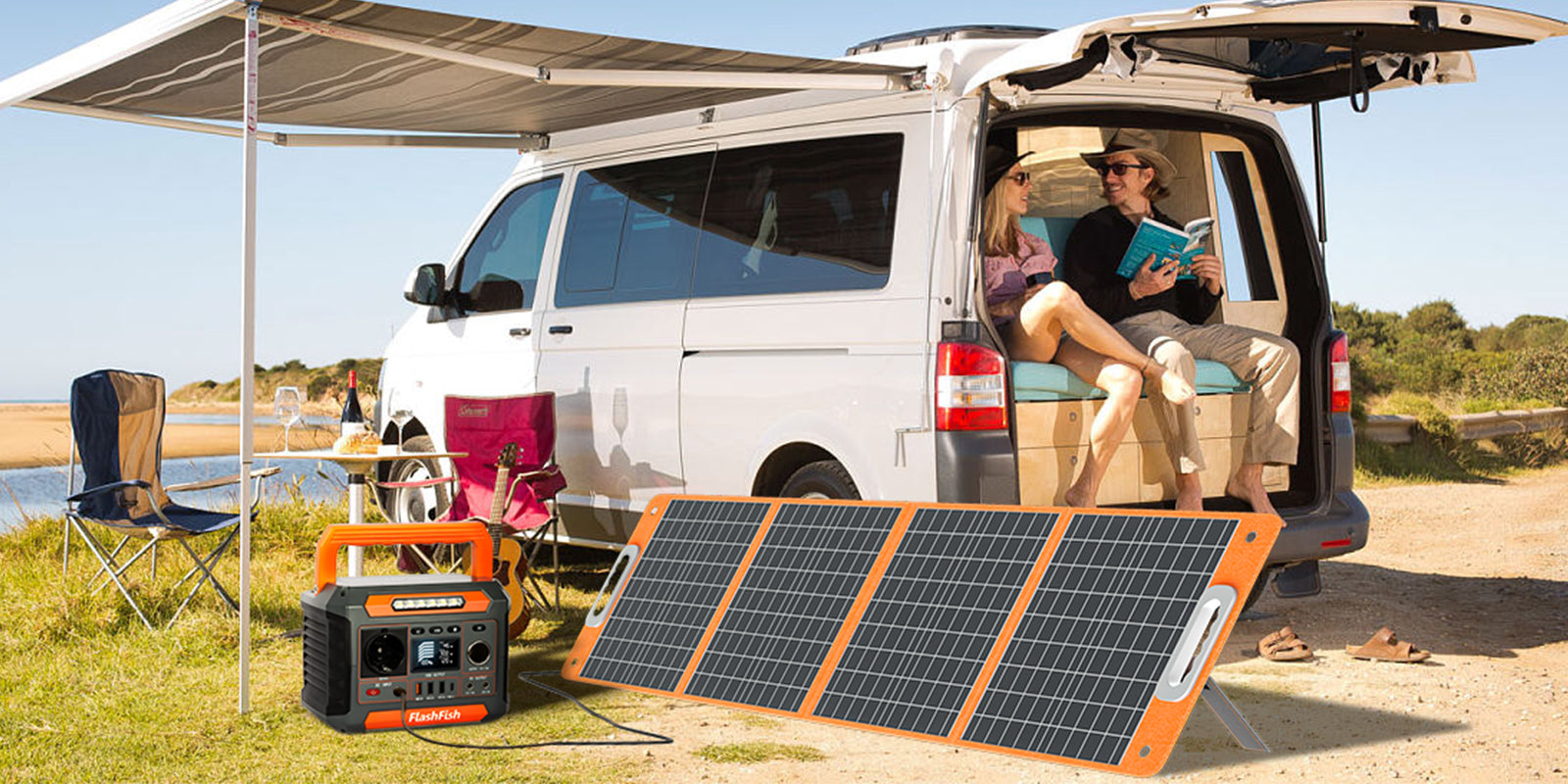
The A101 + TSP60 kit combines an A101 station with a TSP60 panel. The station is the part that stores energy. The panel converts sunlight to electricity; it is not a battery for saving energy after the sun changes.
| Planning item | A101 + TSP60 documented source | What it establishes | What you still verify |
|---|---|---|---|
| Kit listing | 120W / 98Wh / 60W | The listed kit combines a compact station and a 60W panel. | Which figure applies to the output path and device you plan to use. |
| A101 station | 97.68Wh; 120W continuous AC output; 240W peak | The station has documented capacity and AC-output labels. | Your device's required input, continuous demand, and appropriate output path. |
| A101 DC input | 40W maximum DC input | The station has its own documented input limit. | The exact kit instructions before making a physical connection. |
| TSP60 panel | 18V / 60W maximum DC output | The panel has a separate solar-output label. | Sunlight conditions and whether the documented connection method applies to your kit. |
Check before you choose a device or load
First, decide which output path you expect to use. Then read the device's own label or its manufacturer documentation. A device name alone is not enough to establish its power requirement, plug type, or compatibility. If you need a cable, adapter, connector, or polarity answer, pause and consult the exact U.S. kit documentation rather than assuming that a similar panel or station uses the same arrangement.
It also helps to keep station output and station input separate. The A101's documented 120W continuous AC-output figure describes the station's AC-output label. Its documented maximum DC input is a different limit. The TSP60's 60W panel label is another separate specification. Reading them as one number can lead to a plan that the documentation does not support.
The panel needs sunlight; the station stores energy
The FlashFish TSP60 Portable Solar Panel converts sunlight to electricity. Solar conversion depends on conditions such as direct-sun angle, temperature, weather, and charging time. That means its rating should be treated as a planning label, not as a guaranteed charging result. The panel does not store energy, so a plan that needs stored power after sunlight changes must focus on the station and the verified load requirement.
When this kit fits??nd when to pause
It may fit your planning process when you have a modest, documented use case and can verify the device label, the output path, and the kit documentation. The compact format can then be evaluated against your own requirements without turning a product label into a promise.
Pause before deciding if you do not know the device requirement, need a connector or polarity conclusion, expect a guaranteed solar result, or need a runtime or recharge-time answer. Those questions require information beyond the figures in the kit listing.
Keep the next decision specific
For a broader choice between buying a station or a kit, read Portable Power Station or Solar Generator Kit First?. If you are comparing the station components rather than the preconfigured kits, see FlashFish A101 vs E200: Which Compact Station Fits?.
FAQ
What do the 120W, 98Wh, and 60W labels refer to?
They identify different planning figures in the listed kit. Read the station's capacity and output labels separately from the panel's solar-output label and from your device's own requirement.
Does the TSP60 panel store electricity for later?
No. The panel converts sunlight to electricity; the station is the component that stores energy.
What should I check before connecting a device?
Check the device label, the intended station output path, the station manual, and the exact kit documentation if a cable or connection detail is involved.
Does a solar-panel rating guarantee a charging result?
No. Solar conversion depends on conditions, so a panel label is not a guaranteed result for a given day or setup.
When should I pause and check the kit documentation?
Pause when the question depends on an unknown device requirement, connector, cable, polarity, runtime, recharge time, or guaranteed performance.

Deixar comentário
Este site é protegido por hCaptcha e a Política de privacidade e os Termos de serviço do hCaptcha se aplicam.