


Repeated restarts can add energy demand that a successful capture session alone does not show. For a recoverable hobby task, budget the work still needed plus a fixed number of retries multiplied by measured restart overhead. Keep energy already spent in the session total. Without comparable measurements for your equipment and settings, the extra watt-hours remain unknown; a power station's capacity label cannot supply them.
This is an accounting method for an attended, non-critical astrophotography session. It does not establish that interrupting equipment is appropriate or that a failed capture can be recovered. Use the camera and capture software's documented recovery procedure before treating a restart as an available option.
Separate three parts of the energy bill
Describe the successful outcome first: the remaining planned captures saved and checked according to your software's instructions. Then distinguish work already consumed, work still required, and the overhead of getting back to a ready state. A failed attempt may leave useful work intact or require repeating a larger part of the sequence.
Define restart overhead as one non-overlapping interval, from the beginning of the supported recovery procedure until the remaining capture task can resume. Keep repeated capture time outside that interval. If a restart also involves waiting or setup, count those only once.
| Attempt or interval | Energy already spent | Restart overhead | Remaining successful task | Remaining budget and retries |
|---|---|---|---|---|
| Initial attempt | Record consumed Wh | None unless a restart occurs | Record work still required | Allowance minus spent energy; apply the retry cap |
| Proposed retry | Carry forward all spent Wh | Use measured Wh for the matching procedure | Include work that must be repeated | Check the complete proposed demand |
| Further retry | Add the previous retry's consumption | Check that the measurement still applies | Update remaining work | Recalculate headroom and remaining permitted retries |
Use one measurement boundary throughout
Record what equipment the energy reading includes. A camera-only reading cannot stand in for a camera, computer, mount, and accessories combined. Do not combine readings that cover different parts of the setup and call the result a measured station total.
Keep the instrument, units, start and end readings, settings, and connected equipment in the log. Use only measurement arrangements supported by the equipment instructions. This article supplies no electrical connection or forced-interruption procedure. If comparable observations are unavailable, leave the restart field blank.
Calculate a bounded retry allowance
Let B be the agreed session allowance, S the energy already spent, F the energy for the remaining successful task, R the measured overhead per restart, and N the proposed number of restarts. The simplified planning condition is S + F + N × R ≤ B. Additional demand from now is F + N × R.
This assumes F includes all capture work that must be repeated. If each failed retry consumes more active capture energy before another restart, add that energy too and update S. A fixed restart term does not cover arbitrary repeated failures. Set a retry cap before beginning and reassess after each attempt; this calculation does not estimate failure probability.
Three hypothetical planning examples
These numbers are invented arithmetic inputs, not FlashFish tests or typical astrophotography consumption.
Hypothetical example 1: one affordable restart
Suppose B is 80Wh, S is 20Wh, F is 40Wh, and an applicable measured R is 5Wh. One restart produces a planned total of 65Wh, leaving 15Wh of the allowance. That ledger result does not guarantee that the hardware will complete the task.
Hypothetical example 2: the next retry crosses the allowance
With B = 60Wh, S = 20Wh, F = 30Wh, and R = 6Wh, one restart totals 56Wh. Two total 62Wh. The plan permits at most one under these assumptions. Additional failed capture energy reduces that headroom further.
Hypothetical example 3: no comparable overhead measurement
A previous log excludes the computer, but tonight's budget includes it. Leave R unknown. Do not insert the earlier value or calculate a retry ceiling from it. Choose a smaller documented task or postpone the retry decision until comparable evidence exists.
Where E103 and T300Pro fit
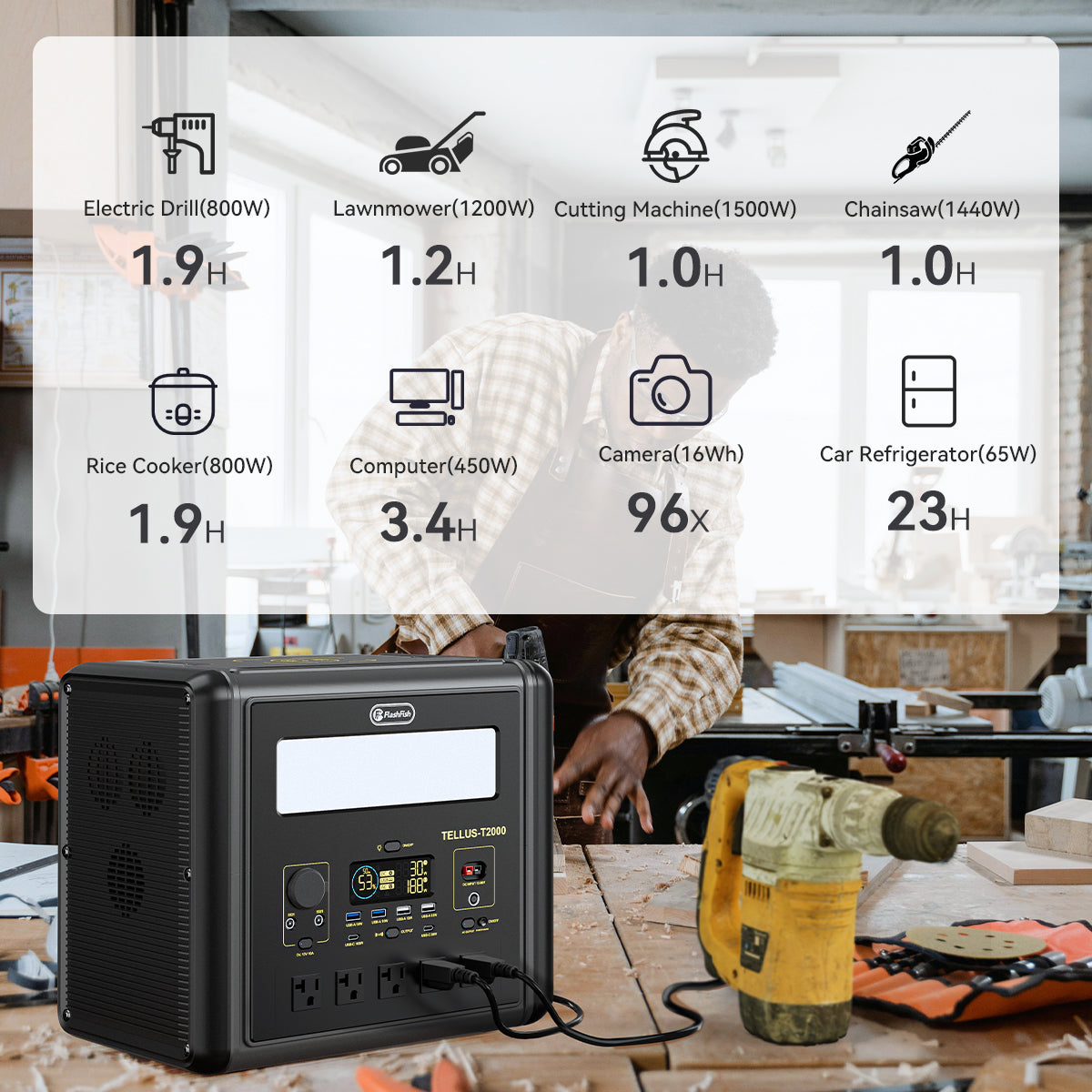
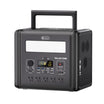
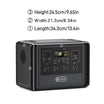
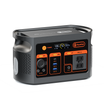
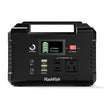
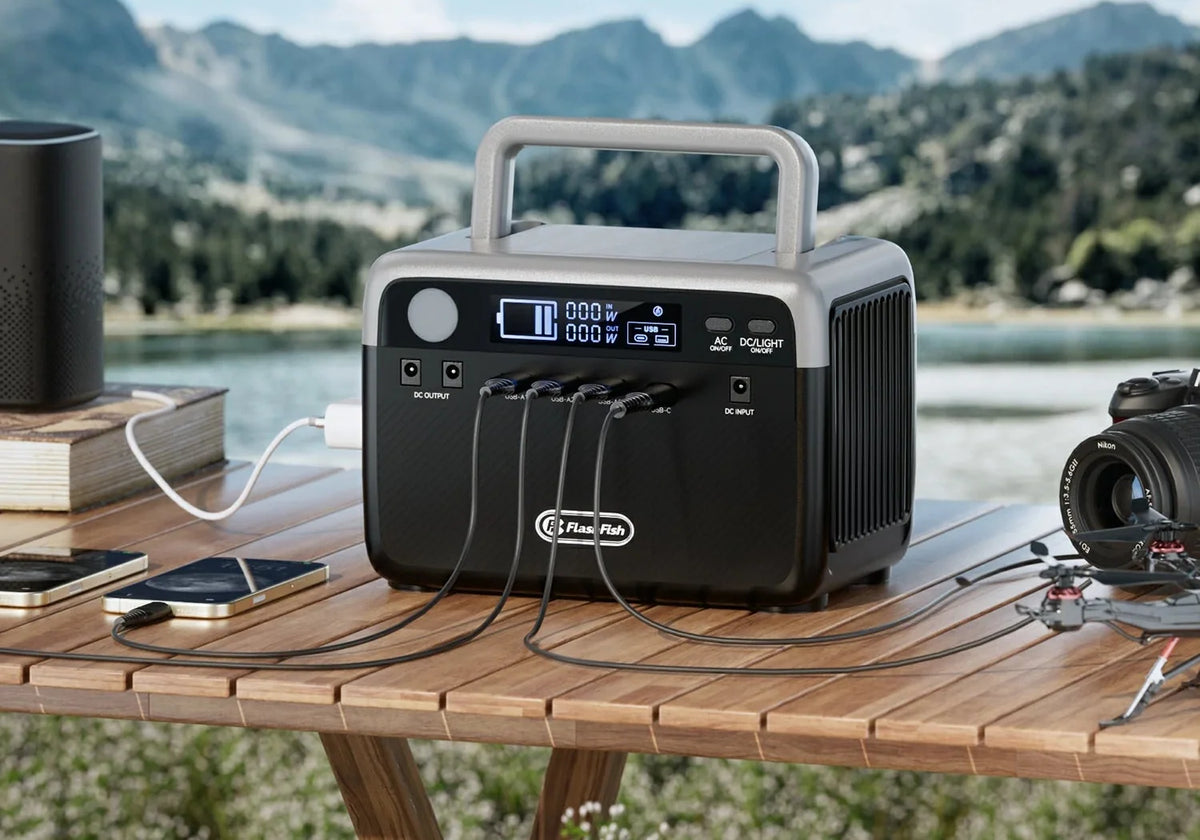
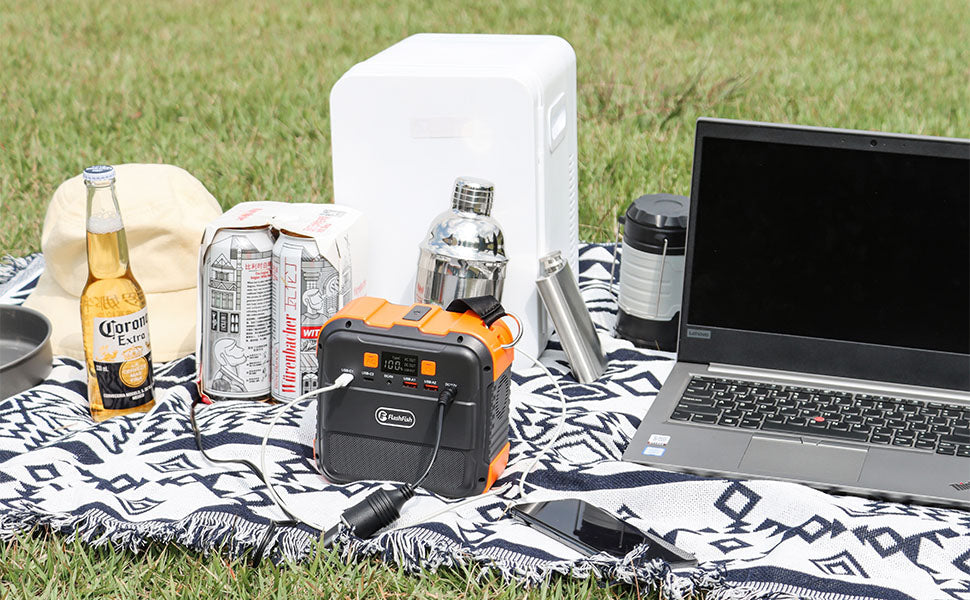
FlashFish E103 has a nominal capacity of 179.2Wh; T300Pro has 230Wh. These product capacity figures are not measured session allowances or usable energy at your selected output. Neither supplies restart overhead, proves camera compatibility, or establishes capture recovery.
Match equipment requirements and the exact station version before shortlisting either model. The available E103 reference manual describes a 230V version; it cannot confirm a U.S. AC pairing. The FlashFish U.S. manual directory explains model and electrical-version matching. This worksheet does not instruct you to power-cycle a camera or station.
Method: a planning ledger using documented product capacity figures and explicitly hypothetical arithmetic. No camera, software recovery sequence, or station discharge was tested for this article.
FAQ
Is restart energy the same as surge watts?
No. This worksheet counts energy over a recovery interval in Wh. It does not measure instantaneous startup power or establish an output's ability to support it.
Should I subtract failed work from the final total?
Keep it in S because that energy has already been spent. Remove it only from the description of useful work completed, not from the consumption record.
Can an energy reading confirm that a file was recovered?
No. Use the camera or software's own completion and recovery criteria. An energy reading does not establish file integrity.
Prepare the next session decision
Write down the successful outcome, agreed allowance, supported recovery procedure, and retry cap. Compare E103 and T300Pro specifications after establishing the exact electrical version and task requirements. Keep the energy sheet with the equipment list so the next decision uses comparable inputs.
For the broader equipment list, see the backyard astronomy power planning guide. The retry ledger comes after equipment selection.
Next step: Compare FlashFish E103 specifications with your equipment list.

Leave a comment
This site is protected by hCaptcha and the hCaptcha Privacy Policy and Terms of Service apply.