


A fair shared charging plan starts with a measured delivered-energy budget, subtracts an agreed group reserve, and assigns the remainder to specific users and tasks. Record usage in watt-hours at a consistent measurement point. Agree in advance when unused shares become available to others. A share is an energy allowance, not a promise to fill a phone or laptop.
This approach is for consenting adults sharing optional camping tasks. Medical equipment, emergency communications, and other essential needs belong in a separate plan. The numbers below are hypothetical bookkeeping examples, not FlashFish test results or recommended reserve sizes.
Start with an energy budget you can actually support
Write down which station, output, charger, cable, and measurement point produced your budget. Use the exact station and meter instructions to establish an appropriate setup. Record the starting condition and the endpoint at which the group will stop allocating energy. A previous observation is a planning input; it does not guarantee the same result on the next trip.
Keep battery capacity and delivered energy separate in the log. A capacity specification identifies the battery's nominal energy; it does not establish how much your particular charging path will deliver. Likewise, a station's remaining-charge display is not the same record as energy delivered to each user's device. Do not mix readings from different points in the path and call them comparable.
Choose one ledger boundary for all users. For example, if you record energy at a documented meter position before a device's charger, keep that position for every allocation. If a charging path cannot be measured on the same basis, label it separately and agree how to handle it before sharing the station.
Subtract the reserve before dividing the shares
Allocatable energy = supported delivered-energy budget − agreed shared reserve. The reserve remains a separate ledger balance. Do not quietly include it in individual allowances. Its size is a group choice informed by the tasks and uncertainty; there is no universal percentage in this method.
Ask each person for a task and its measured energy request. Decide whether fairness means equal allowances, equal access to one agreed task, or a negotiated mix. Equal energy does not necessarily mean equal charge percentages across different devices. If requests exceed the allocatable budget, shorten optional tasks or reduce shares with everyone's agreement before charging begins.
Hypothetical example 1: Allocate a finite group budget
Assume the group has a supported planning budget of 120Wh delivered at its chosen measurement point and holds back 24Wh. That leaves 96Wh to allocate. These are invented worksheet inputs, unrelated to any model's measured performance.
| User and optional task | Requested Wh | Allocated Wh | Used Wh | Unused quota Wh |
|---|---|---|---|---|
| Alex: phone top-up | 24 | 24 | 18 | 6 |
| Blair: reading device | 16 | 16 | 10 | 6 |
| Casey: camera battery charger | 32 | 32 | 24 | 8 |
| Drew: laptop task | 24 | 24 | 20 | 4 |
| Total user shares | 96 | 96 | 72 | 24 |
| Shared reserve, outside user shares | Not a user request | 24 | 0 | 24 |
The opening allocation balances: 96Wh in user shares plus 24Wh reserved equals 120Wh. At check-in, the ledger has 24Wh of unused user shares and the separate 24Wh reserve. That arithmetic does not prove the station still has 48Wh available; compare the ledger with current observations and stop allocating if the supported budget no longer holds.
Make redistribution an explicit agreement
Set a check-in time, who records readings, and what happens when someone finishes early. A person can release an unused allowance without releasing the reserve. Avoid first-come access to all remaining energy unless everyone chose that rule.
Hypothetical example 2: Transfer an unused share
Using the table above, Blair releases 6Wh and Drew requests another 6Wh for an optional task. Record Blair's allocation as 10Wh and Drew's as 30Wh. Total user allocations remain 96Wh, and the reserve remains 24Wh. The transfer changes ownership of an allowance; it creates no additional energy.
Record the agreement before the next session. At the end, subtract measured use from the revised allowance. Do not subtract the same session from both the individual's share and the reserve. If more people request the released energy than it can cover, use the tie-breaking rule agreed at the start.
Hypothetical example 3: The measured result falls short
Suppose current observations support only 100Wh for the same planning boundary. Preserving the hypothetical 24Wh reserve leaves 76Wh for users, 20Wh less than the opening 96Wh allocation. The group must revise unspent allowances or cancel optional tasks. If use already exceeds the revised user budget, stop further optional allocations and reassess; a ledger cannot restore energy already delivered.
Where FlashFish models fit
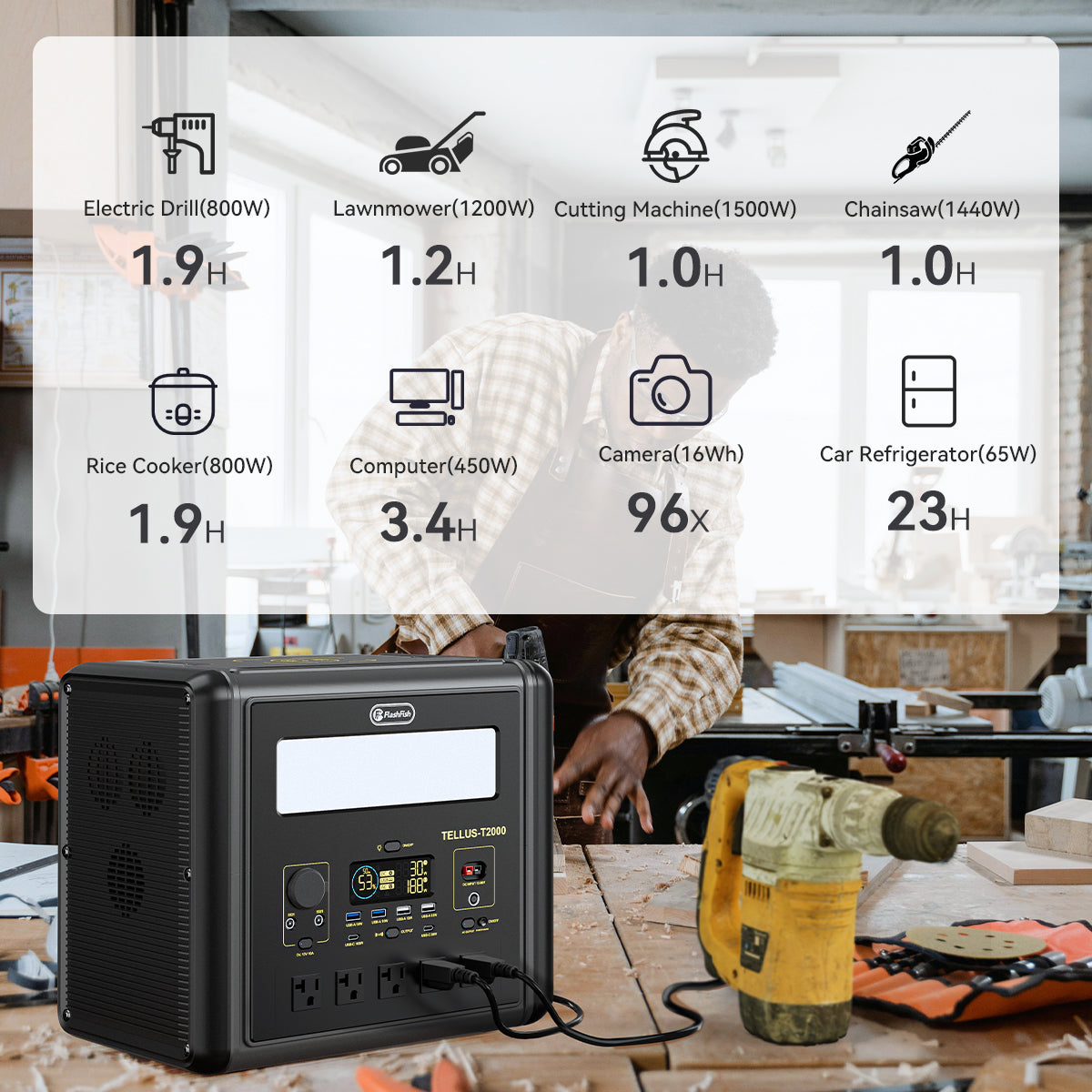
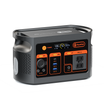
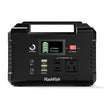
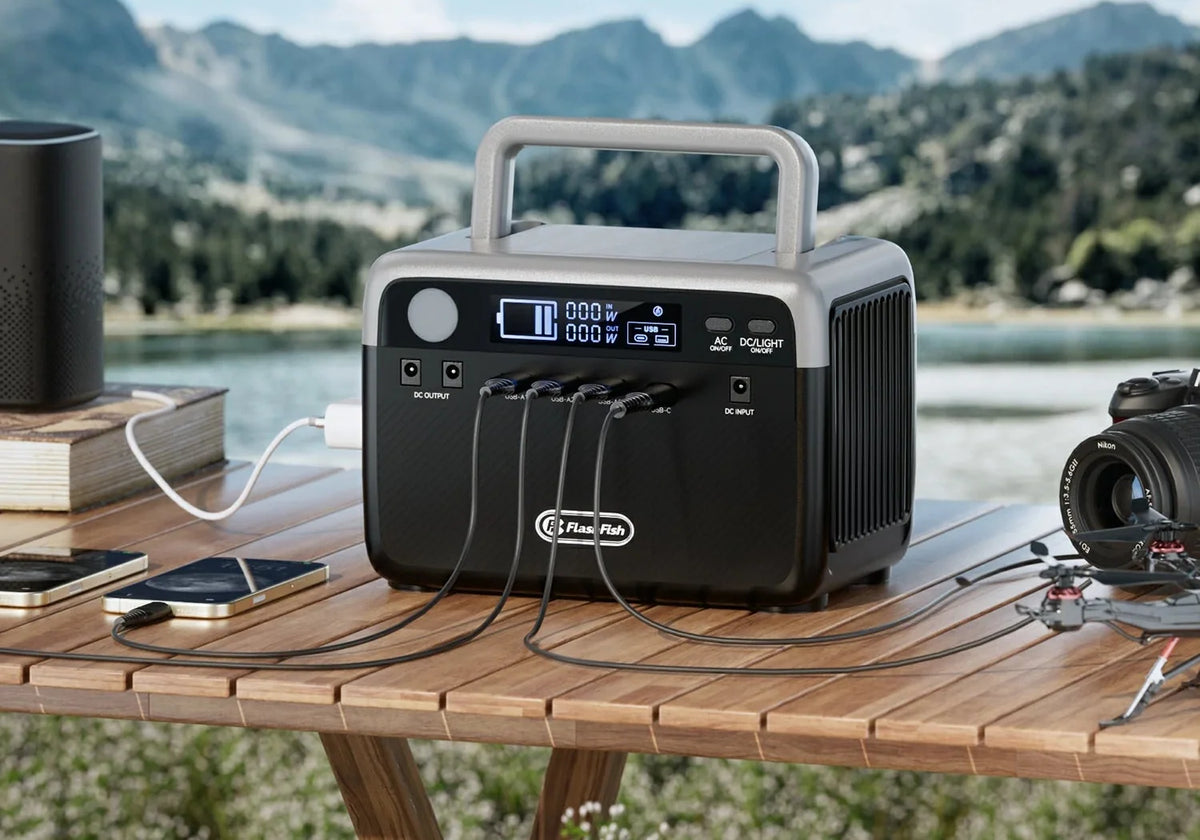
FlashFish T300Pro has a nominal 230Wh capacity. T1200s has a nominal 768Wh capacity. These specifications identify two different capacity tiers; neither supplies a measured group charging budget or an individual full-recharge count. Choose between them only after checking your actual task requirements, exact regional unit, output needs, and complete kit.
The FlashFish U.S. manual directory instructs readers to match the model and electrical version on the product label. Use the matching instructions for the station and your meter before applying the worksheet. A larger capacity label does not remove the need for agreed shares or establish which device connections are supported.
Frequently asked questions
Can we divide the displayed battery percentage equally?
You can agree on that as an informal access rule, but it is not the delivered-Wh quota method described here. Keep the display reading separate from the meter log and avoid calling it a measured equal-energy allocation.
What happens when someone joins late?
Offer only an allowance the group can support from released shares or a newly agreed allocation. Do not create a fresh full share for each arrival while leaving the total budget unchanged.
Should the reserve be used at the end?
Only under the release rule the group agreed on and after checking the remaining budget. An unused reserve is a planning outcome, not a mistake that requires another charging session.
Prepare the next shared trip
List the optional tasks, gather comparable energy observations, and choose a reserve and redistribution rule with the group. Then compare the exact FlashFish model specifications with those requirements. Bring one ledger that names each allowance, measurement boundary, and release time so the group can make the same decision together.
For the broader hardware choice, see the camping power station selection guide. A group allocation rule comes after that equipment decision.
Next step: Compare FlashFish T300Pro specifications with your equipment list.

Leave a comment
This site is protected by hCaptcha and the hCaptcha Privacy Policy and Terms of Service apply.