



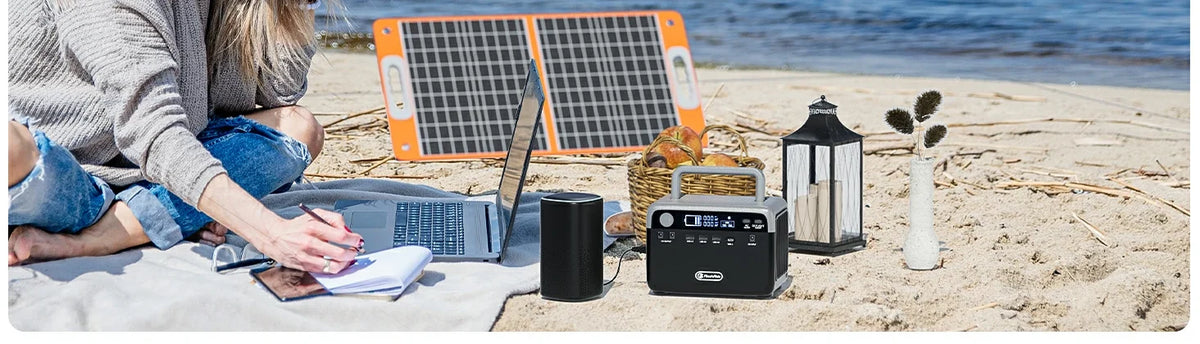
Observe the proposed panel footprint at several explicit times during your intended attended session, and record where shadows fall. Choose a location for further setup checks only when its observed clear periods overlap your planned use and placement is permitted. A few clear snapshots do not establish an uninterrupted clear window. Leave gaps unresolved; this worksheet does not predict charging energy.
This is a ground-level planning exercise before deploying electrical equipment. It helps you decide where more observation is needed, rather than whether moving an already connected panel will repay lost charging time. No campsite survey, panel-output test, or reader observation was performed for this guide.
Define the footprint and the session before watching the shade
Write down the date, local time zone, proposed start and finish, and the area you would need to use. Include room for the fully opened panel and the permitted equipment arrangement. Obtain the venue's rules for that exact area; an empty-looking patch beside a campsite is not proof that you may occupy it.
Give each candidate a stable name, such as table-side spot A or gravel-edge spot B. Sketch fixed landmarks from an accessible, permitted viewpoint. Mark which edge of the proposed footprint a tree, parked vehicle, awning, or neighboring tent could shade. Record the shadow you actually see rather than inferring one from the landmark's size.
Do not put a panel in a walkway to mark the area, move other people's equipment, or connect a station for this observation exercise. If you cannot inspect a spot without entering a restricted area, its status remains unavailable for this plan.
Use a dated observation log, including the missing intervals
| Spot and intended window | Observation date and local time | Obstruction and shadow extent | Permission and footprint | What remains unknown |
|---|---|---|---|---|
| A; write the session start and finish | Write each actual observation time | Name the visible obstruction and which part of the footprint is shaded | Identify the rule or permission and usable area | Every interval between snapshots unless continuously observed |
| B; use the same proposed session | Keep observations on their actual date | Record the same footprint-based description | Check B separately; permission for A does not cover B | Unvisited times, changed weather, and later-date conditions |
Record cloud cover as observed, with a simple description rather than a percentage loss. If the whole area becomes cloudy, distinguish that from a shadow whose edge you can trace to an obstruction. A phone photo can document what was visible at its timestamp, but does not fill the minutes before or after it. Avoid capturing other visitors or private labels unnecessarily.
Choose observation times around the beginning, middle, and end of your own intended window, adding checks where a shadow edge approaches the footprint. That is a practical sampling suggestion, not a validated interval or a promise that a fixed number of checks will find every obstruction. If you leave the site, record the gap explicitly.
Turn the log into a placement decision, without converting minutes to watts
Separate three conclusions: a shadow was observed; the footprint was visibly clear at a named time; or the interval was not observed. Do not label the third category clear. A continuously watched clear interval can support a dated description of that interval, but still supplies no electrical input reading.
When two spots have incomplete records, the useful next step may be another permitted observation at the missing time. A spot with a confirmed obstruction during your only available session may be less useful for that plan than one worth checking further. Neither decision needs an invented charging yield.
The TSP18V60W manual, printed page 3, and TSP18V100W manual, printed page 3, identify sunlight angle, temperature, weather, and charging time as factors in conversion. Your shade log measures none of the resulting electrical energy. Multiplying a model's rated watts by snapshot spacing would turn missing observations into a false energy estimate.
Three hypothetical shade-log decisions
These fictional cases illustrate the record, not measured conditions or expected FlashFish performance.
Example 1: The planned window crosses an observed shadow
A camper plans to remain from 1:00 to 2:00 p.m. Spot A is clear at 1:00, but an awning shadow crosses its footprint at 1:30. The camper marks the later portion unsuitable for an assumed fully clear session and checks another permitted spot. The first snapshot does not establish the whole hour.
Example 2: Three snapshots leave two gaps
Spot B looks clear at 10:00, 10:30, and 11:00 a.m. The camper was elsewhere between checks. The record contains three clear observations, not sixty continuously observed clear minutes. More observation is needed before describing a clear interval.
Example 3: A clear footprint lacks permission
A gravel area appears clear during an attended observation, but the venue has not confirmed whether equipment may be placed there. Its permission field stays unresolved. The camper does not treat favorable shade observations as authorization to deploy.
What the two FlashFish panels add to this decision
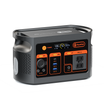
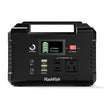
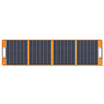
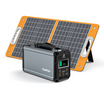
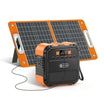
TSP18V60W and TSP18V100W are separate panel models, rated at 60W and 100W respectively. Their specification pages identify different unfolded sizes, so use the exact panel's full footprint rather than assuming the same clear patch accommodates both. The manuals direct use with the panel fully unfolded. This guide does not establish a panel-to-station pairing or recommend a weather exposure.
After the site record is useful, check the exact panel and receiving station instructions, connector and input requirements, allowed conditions, and venue placement rules. The FlashFish U.S. manual directory helps locate model documents. A dated shade map remains a placement aid, not an electrical or safety approval.
FAQ
Can three clear photographs prove an hour of uninterrupted sunlight?
No. They document their individual timestamps. Unless the intervals were observed, keep those gaps unknown rather than marking the whole hour clear.
Can I use today's shade map for a later trip?
Keep the original date attached. Recheck the actual session and conditions; a previous record does not establish what will be clear on the later date.
Should I calculate charging watt-hours from the clear observations?
No. The log records visible obstruction and time, not accepted electrical input. It cannot supply a charging-energy or full-charge estimate.
Next step: Compare FlashFish TSP18V60W specifications with your equipment list.

Leave a comment
This site is protected by hCaptcha and the hCaptcha Privacy Policy and Terms of Service apply.