
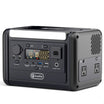
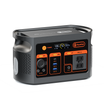
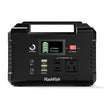

Before an adult borrower takes a portable power station on a non-critical trip, ask them to demonstrate the permitted controls for the exact unit and explain its operating limits, shutdown instructions, and unanswered questions in their own words. Use the matching manual beside the station. Record each action as observed, not demonstrated, or unknown. A successful rehearsal documents understanding of those specific actions; it does not certify the borrower, prove equipment condition, or establish device compatibility.
The useful question is whether the person receiving the station can repeat the documented routine without the owner supplying each next step. A nod during an explanation leaves that question unanswered. This handoff method produces a short record of what the borrower actually understood.
Start with the document that belongs to this unit
Write down the model, electrical version, and manual revision before choosing demonstration tasks. FlashFish's U.S. User Guides directory instructs owners to match the product label and regional electrical version, and to ask support when the manual and label conflict. A similar model name is insufficient.
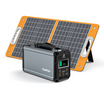
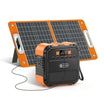
This matters even for familiar compact stations. The documented nominal capacities are 97.68Wh for A101 and 151Wh for E200. Those capacities identify an energy specification, not a control sequence. The available A101 reference manual describes a 230V version, while E200 has regional versions. Neither capacity nor appearance establishes which instructions belong to a borrowed U.S. unit.
Ask the owner to locate the sections covering the intended output, permitted charging arrangement, normal shutdown, and warnings. If the correct document cannot be identified, leave the affected operation unresolved and postpone that part of the handoff. Do not use this article to replace a missing manual.
Choose a small set of permitted actions
Keep the rehearsal tied to the planned trip. Someone borrowing a station for a documented phone-charging arrangement needs to understand that arrangement and the applicable warnings. There is no reason to add unfamiliar AC equipment just to create a more impressive demonstration.
The owner first explains an ordinary operation using the matching instructions. The borrower then demonstrates it, where those instructions permit, and explains what the indicators mean. Ask an open question such as, “Show me which output this routine uses and where you would find its shutdown instructions.” Avoid prompting with the answer.
Do not create a fault, overload a port, or trigger a protection function for the rehearsal. A warning can be discussed without reproducing the condition. If there is damage, swelling, leakage, unusual heat, or an unusual odor, the U.S. User Guides page says to stop use and charging and seek support; a teach-back exercise is not a troubleshooting remedy.
Use an observation sheet, not a pass score
| Permitted operation | Manual reference | Demonstrated action | Teach-back answer | Unresolved instruction | Handoff condition |
|---|---|---|---|---|---|
| Identify the intended output | Exact model, revision, and section | Observed or not demonstrated | Borrower explains the selected output | Any label or version mismatch | Resolve mismatch before including that use |
| Perform normal shutdown | Matching shutdown section | Record the permitted action observed | Borrower explains how to recognize completion | Any unclear indicator or step | Repeat instruction and demonstration if unclear |
| Explain when to stop and ask for help | Matching warning and support sections | Verbal explanation; no fault simulation | Record the answer in ordinary language | Any missing warning or contact instruction | Resolve before the off-site loan |
Keep “not demonstrated” separate from “unknown.” The first means the action was not observed. The second means the instruction or its applicability has not been established. Neither should turn into a checkmark because departure time is approaching.
Three hypothetical handoff outcomes
The following examples illustrate the worksheet. They are not borrower observations or FlashFish tests.
Hypothetical example 1: the routine is explained independently
An owner identifies the correct manual and a permitted output routine. The borrower repeats the documented action and explains shutdown without prompting. Record those actions as observed, along with the manual reference. Keep the agreement limited to the documented routine; this does not approve additional devices.
Hypothetical example 2: the owner supplies every next step
The borrower follows instructions while the owner points to each control. Record an assisted rehearsal, not an independent demonstration. Explain the unclear part, then offer another opportunity to describe it. If uncertainty remains, postpone the loan rather than assign a numerical score that hides it.
Hypothetical example 3: the manual does not match
The label identifies one electrical version, but the available document describes another. Record the mismatch and request the correct instructions. Knowing where the buttons are does not resolve the document gap.
Where A101 and E200 fit in this decision
Either planned model requires its own handoff record. An A101 demonstration cannot serve as evidence that the borrower knows E200 controls. Keep product selection and device-load verification as separate decisions: this worksheet checks understanding of an already documented routine. It supplies no runtime estimate, charging promise, or finding that either model can power a particular appliance.
FAQ
Does teach-back prove the station is safe to lend?
No. It records the borrower's demonstrated understanding of specified instructions. Product condition, applicable warnings, and device fit remain separate requirements.
Can the borrower read the manual during the rehearsal?
Yes. Finding the correct instruction is useful. Record whether the borrower located and explained it independently or needed the owner to supply the answer.
What if one operation remains unclear?
Write down the exact gap and its manual reference. Resolve it with the matching instructions or support before agreeing to include that operation in the loan.
Prepare the handoff record
Today, gather the exact-unit documentation and make one worksheet for the intended routine. Compare the A101 or E200 details with the borrowed label, complete the attended rehearsal, and agree on the loan only after the relevant questions are resolved. Keep a copy with the borrower so the documented limits remain available away from home.
Next step: Compare FlashFish A101 specifications with your equipment list.

Leave a comment
This site is protected by hCaptcha and the hCaptcha Privacy Policy and Terms of Service apply.