

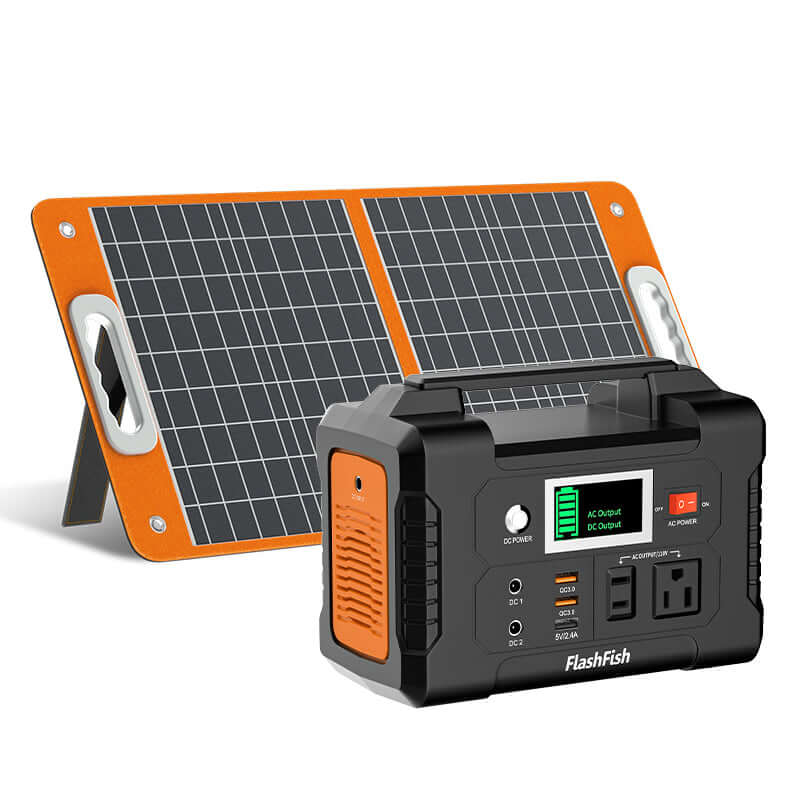
Short answer: For a light weekend camping trip, start by estimating watt-hours. Add the watts used by each device, multiply by hours used, then add a buffer for conversion loss and cold or cloudy conditions. A compact station such as FlashFish E200 can fit phones and lights; P56 or P63 gives more margin for fans, laptops, and repeated charging.
This guide is for campers carrying phones, LED lights, small fans, cameras, a laptop, or a portable solar panel. It is not for high-wattage appliances such as heaters, electric kettles, induction cookers, or microwave ovens.
The Simple Formula
Battery planning starts with one formula:
Device watts x hours used = watt-hours needed.
If a light uses 10W for 5 hours, it needs about 50Wh. If a fan uses 30W for 6 hours, it needs about 180Wh. Real-world runtime varies because of inverter loss, device startup behavior, temperature, and how fully you discharge the battery.
Example Weekend Load List
| Device | Example planning load | Estimated energy |
|---|---|---|
| Two phones | 10-20Wh each per recharge | 20-40Wh |
| LED camp light | 5-10W for 5 hours | 25-50Wh |
| Small fan | 20-40W for 4-6 hours | 80-240Wh |
| Laptop top-up | 40-80Wh per charge | 40-80Wh |
| Camera or drone batteries | varies by model | check charger label |
For light use, many campers land in the 150-300Wh range. If you add a fan for long nights, laptop charging, or multiple people, the useful range can move toward 300-600Wh.
FlashFish Product Fits
| FlashFish option | Live U.S. product facts checked 2026-06-10 | Best fit |
|---|---|---|
| E200 | 151Wh, 200W, U.S. variant listed at $119.99 | Phones, lights, camera batteries, short laptop top-ups |
| P56 | 288Wh, 330W, U.S. variant listed at $189.99 | Small fan plus phones and lights |
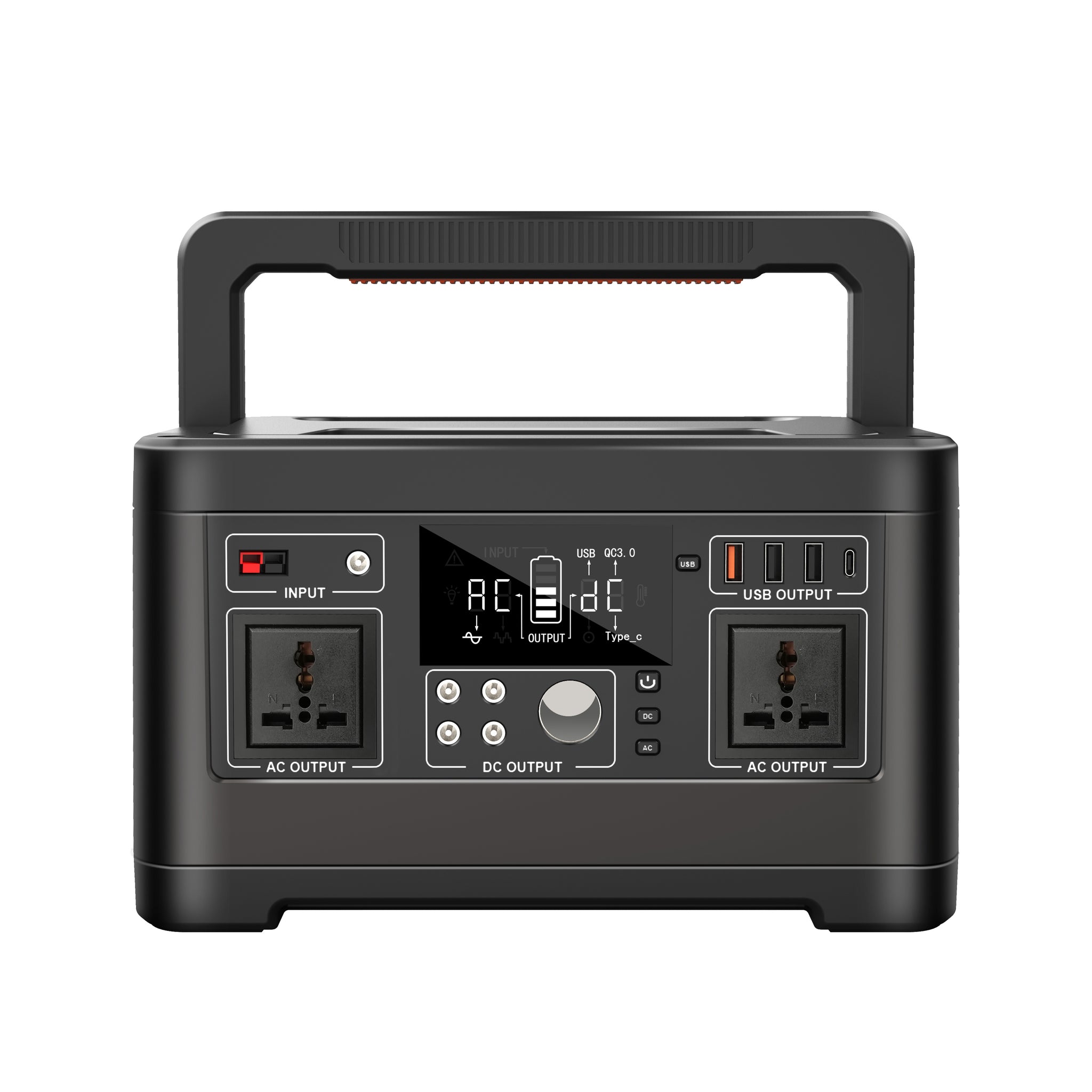
| P63 | 520Wh, 500W, U.S. variant listed at $299.99 | More margin for fans, laptop charging, and two-person trips |
| T1200S | 768Wh, 1200W, U.S. variant listed at $389.99 | Higher-capacity camping and outage crossover use |
Where Solar Fits
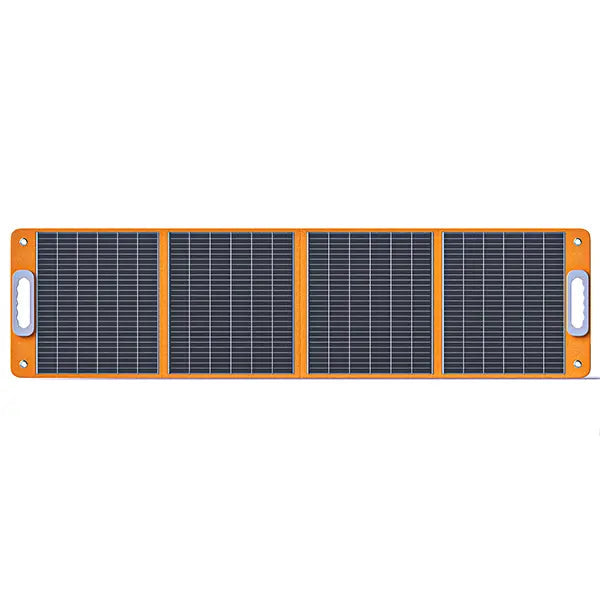
Solar can extend a weekend setup, but it should be planned as support rather than a guaranteed full recharge. Sun angle, tree cover, clouds, panel placement, and input limits all affect charging. FlashFish lists the TSP60 60W panel and TSP100 100W panel for portable charging setups.
When FlashFish Fits
- You want compact battery power for common camping electronics.
- You need a quiet option for lights, phones, small fans, and laptops.
- You want to pair a station with a portable solar panel.
- You prefer a budget-friendly setup and can check live specs before buying.
When FlashFish May Not Fit
- You need to run heaters, large cooking appliances, or compressor-heavy loads.
- You need a whole-cabin or whole-home backup system.
- You need exact runtime guarantees for every device.
- You camp in shaded areas and depend entirely on solar charging.
FAQ
How many watt-hours do I need for weekend camping?
For phones and lights, 150Wh can be enough for careful use. Add a small fan or laptop and 300-600Wh is often more comfortable. Always calculate from your own device labels.
Should I buy the biggest power station I can afford?
Not always. Bigger stations cost more and take more space. Match the battery to your load list, then add a buffer.
Can a solar panel replace a bigger battery?
Sometimes it can reduce how much battery you need, but solar output is weather-dependent. For a short weekend trip, battery capacity is usually the dependable base and solar is the extender.
Sources And Review Notes
FlashFish product facts and prices in this draft come from live U.S. Shopify product data checked on 2026-06-10. General outage planning can be cross-checked with Ready.gov. Campsite generator and quiet-hour rules vary by location, so campers should check the campground rules before relying on any powered device.

Dejar un comentario
Este sitio está protegido por hCaptcha y se aplican la Política de privacidad de hCaptcha y los Términos del servicio.