


Subtract later-task energy and an uncertainty allowance from a tested delivery budget to set an optional-charging cutoff. Track Wh at the same boundary. Nominal capacity and battery percentage alone do not establish a usable reserve.
This method is for households planning ordinary phone check-ins and optional lighting. It does not establish emergency communication reliability or support medical equipment. Keep a separate paper communication plan; a charged phone does not establish that a network will work.
Define what the reserve must cover
Write down the later tasks before connecting optional devices. Specify the phone, starting charge level, intended top-up, cable, station output and number of sessions. “Keep enough for the phone” is too vague to turn into a measurable allowance. A short top-up and a nearly empty phone are different tasks.
Use your own recorded charging sessions under documented conditions. If repeated sessions differ, retain the range and choose a conservative planning value rather than the smallest result. Record why you selected it. The available model records does not supply the energy your phone will need for a particular check-in.
Keep all energy values on one boundary
An inline USB meter records energy crossing its location, not necessarily energy stored in the phone or removed from the station battery. A station's nominal Wh specification describes a different boundary. Do not subtract one kind of energy from another and call the result a measured reserve.
For a USB-only plan, use delivery records from the same documented output arrangement for both the station budget and later tasks. If several outputs are involved, every relevant delivered-energy channel must be accounted for. Use only measurement equipment and connections supported by their documentation. Follow the exact station manual when establishing a test endpoint; this guide does not instruct you to bypass protections or force a deep discharge.
A built-in light, an unmetered output or a different idle interval can consume energy outside the USB ledger. Either include those effects in a representative prior delivery test or leave the numerical allocation unresolved. Do not treat unobserved consumption as zero.
Calculate the optional allocation
Optional allocation = conservative tested delivery budget − later-task reserve − uncertainty allowance. The later-task reserve is the sum of measured Wh per session multiplied by planned repetitions. The allowance is a stated planning choice for variability and gaps, not a universal percentage or a guarantee.
The following worksheet is entirely hypothetical. It is not a FlashFish test, phone measurement or runtime estimate. Assume the same documented USB arrangement supports a conservative 70Wh delivery budget.
| Later task or allowance | Planning Wh per session | Repetitions | Reserved Wh | Unallocated budget |
|---|---|---|---|---|
| Phone A top-up | 8Wh | 2 | 16Wh | 54Wh |
| Phone B top-up | 6Wh | 2 | 12Wh | 42Wh |
| Uncertainty allowance | 10Wh, selected assumption | 1 | 10Wh | 32Wh |
The planned later tasks total 28Wh. With the 10Wh allowance, optional use is limited to 32Wh. This is an accounting limit for those assumptions; it does not prove that an outage will end before the planned sessions are used.
Three ways the cutoff changes
Example 1. An optional session uses part of the allocation
In the hypothetical worksheet, an optional device session records 9Wh at the included output boundary. The remaining optional allocation becomes 32 − 9 = 23Wh. Keep the 28Wh task reserve and 10Wh allowance intact. Do not reset the ledger merely because the device has been unplugged.
Example 2. Another later top-up is added
If an extra session requires an assumed 8Wh, the reserve becomes 36Wh. The original optional allowance falls to 70 − 36 − 10 = 24Wh. After the earlier 9Wh optional session, only 15Wh remains allocatable. Update the plan before approving another optional session.
Example 3. The tested budget cannot be transferred
If the prior 70Wh record used a different output arrangement or omitted a light now in use, it cannot establish today's numerical cutoff. Pause optional charging while resolving the missing evidence. An unsupported “30% remaining” rule cannot repair the gap.
Where FlashFish E200 and T200 fit
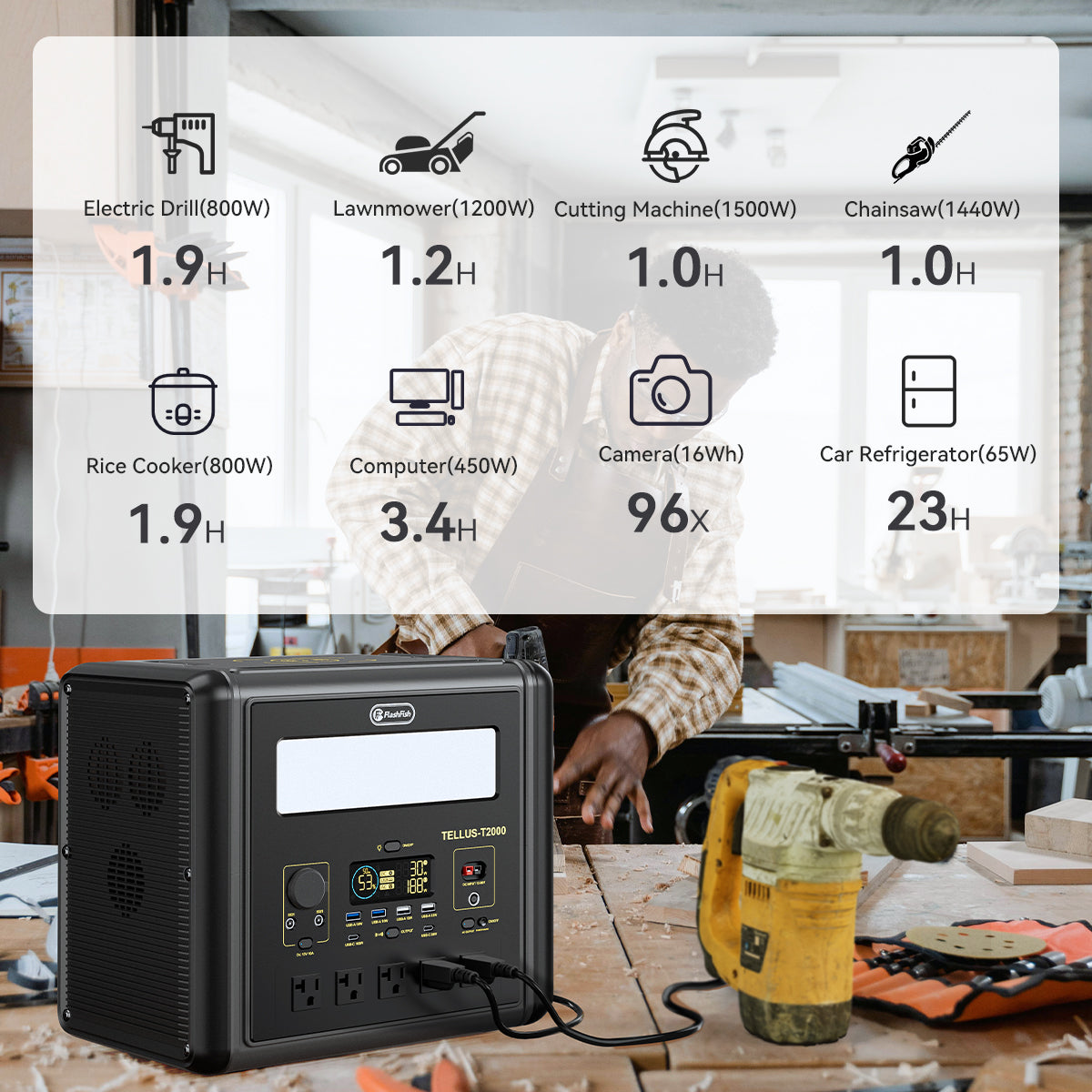
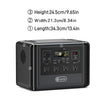
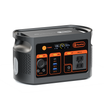
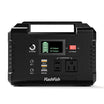
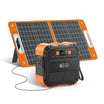
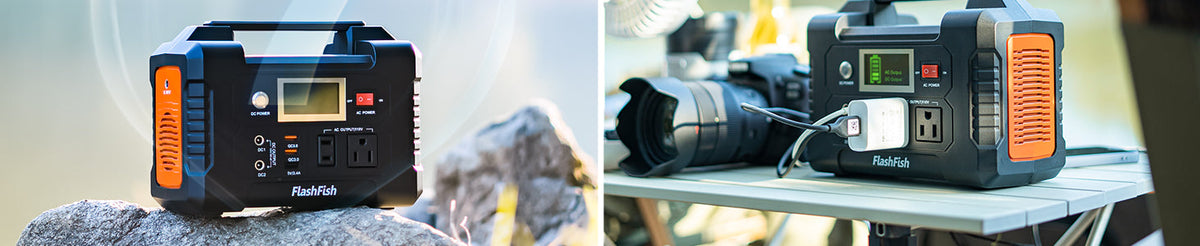
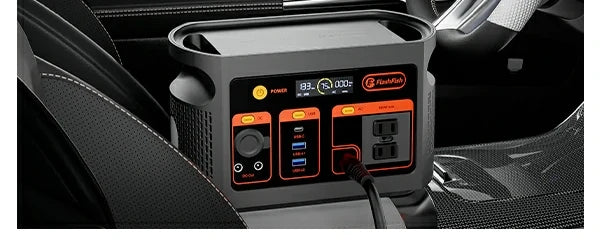
The available model records list FlashFish E200 at 151Wh, with two USB-A outputs rated up to 18W and another up to 12W. T200 is an explicit alias of TELLUS-T200, whose record lists 153.6Wh, USB-C outputs up to 60W and 18W, and USB-A outputs up to 18W and 12W. These are documented capacities and port limits, not measured delivered-energy budgets.
Compare the documented ports with your actual charging equipment, then establish the relevant delivery record. Similar nominal capacities do not establish identical usable energy. Port maxima do not establish simultaneous output or your phone's charging rate. Verify the original manual and exact unit before using operational or regional electrical details.
FAQ
Can I use the battery percentage as my reserve?
You can record it as an observation, but it does not establish delivered Wh for the remaining tasks. A numerical reserve requires a documented relationship to usable delivery under the relevant conditions. The local records do not provide that relationship for this household plan.
What if my allowance leaves no optional energy?
If the result is zero or negative, the plan supports no optional allocation. Reduce optional demand and reconsider the task schedule. If even the later-task reserve exceeds the supported budget, record the deficit and use the independent communication plan rather than assuming the station will cover it.
Can anticipated recharging increase the budget?
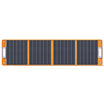
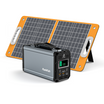
Keep future recharging separate until it has actually produced a documented usable contribution. A possible outlet window or solar opportunity is not stored energy. Reassess the budget after recharging using evidence that supports the same measurement boundary.
Make the decision before optional charging starts
Prepare one page showing the tested budget, later-task reserve, allowance, cumulative optional Wh and stop condition. If those entries are supported, compare E200 and T200 documentation against the required ports. If they are unresolved, finish the measurement plan before selecting a station for this job.
For the broader load-priority list, see what to run first during a power outage. This reserve worksheet is a narrower accounting tool and does not validate medical backup or communication reliability.
Next step: Compare FlashFish E200 specifications with your equipment list.

Leave a comment
Situs ini dilindungi oleh hCaptcha dan berlaku Kebijakan Privasi serta Ketentuan Layanan hCaptcha.