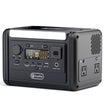
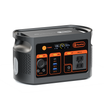
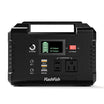
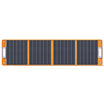

A portable power station will run your camping gear for as long as its usable watt-hours can support the watts your devices draw. The simple planning formula is:
Runtime in hours = usable battery capacity in Wh / device watts
For AC outlets, use a planning efficiency of about 85% to 90%. For DC and USB outputs, use about 90% to 95% when the product page or manual does not give a more specific number. That means a 520Wh camping power station can run a 30W fan for roughly 15 to 17 hours, but a 300W appliance may last closer to 1.5 hours. Device cycling, temperature, battery age, and inverter load all change the real result.
Quick Runtime Calculator
Use this before you pack:
- Write down each device you need: phone, light, fan, laptop, camera battery, cooler, CPAP, router, or small appliance.
- Find the watts on the label, charger, manual, or manufacturer page.
- Estimate how many hours you will run it each day.
- Multiply watts by hours to get Wh needed.
- Add 20% to 30% buffer for inverter loss, weather, extra charging, and real-world use.
Example:
| Camping device | Planning load | Daily use | Daily energy |
|---|---|---|---|
| LED camp light | 10W | 5 hours | 50Wh |
| Phone charging | 12Wh per charge | 2 charges | 24Wh |
| Small fan | 30W | 6 hours | 180Wh |
| Laptop | 60Wh per charge | 1 charge | 60Wh |
| Camera/drone batteries | 40Wh | 1 set | 40Wh |
| Estimated total | 354Wh |
For this example, a camper should not buy for exactly 354Wh. A safer planning target is about 425Wh to 460Wh, which leaves room for conversion loss and unexpected use.
Wh vs W: What Matters More?
Both matter, but they answer different questions.
| Spec | What it means | Camping question it answers |
|---|---|---|
| Watt-hours (Wh) | Battery energy stored over time | How long can my gear run? |
| Watts (W) | Power output at a moment | Can this station power my device? |
| Surge watts | Short startup power for some appliances | Can it start a fan, pump, or compressor? |
| Output ports | AC, DC, USB-A, USB-C, car socket, wireless | Can I plug in the gear I actually bring? |
| Solar input | Compatible panel and input limits | Can I recharge during the trip? |
The U.S. Energy Information Administration explains watt-hours as electricity use over time, while the U.S. Department of Energy gives the same idea in practical terms: a 100W load running for 10 hours uses 1,000Wh, or 1kWh. For camping, that is the exact math behind runtime planning.
FlashFish Runtime Examples
FlashFish product pages already give useful planning examples for several models.
| FlashFish model | Verified capacity/output | Product-page examples to use when planning |
|---|---|---|
| FlashFish E200 Portable Power Station | 151Wh, 200W AC output | Phone 12Wh: 11.5 charges; box fan 30W: 4.5 hours; mini fridge 60W: 2.3 hours; laptop 60Wh: 2.5 charges |
| FlashFish T300PRO Portable Power Station | 230Wh, 300W AC output, LiFePO4 battery | Good planning range for phones, lights, camera batteries, USB-C charging, and short fan/laptop use |
| FlashFish P63 Portable Power Station | 520Wh, 500W AC output | Phone 18Wh: 28.8 charges; mini fan 30W: 17.3 hours; mini fridge 60W: 8.6 hours; laptop 37Wh: 14 charges; TV 80W: 6.5 hours |
| FlashFish T1200S Portable Power Station | 768Wh, 1200W rated output, LiFePO4 battery | Better fit for longer trips, higher wattage devices, and multi-device campsite setups |
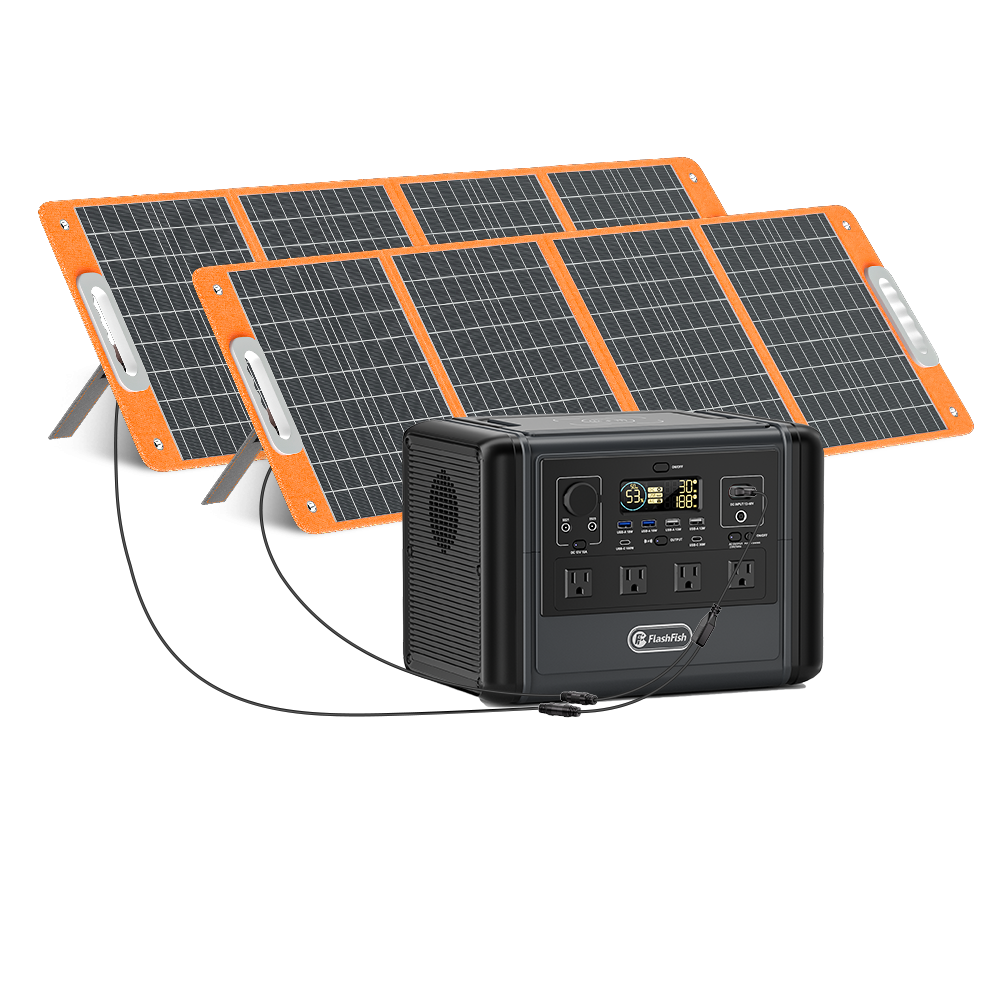
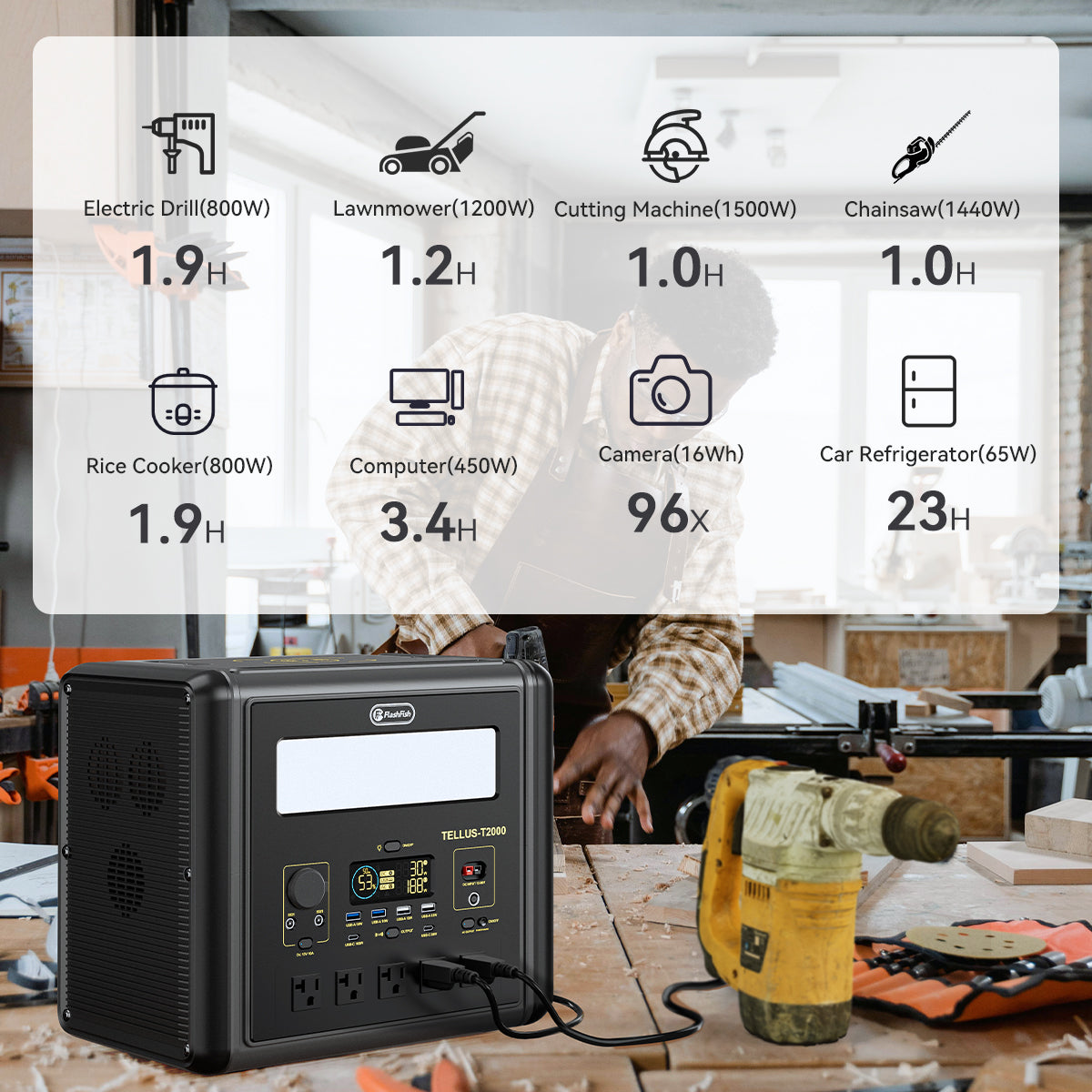
| FlashFish T2000 Portable Power Station | 1536Wh, 2000W rated output, LiFePO4 battery | Better fit for basecamp, RV support, higher-demand appliances, or home backup overlap |
The P63 product page also provides a useful rule of thumb: AC output runtime can be estimated with battery Wh times 0.9 divided by device watts, while DC and USB output runtime can be estimated with battery Wh times 0.95 divided by device watts. Use this as a planning estimate, not a promise, because real devices do not always draw a flat wattage.
Which Size Portable Power Station Do You Need for Camping?
Choose by your highest-watt device first, then by your total Wh need.
| Camping style | Typical gear | Suggested FlashFish fit | Why |
|---|---|---|---|
| Day trip or picnic | Phones, camera batteries, small light | E200 or compact model | Lightweight power for basic device charging |
| Overnight tent camping | Phones, lights, fan, laptop top-up | T300PRO or P63 | More useful Wh reserve for overnight comfort gear |
| Weekend camping | Phones, lights, fan, small cooler, laptop, camera/drone batteries | P63 | Strong balance of 520Wh capacity and 500W output |
| Longer campsite stay | Multiple devices, larger fan, cooler, work laptop, shared charging | T1200S | More battery reserve and higher rated output |
| RV, basecamp, or backup overlap | Higher-demand appliances, several users, more reserve | T2000 | Large 1536Wh capacity and 2000W rated output |
For most weekend campers, the biggest mistake is choosing only by output watts. A 500W unit and a 1200W unit describe what each can power at one moment. The Wh number tells you how long your campsite stays powered.
Camping Power Checklist Before You Leave
Use this checklist after you choose the model:
- Charge the portable power station to full before departure.
- Check the wattage of each device and charger.
- Confirm whether each device needs AC, USB-C, USB-A, DC, or a car socket.
- Keep total running watts below the rated output.
- Check surge watts for devices with motors or compressors.
- Pack all cables, adapters, and solar charging cables.
- Test critical devices at home before the trip.
- Keep the power station dry, shaded from extreme heat, and used according to the manual.
- If you bring a fuel-powered generator too, follow CDC carbon monoxide safety guidance and never run it inside a tent, RV, vehicle, garage, or enclosed space.
Portable battery power stations are different from fuel generators because they do not burn gasoline while discharging. But they are still electrical equipment, so treat moisture, heat, overloaded outlets, damaged cords, and incompatible chargers seriously.
Should You Bring a Solar Panel?
A portable solar panel is useful when your trip is longer than your stored battery capacity. It is most helpful when you can place the panel in open sun, adjust the angle during the day, and stay within the power station input limits.
Solar does not remove the need for runtime planning. Clouds, shade, short winter days, dirty panels, and poor angle can reduce recharge speed. For a weekend camping trip, think of solar as a way to extend runtime, not as a guarantee that every device can run nonstop.
Start with the FlashFish portable power station collection, then match a compatible solar panel or kit after you know your Wh target.
FAQ
How do I calculate portable power station runtime?
Divide usable battery capacity in Wh by the watts your device draws. For AC outlets, plan with about 85% to 90% usable capacity. For DC or USB outputs, plan with about 90% to 95% usable capacity when no more specific product guidance is available.
Is Wh or W more important for camping?
Wh is more important for runtime, while W is more important for compatibility. Choose a station with enough output watts for your highest-watt device, then choose enough Wh capacity for how many hours you need.
What size portable power station do I need for weekend camping?
Many weekend campers should start by comparing models in the 300Wh to 600Wh range if they need phones, lights, fans, laptops, and small camera batteries. If you need a fridge, CPAP, shared charging, or multiple days without reliable solar, compare higher-capacity models such as the T1200S or T2000.
Can a portable power station run a CPAP while camping?
It can if the station output, battery capacity, cable type, and CPAP power draw match your setup. Check your CPAP manual, confirm whether the humidifier or heated tube changes wattage, and test the exact setup at home before relying on it overnight.
Can I use a portable power station inside a tent?
Use it only if the product manual allows the environment and the station stays dry, ventilated, and protected from heat, dust, and damaged cords. Battery power stations do not produce generator exhaust while discharging, but they still need careful electrical handling.
Can solar recharge a camping power station during the trip?
Yes, when the panel is compatible with the station input limits and sunlight is strong enough. Solar recharge time varies with sun angle, shade, weather, season, and panel placement, so plan battery capacity first and use solar as an extension.
Final Takeaway
The best camping power station is not simply the biggest one. It is the one with enough output watts for your devices, enough Wh capacity for your real trip length, and the right ports for the way you camp.
Start with your device list, calculate daily Wh, add a buffer, then compare FlashFish portable power stations by capacity, output, battery chemistry, and recharge options.


Leave a comment
Situs ini dilindungi oleh hCaptcha dan berlaku Kebijakan Privasi serta Ketentuan Layanan hCaptcha.