


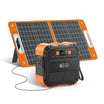
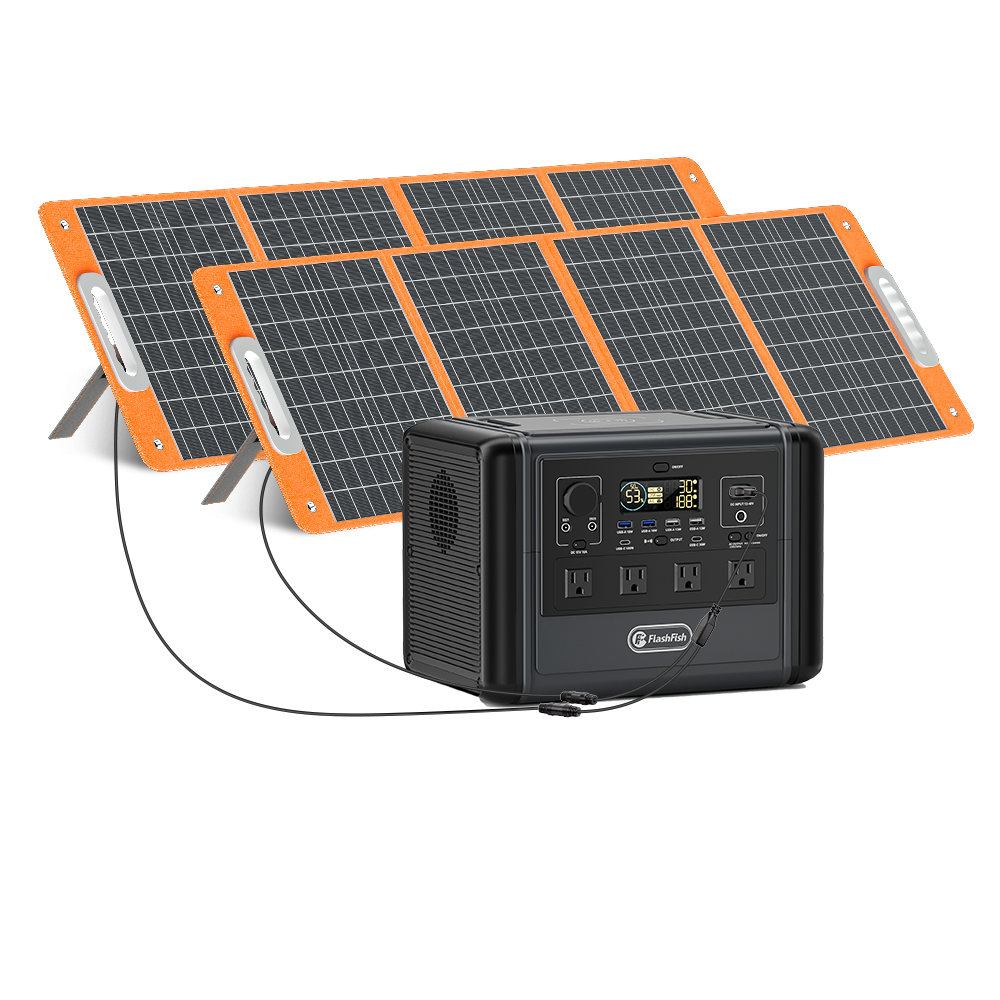
How Many Solar Panel Watts Do You Need for a Portable Power Station?
Short answer: Choose solar panel wattage that stays within the power station's solar input voltage, current, and watt limits, then size the panel for how much energy you want to recover in the available sunlight. A larger panel can improve charging opportunity, but only up to the station's input limit.
A panel's rated watts are measured under standard conditions. Real output changes with sun angle, clouds, shade, temperature, dust, cable loss, and the power station's charge controller. The U.S. Department of Energy explains that solar radiation varies by location, time of day, season, and weather, so a 100W panel should not be treated as 100W of continuous all-day charging.
Check input limits before panel watts
| Specification | What it controls | Planning question |
|---|---|---|
| Input voltage range | Whether the panel array voltage is accepted | Will this panel or series setup stay inside the station's limit? |
| Maximum input current | How much current the charge controller accepts | Will parallel panels exceed the current limit? |
| Maximum solar watts | The station's solar charging ceiling | Will extra panel rating be usable? |
| Connector and polarity | Physical and electrical compatibility | Do I have the correct approved cable? |
Never choose a panel based only on the word "compatible." Compare the exact electrical specifications and follow both manuals. Series and parallel connections change voltage and current in different ways.
Estimate the panel size from your recharge goal
Start with the energy you want to replace. A basic planning formula is: energy to replace in Wh / realistic average solar input watts = charging hours. Then add a buffer for changing sunlight and conversion loss.
For example, a 100W-rated panel may often deliver less than 100W in real outdoor conditions. If your goal is to recover several hundred watt-hours in one afternoon, a single small panel may not be enough. If your goal is only to recharge phones and lights, a smaller panel may be a practical fit.
Portable solar panel planning ranges
| Panel rating | Typical planning role | Key limitation |
|---|---|---|
| 60W | Compact kits, phones, lights, and smaller power stations | Slower recovery for larger batteries |
| 100W | General camping and moderate daily recovery | Real output varies and may not fully recharge large batteries in one day |
| Multiple panels | Higher daily energy recovery | Voltage, current, wiring, and station input limits must all be checked |
Where FlashFish panels naturally fit
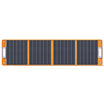
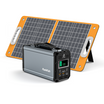
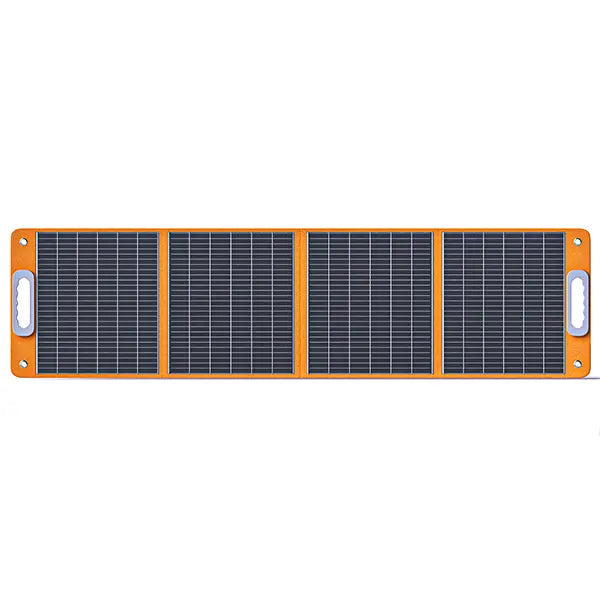
The FlashFish TSP60 Portable Solar Panel is a compact 60W option for smaller charging plans. The FlashFish TSP100 Portable Solar Panel is a 100W option for users who want more daytime recovery. Browse the FlashFish portable solar panel collection only after confirming the power station input limits and connector requirements.
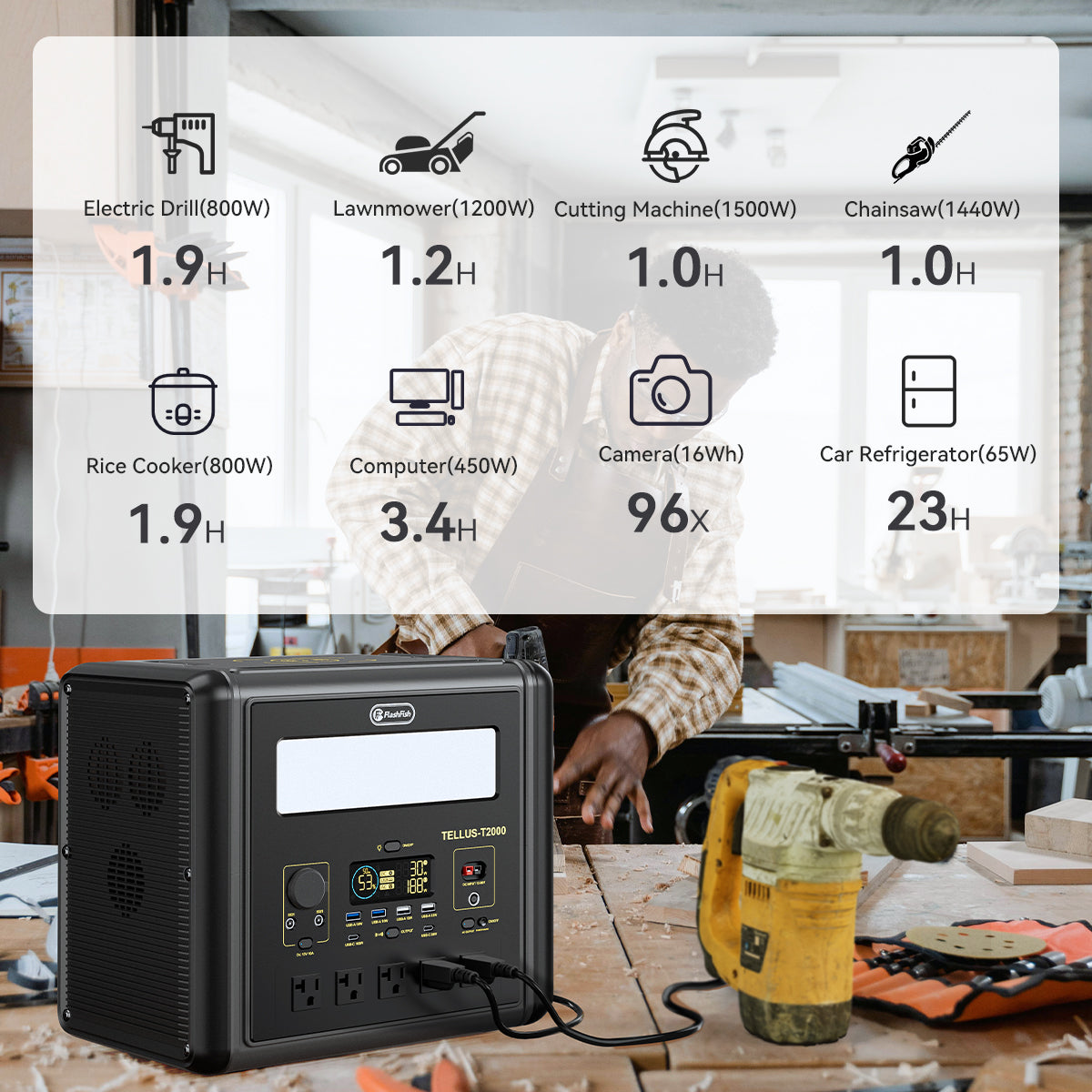
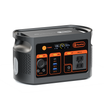
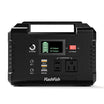
For higher-capacity planning, the FlashFish T1200S product page lists a 12-50V, 10A, 400W maximum DC input, while the FlashFish T2000 product page lists a 12-80V, 10A, 600W maximum DC input. Those limits matter more than simply buying the largest panel rating available.
Better solar charging checklist
- Verify voltage, current, watts, connector, and polarity before connecting.
- Place panels in direct sun and reposition them as the sun moves.
- Avoid partial shade across the panel surface.
- Keep panels ventilated and use them within the manual's conditions.
- Plan battery capacity first; treat solar as energy recovery, not guaranteed unlimited power.
FAQ
Can I use a 200W panel with a 100W solar input?
Only if the complete panel setup stays within the station's voltage and current limits, and the manufacturer permits it. The station will not normally accept more than its input ceiling.
Why is my 100W panel producing less than 100W?
Rated output uses standard test conditions. Shade, clouds, heat, sun angle, dirt, cables, and charge-controller behavior reduce real output.
Is more solar panel wattage always better?
No. Extra panel capacity is useful only when the electrical setup is allowed and the station can accept the input.
Human review checklist
- Verify TSP60, TSP100, T1200S, and T2000 U.S. product specifications and availability.
- Confirm no universal compatibility claim is implied.
- Check DOE source links and solar terminology.
- Preview the featured image, links, and tables on mobile.


Leave a comment
Situs ini dilindungi oleh hCaptcha dan berlaku Kebijakan Privasi serta Ketentuan Layanan hCaptcha.