

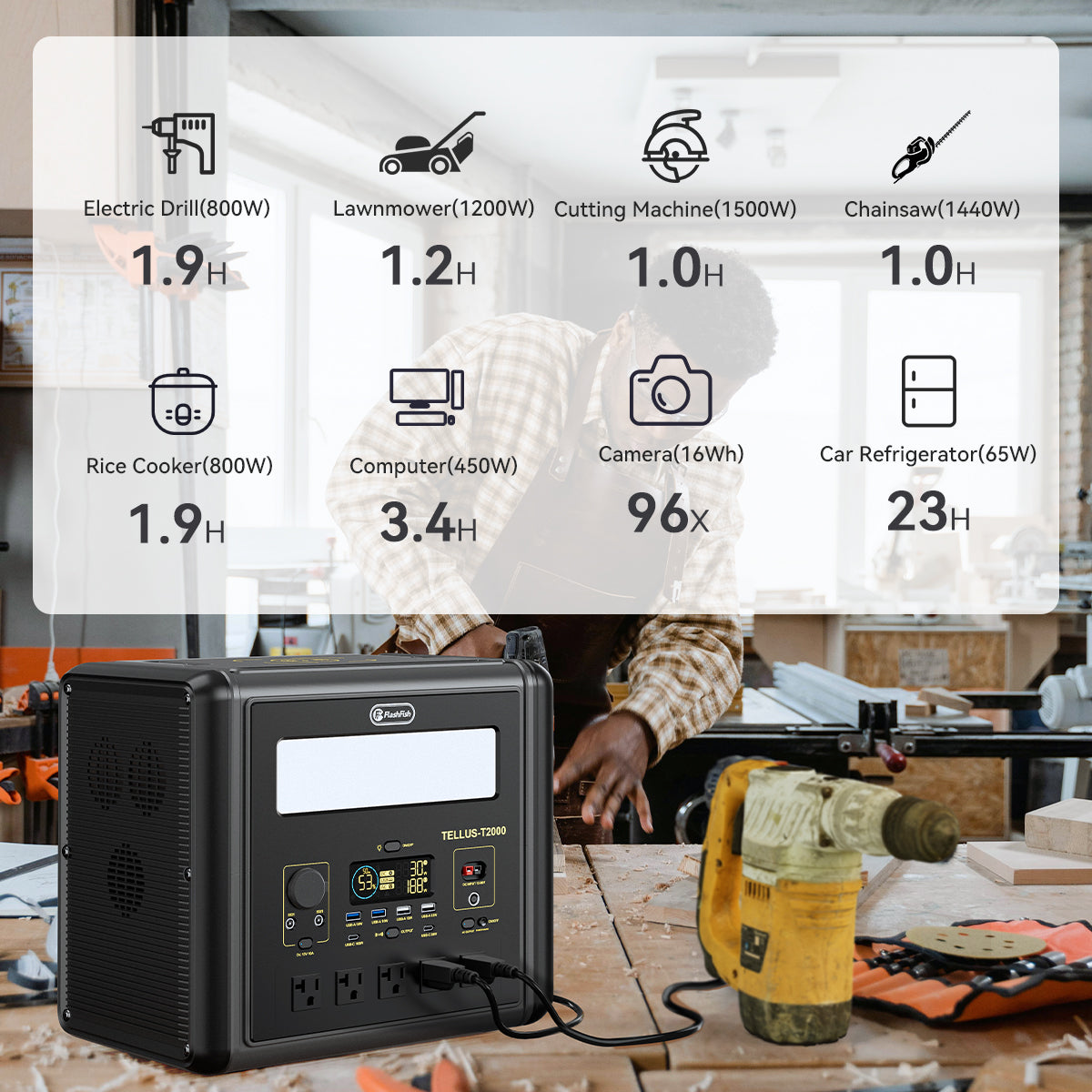
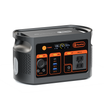
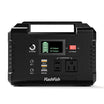

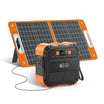
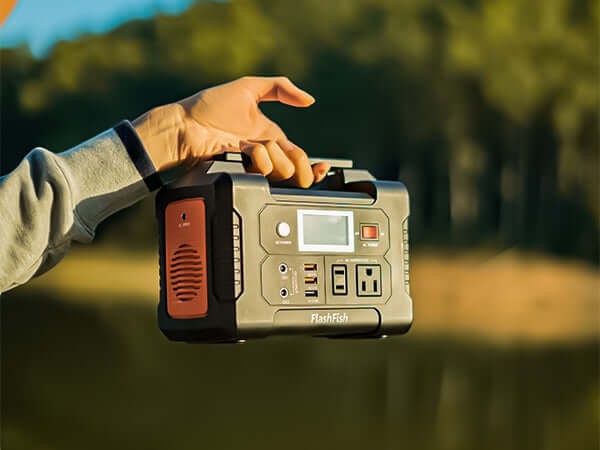
Short answer: the FlashFish E200 and T200 are close in stored energy and both list 200W continuous and 400W peak AC output, but they are not interchangeable. The E200 is lighter and uses modified-sine AC, while the T200 uses a LiFePO4 battery, pure-sine AC, and includes higher-power USB-C input/output. Choose from the exact devices, charging methods, waveform requirements, carry weight, and manual for the U.S. version.
Verified specification comparison
| Specification | FlashFish E200 | FlashFish T200 |
|---|---|---|
| Battery capacity | 151Wh | 153.6Wh |
| Battery record | Lithium-ion, 18650 cells | LiFePO4 |
| Continuous AC output | 200W | 200W |
| Peak AC output | 400W | 400W |
| AC waveform | Modified sine wave | Pure sine wave |
| USB-C | Not listed in the local E200 manual record | One 60W USB-C input/output and one 18W USB-C output |
| DC output | 12V, up to 120W | 12V, up to 120W |
| Maximum documented input | 40W through the DC/solar input | 60W through DC6530 or USB-C1 |
| Approximate net weight | 1.85 kg / 4.08 lb | 2.5 kg / 5.5 lb |
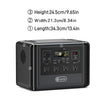
| Dimensions | 208 x 110 x 158 mm | 200 x 142 x 146 mm |
These values come from the local manual-derived product records. They are screening specifications, not a promise that either station will run a particular camping device. Always check the station label and current manual for the exact market version.
The capacity difference is small
The T200 lists 153.6Wh and the E200 151Wh, a difference of 2.6Wh in their nominal specifications. In real planning, conversion losses, temperature, battery condition, and the selected output path can matter more than that small nameplate difference. Do not choose between them using nominal watt-hours alone.
For a planning example, a device averaging 20W for three hours represents 60Wh before losses. That arithmetic helps build a load list, but it does not predict an exact runtime. Measure or verify the device demand and keep a reserve.
Waveform may decide the comparison
The E200 record specifies modified-sine AC; the T200 specifies pure-sine AC. Some equipment manufacturers require or recommend pure-sine input. If a charger or device manual is silent, contact its manufacturer rather than assuming compatibility. A plug fitting the outlet and a wattage below 200W are not, by themselves, enough evidence.
Where the device can charge directly from a documented DC or USB output, avoiding AC conversion may simplify the path. The T200's 60W USB-C port can be relevant to supported phones, tablets, and laptops, but only when their USB-C PD requirements match. The E200 record lists two QC 3.0 USB-A ports up to 18W each and one 5V/2.4A USB-A port.
Carry weight favors the E200
The E200's listed net weight is about 1.85 kg, compared with 2.5 kg for the T200. For a short walk from the car, the difference may be minor; for a dispersed campsite or a load already filled with water and safety equipment, it can be meaningful. Compare the entire packed system, including adapters and cables.
Charging options favor different workflows
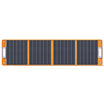
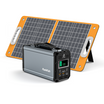
The E200 record lists an 11-24V DC input with 40W maximum input power. The T200 record lists 15-30V DC6530 input up to 60W and a 60W USB-C input path. Those ranges do not make every solar panel or charger compatible. Verify voltage, current, connector dimensions, polarity, and manual guidance before connecting an input source.
Which model fits a light camping list?
| Priority | Start by reviewing | Reason |
|---|---|---|
| Lower carry weight | E200 | Its listed net weight is lower |
| Pure-sine AC requirement | T200 | The local record explicitly lists pure-sine output |
| Up to 60W USB-C PD path | T200 | USB-C1 is documented for 60W input/output |
| Known USB-A charging kit | Either, after port matching | Both provide USB-A, but port ratings differ |
| Motor-driven or heat-producing load | Neither by assumption | Check startup demand, continuous draw, waveform, and manufacturer instructions |
Make the final decision from the label of every phone charger, light, camera, pump, fan, or other device. Add simultaneous continuous demand, identify startup surge, and leave headroom. Keep the station dry and ventilated and follow campground restrictions.
FAQ
Does the T200 run longer because it has more watt-hours?
Its nominal capacity is only 2.6Wh higher. That small difference does not support a universal runtime conclusion because loads and conversion conditions vary.
Can both models power any device below 200W?
No. Continuous wattage is one check. Startup surge, waveform, voltage, connector, manufacturer restrictions, and combined loads also matter.
Is the T200 always better because it uses LiFePO4?
No. Its chemistry and cycle-life record may matter for repeated use, while weight, ports, price, and the actual equipment list may point to a different decision.
Can I use the same solar panel with both?
Do not assume so. Their documented input ranges and connectors differ. Check the panel's operating voltage, connector and polarity against the exact station manual.
Next step: Compare FlashFish E200 specifications with your requirements.

发表评论
此站点受 hCaptcha 保护,并且 hCaptcha 隐私政策和服务条款适用。