

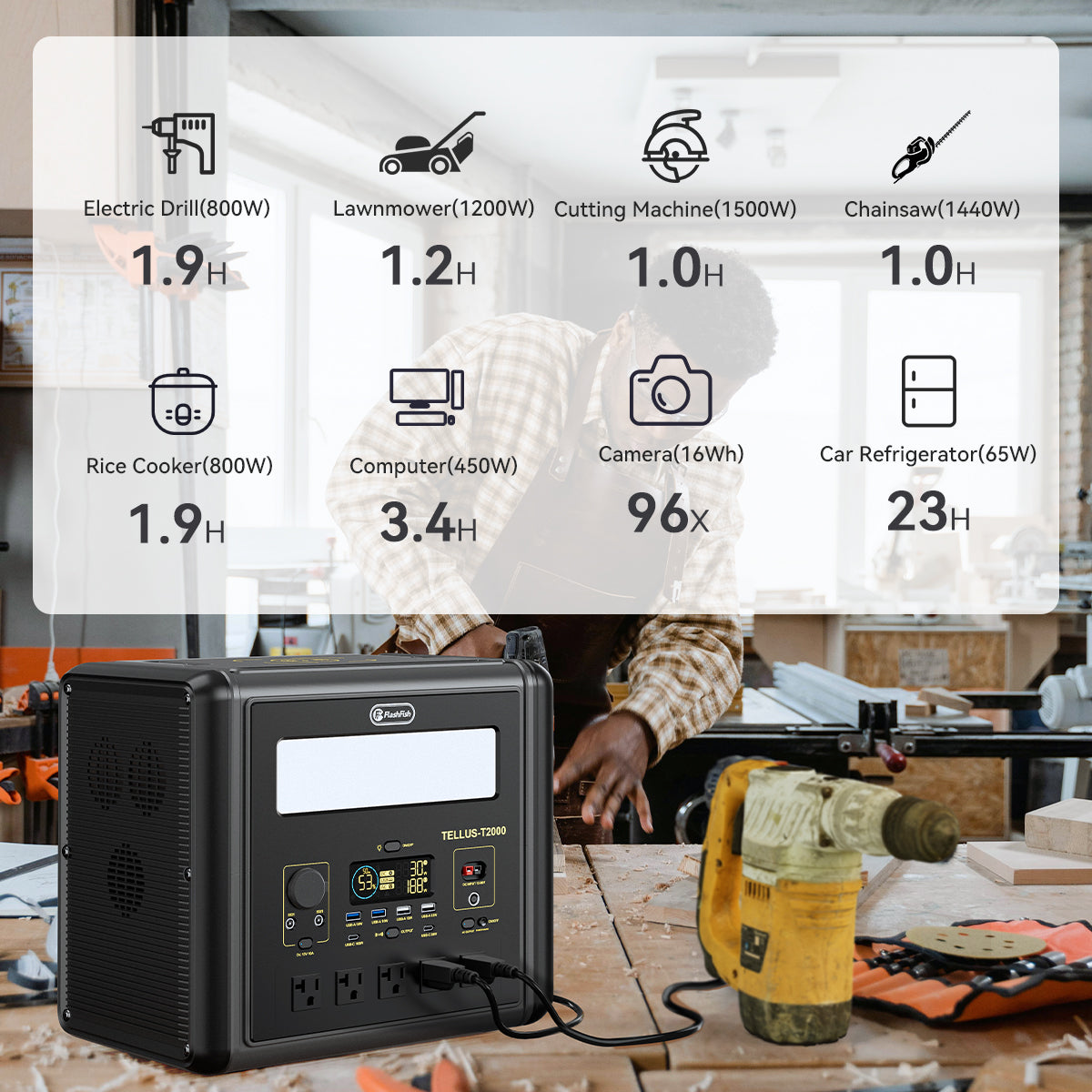
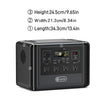
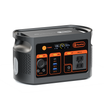
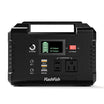

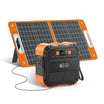
Quick answer: Choose the FlashFish T200 when lower carried weight and a 200 W continuous AC limit fit the device plan. Choose the T300PRO when the trip needs 300 W continuous AC, more stored energy, two AC outlets, up to 100 W USB-C, or up to 120 W solar/DC input. Neither model is a fit until every device, cable, and recharge path is verified.
T200 vs T300PRO specifications
| Field | T200 | T300PRO | Camping decision |
|---|---|---|---|
| Capacity | 153.6 Wh | 230 Wh | Stored-energy planning |
| Continuous AC | 200 W | 300 W | Supported steady AC load |
| Peak AC | 400 W | 600 W | Startup boundary, not continuous output |
| AC waveform | Pure sine wave | Pure sine wave | Still verify the device requirement |
| AC outlets | 1 | 2 | Outlet count; total output remains shared |
| Weight | 2.5 kg / 5.5 lb | 4.5 kg / 9.9 lb | Route and carry tradeoff |
| Dimensions | 200 x 142 x 146 mm | 256 x 169 x 169 mm | Packed-space planning |
| Highest USB-C output | 60 W | 100 W | Compatible-device charging |
| Second USB-C output | 18 W | 30 W | Compatible lower-power devices |
| Maximum solar/DC input | 60 W | 120 W | Recharge-path ceiling |
| Battery chemistry | LiFePO4 | LiFePO4 | Documented chemistry for both |
The main tradeoff is 2 kg of carried weight
The FlashFish T200 weighs 2.5 kg. The T300PRO weighs 4.5 kg, a difference of 2 kg. That difference is meaningful on a walk-in route, but product weight is not the whole carried load. Include cables, adapters, a panel, and every other item in the pack.
Car-adjacent camping may make the heavier model practical. For a long walk, the lighter T200 may be easier to justify when all loads remain within its documented limits. Do not describe either model as universally portable without considering the route.
Capacity and output answer different questions
The U.S. Energy Information Administration distinguishes watts, a measure of power at a moment, from watt-hours, a measure of energy over time. The T300PRO stores 230 Wh versus 153.6 Wh for the T200, a difference of 76.4 Wh. That supports a larger energy plan, but it does not establish exact runtime.
For AC loads, the T200 is limited to 200 W continuous and the T300PRO to 300 W continuous. Peak ratings of 400 W and 600 W are startup boundaries, not permission to operate continuously at those levels. Check the device's official running and startup requirements before selecting either model.
Two AC outlets do not double T300PRO output
The T300PRO has two AC outlets, while the T200 has one. The extra outlet can reduce the need for an external splitter when two compatible AC devices are planned, but both outlets share the station's 300 W continuous AC limit. Do not assign 300 W to each outlet.
If either planned device has an uncertain startup load, test it independently before testing the combination. The running-watts and surge-watts guide explains the distinction.
USB-C is a clear capability difference
The T200 has USB-C1 up to 60 W input/output and USB-C2 output up to 18 W. The T300PRO has USB-C1 up to 100 W input/output and USB-C2 output up to 30 W. A higher maximum can matter for a compatible laptop or other PD device, but the device and cable must support a matching profile.
Choose from the device's official charging requirements. A USB-C connector alone does not prove Power Delivery support, and a port maximum does not guarantee that the device will accept that rate.
DC ports differ as well
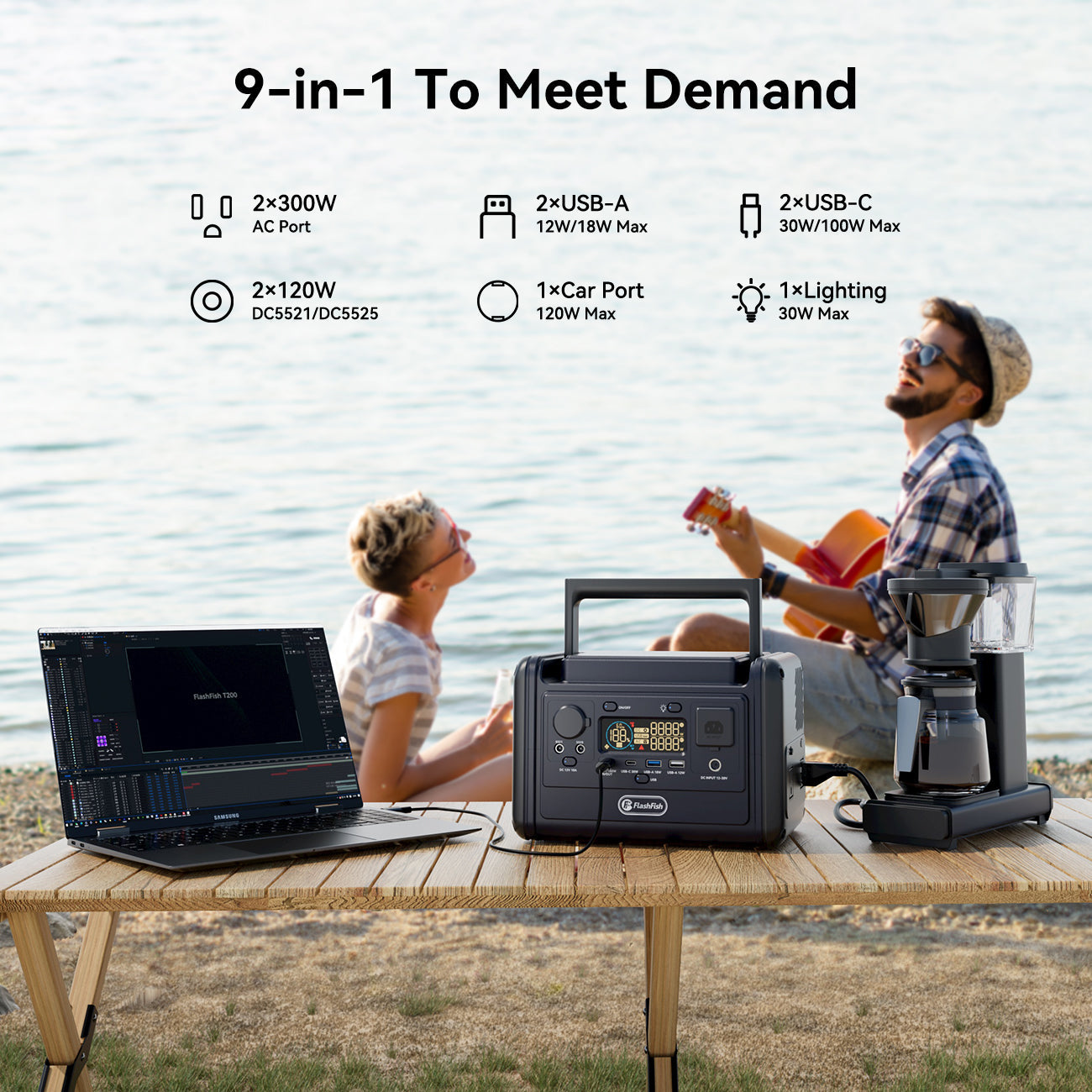
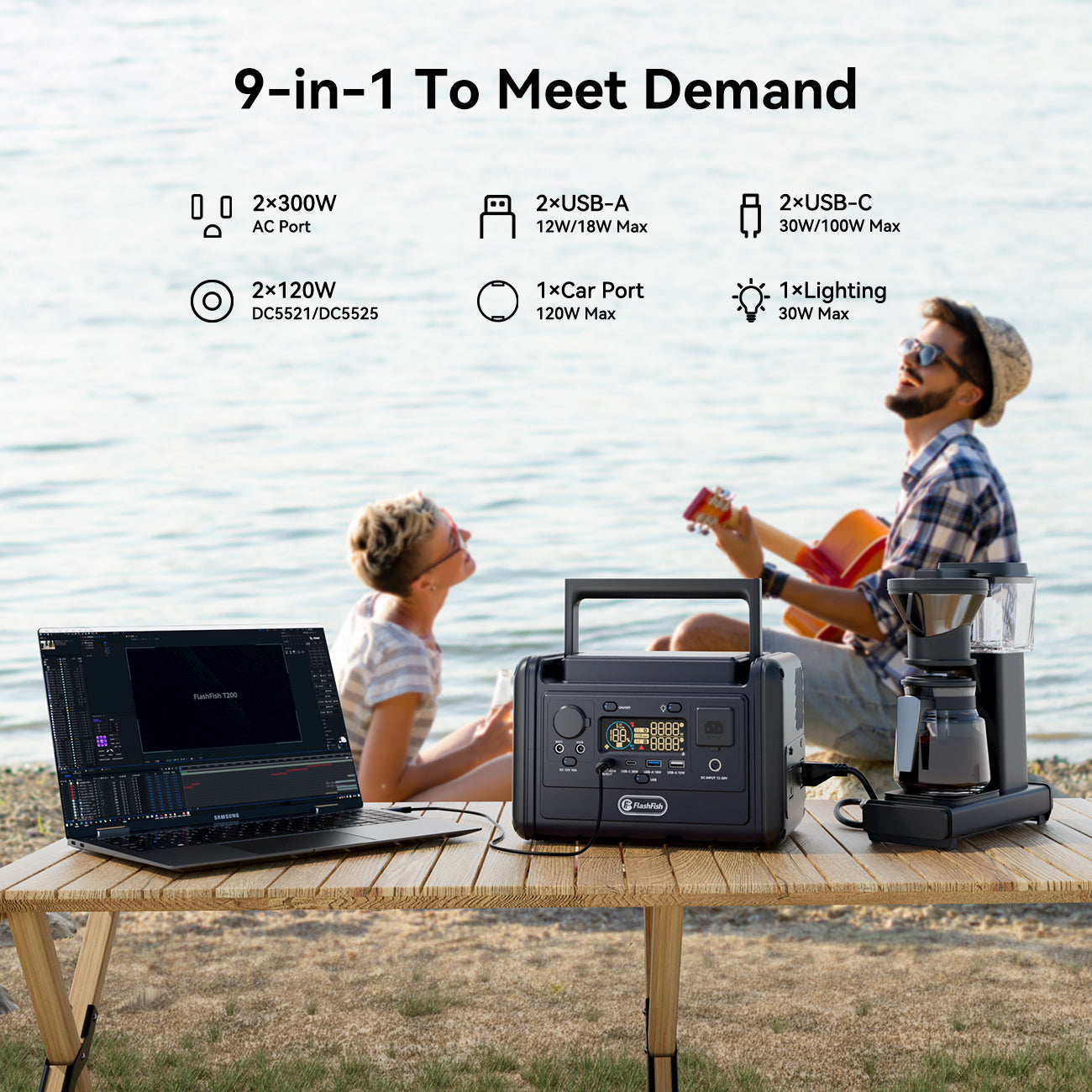
The T200 documents one DC5521 output at 12 V / 10 A, up to 120 W. The T300PRO documents a cigarette-lighter port, DC5521, and DC5525 outputs that share a 120 W maximum. More connector types can improve fit for compatible gear, but shared-output limits still apply.
Confirm voltage, current, connector size, and polarity from both manuals before connecting a DC device. Physical fit alone is not compatibility.
Solar and other recharge inputs
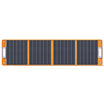
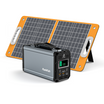
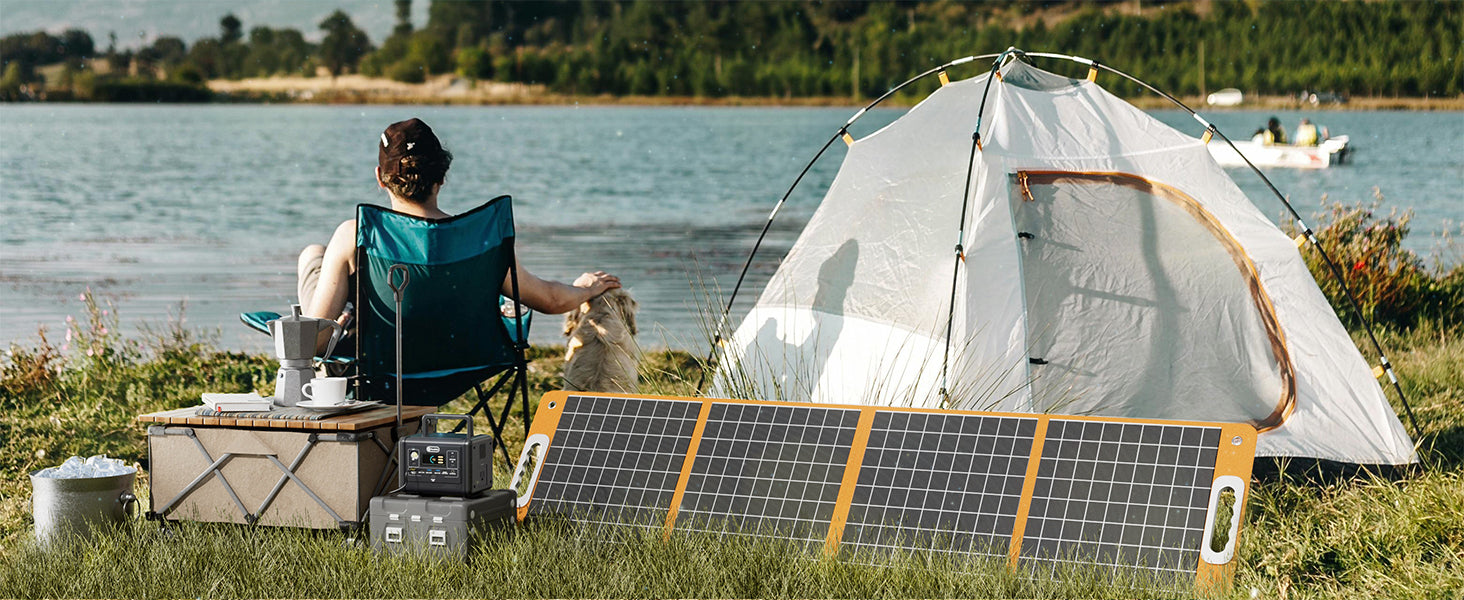
The T200 accepts up to 60 W through its documented solar/DC input. The T300PRO accepts up to 120 W through its solar/DC input. The T300PRO's higher ceiling may matter when a compatible panel and adequate sunlight are available, but it does not guarantee twice the field input or a fixed recharge time.
The U.S. Department of Energy solar resource overview explains why location, time, season, landscape, weather, and sun angle change available solar energy. Verify voltage range, current limit, connector, polarity, and cable requirements before choosing a panel.
Which model fits common camping plans?
Walk-in camping with light device charging
Consider the T200 when lower weight matters and the complete plan stays within 200 W continuous AC, 153.6 Wh, and the documented USB/DC ports. Test all planned combinations before departure.
Car camping with more ports or higher USB-C demand
Consider the T300PRO when the route can accommodate 4.5 kg and the plan benefits from 300 W continuous AC, two AC outlets, 230 Wh, 100 W USB-C, or additional DC connector options.
Trips that depend heavily on solar recharging
The T300PRO's 120 W input ceiling offers more headroom than the T200's 60 W ceiling, but actual field input remains conditional. Begin with enough stored energy for essential use.
When neither model fits
Choose neither model when a device exceeds the supported output, requires an unverified protocol or connector, needs more stored energy than the trip plan allows, or conflicts with environmental and operating instructions. Review the broader FlashFish portable power station collection only after the requirements are documented.
Frequently asked questions
Is the T200 or T300PRO easier to carry?
The T200 is lighter at 2.5 kg versus 4.5 kg for the T300PRO. Practical carry still depends on the route, cables, panels, and the rest of the gear.
Which model has higher USB-C output?
The T300PRO has USB-C1 up to 100 W, while the T200 has USB-C1 up to 60 W. Device and cable compatibility still determine actual charging.
Which model accepts more solar input?
The T300PRO documents up to 120 W solar/DC input, while the T200 documents up to 60 W, subject to voltage, current, connector, polarity, and field conditions.
Does the T300PRO have twice the runtime?
No. It has more documented capacity, but exact runtime depends on load, conversion losses, battery state, temperature, and output path.

发表评论
此站点受 hCaptcha 保护,并且 hCaptcha 隐私政策和服务条款适用。