

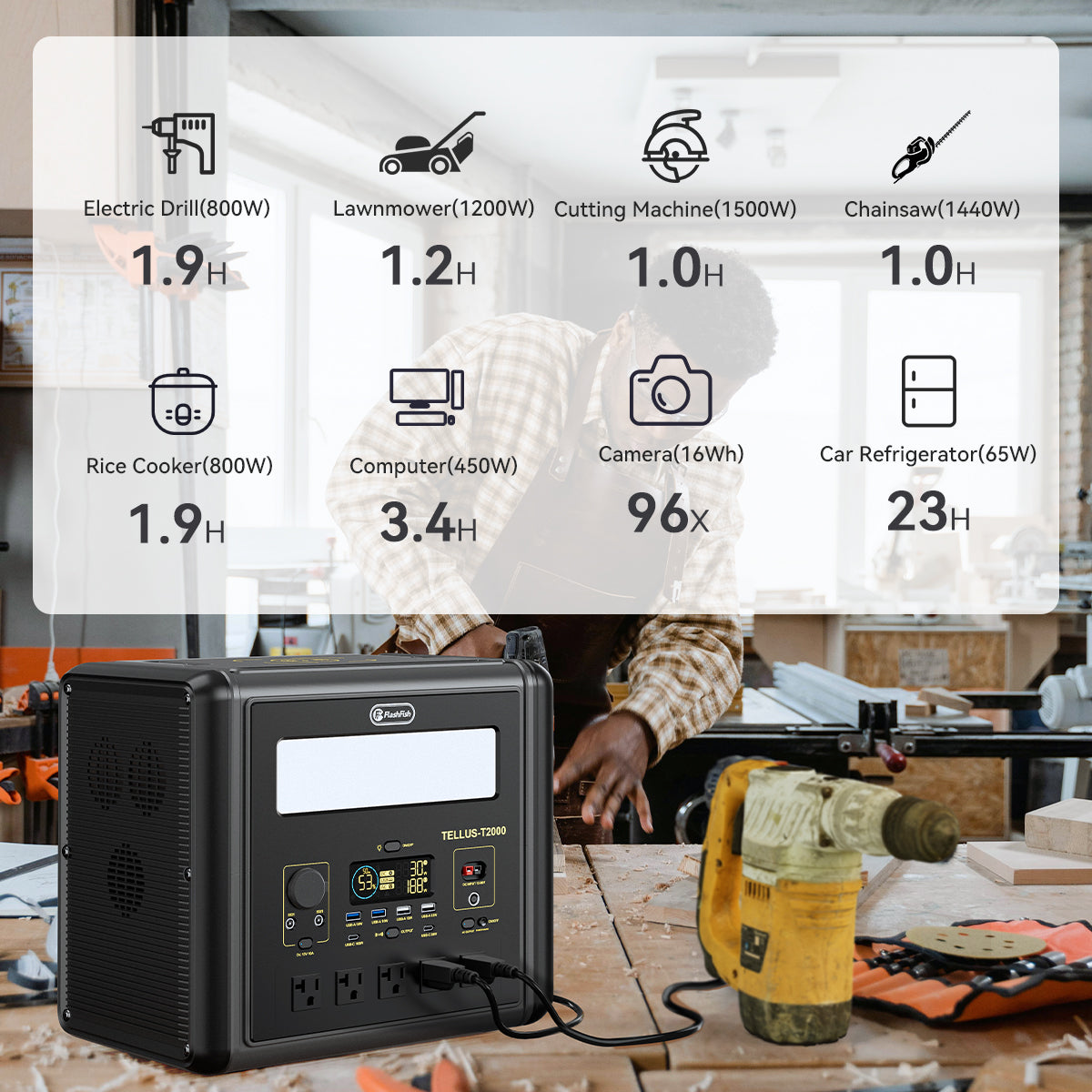
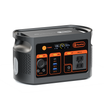
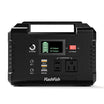

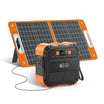
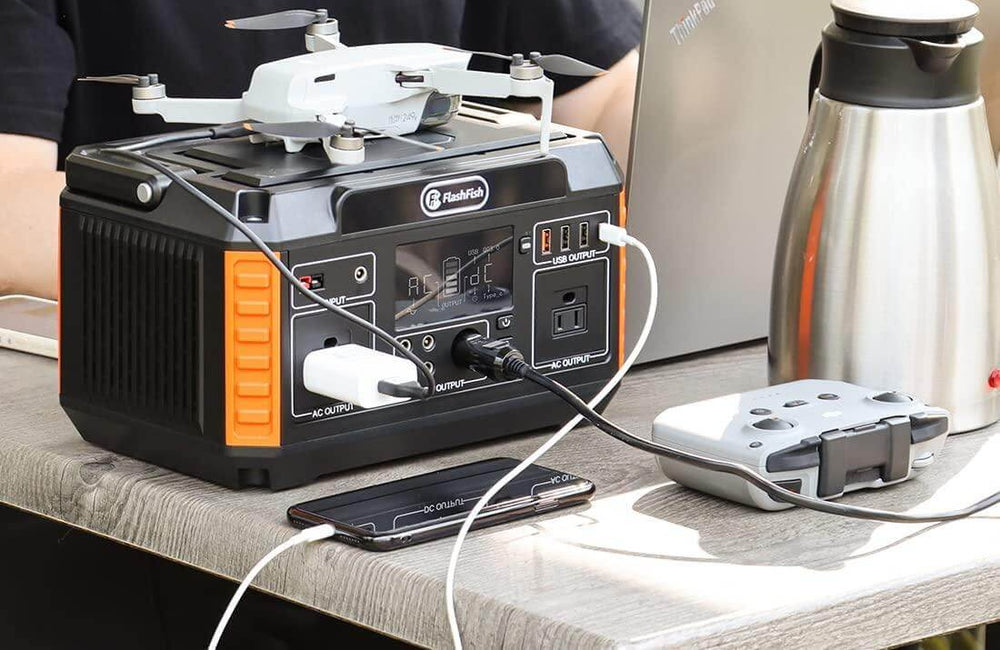
Short answer: budget an outdoor podcast kit in separate lines for recording gear, wind protection, monitoring, storage, cables, weather protection, permits, and optional portable power. On the FlashFish U.S. store checked September 16, 2026, the E200 station-only variant was listed at $99.99 and the E103 station-only variant at $129.99. Prices, bundles, taxes, shipping, and availability can change, so confirm the selected variant at checkout.
Portable power should not be the first item in the cart. A recorder that runs all day on its supported batteries may need no station, while a laptop-based edit or multi-device shoot can create a larger energy and connector problem. Price the workflow first, then decide whether a station replaces a real limitation.
Divide the budget into six practical categories
| Category | What belongs in it | Question before spending |
|---|---|---|
| Audio capture | Recorder, microphones, mounts, and supported media | Does the setup record every planned speaker with acceptable isolation? |
| Wind and handling control | Windscreens, shock mounts, stands, and clamps | Has the kit been tested outdoors at the intended location? |
| Monitoring | Closed-back headphones and required adapters | Can the operator hear clipping, wind, rubbing, and connection faults? |
| Power | Device batteries, chargers, power bank, or station | What do the exact labels and manuals require? |
| Protection | Cases, dry storage, cable ties, and ground cover | Can the equipment remain dry, ventilated, and secure? |
| Location | Permit, reservation, parking, and crew access | What rules and costs apply to recording and electrical equipment? |
Choose the simplest verified power path
List the recorder, phone, laptop, interface, and camera separately. Record whether each item runs continuously or only needs recharging. A compatible USB power bank may be the lower-cost solution for one documented USB device. A portable station becomes more relevant when the kit needs an original AC adapter, multiple output types, or a larger combined energy budget.
Do not treat USB-C as a promise of compatibility. The source, cable, and device must support the required voltage and current profile. For AC equipment, check the adapter label, station continuous output, output waveform guidance, and simultaneous load.
Two current FlashFish station-only price points
The FlashFish U.S. Shopify data checked September 16, 2026, showed these station-only variants as available for sale:
| Variant | Observed price | Verified product-record context |
|---|---|---|
| FlashFish E200 | $99.99 | 151Wh capacity and 200W continuous modified-sine AC output |
| FlashFish E103 | $129.99 | 179.2Wh capacity, 300W continuous pure-sine AC output, and USB-C output up to 60W |
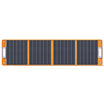
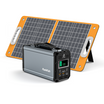
These figures are dated catalog observations, not permanent sale claims. The E200 page also offered a higher-priced panel bundle, and the E103 page offered its own bundle. Compare the selected variant name and included items rather than assuming the lowest page price represents the entire kit.
Do not buy capacity before calculating demand
Multiply each device's verified watts by expected operating hours to form a watt-hour estimate. Add the devices, account for conversion losses and operating conditions, and keep a reserve. Calculate simultaneous watts separately. A station can have enough energy but lack the correct port, protocol, waveform, or continuous output.
For illustration, a 12W recorder system used for three hours represents 36Wh, while a 45W laptop used for two hours represents 90Wh. Together they form a 126Wh arithmetic estimate before losses. These are teaching numbers, not assumed specifications or runtime promises for any real recording kit.
Costs that frequently get missed
- Original or manufacturer-approved adapters and replacement cables
- High-capacity memory cards and a second verified recording path
- Wind protection appropriate to each microphone
- Dry cases or covers that do not block station ventilation
- Location permits, parking, insurance, or reservation fees
- Travel time and a weather-related reschedule
Use a staged buying order
- Prove the audio chain indoors with the exact recorder and microphones.
- Test wind and handling control outdoors.
- Measure the real session length and charging needs.
- Add only the power source that matches the documented gap.
- Rehearse the full kit with the actual cables and adapters.
FAQ
Is a portable power station required for outdoor podcasting?
No. A recorder and phone may be covered by their supported batteries or a compatible power bank. A station is useful only when the verified load, connectors, and session plan justify it.
Should a beginner choose E200 or E103?
Compare the exact devices first. E103 has a larger documented capacity, higher continuous AC output, pure-sine AC, and documented USB-C output. E200 is a lower-priced compact station, but its modified-sine AC output requires attention to equipment guidance.
Can the station power a recorder during the session?
Only when the recorder manufacturer permits that power path and the cable, voltage, current, and station output all match. Test for noise and connection stability before recording important material.
What provides the best protection against lost audio?
A rehearsed recording workflow with monitored levels, adequate media, supported power, and a second recording path where appropriate. More battery capacity cannot repair a poor capture or missing backup.
Next step: Check the current FlashFish E200 product details and price.

发表评论
此站点受 hCaptcha 保护,并且 hCaptcha 隐私政策和服务条款适用。