


Small Solar Generator for RV Lights and Phones: Size Guide
Short answer: For RV lights, phones, camera batteries, and a small fan, a small solar generator should be sized by watt-hours first, then by AC output and solar input. Start with the actual device labels, add the hours you expect to use each device, and choose a station with enough reserve rather than buying only by panel wattage.
This guide focuses on light-duty RV and campground loads. It is not a whole-RV electrical-system guide, and it does not claim a fixed runtime for every RV because lights, chargers, fans, inverter losses, and weather vary.
The Simple Sizing Formula
The U.S. Energy Information Administration explains that watts measure power at a moment, while watt-hours measure electricity used over time. For RV planning, multiply device watts by hours of use. A 10W light used for five hours is about 50Wh before losses. Do that for each device, then add reserve.
| Load type | Planning question | Why it matters |
|---|---|---|
| LED lights | How many lights and how many hours? | Several small lights can still add up over a weekend. |
| Phones and cameras | How many people need charging? | USB loads are usually modest but frequent. |
| Small fan | What is the fan wattage? | A fan running overnight can use more energy than phones. |
| Laptop or monitor | What does the charger label say? | AC adapters can push a compact station harder than expected. |
FlashFish Options To Compare
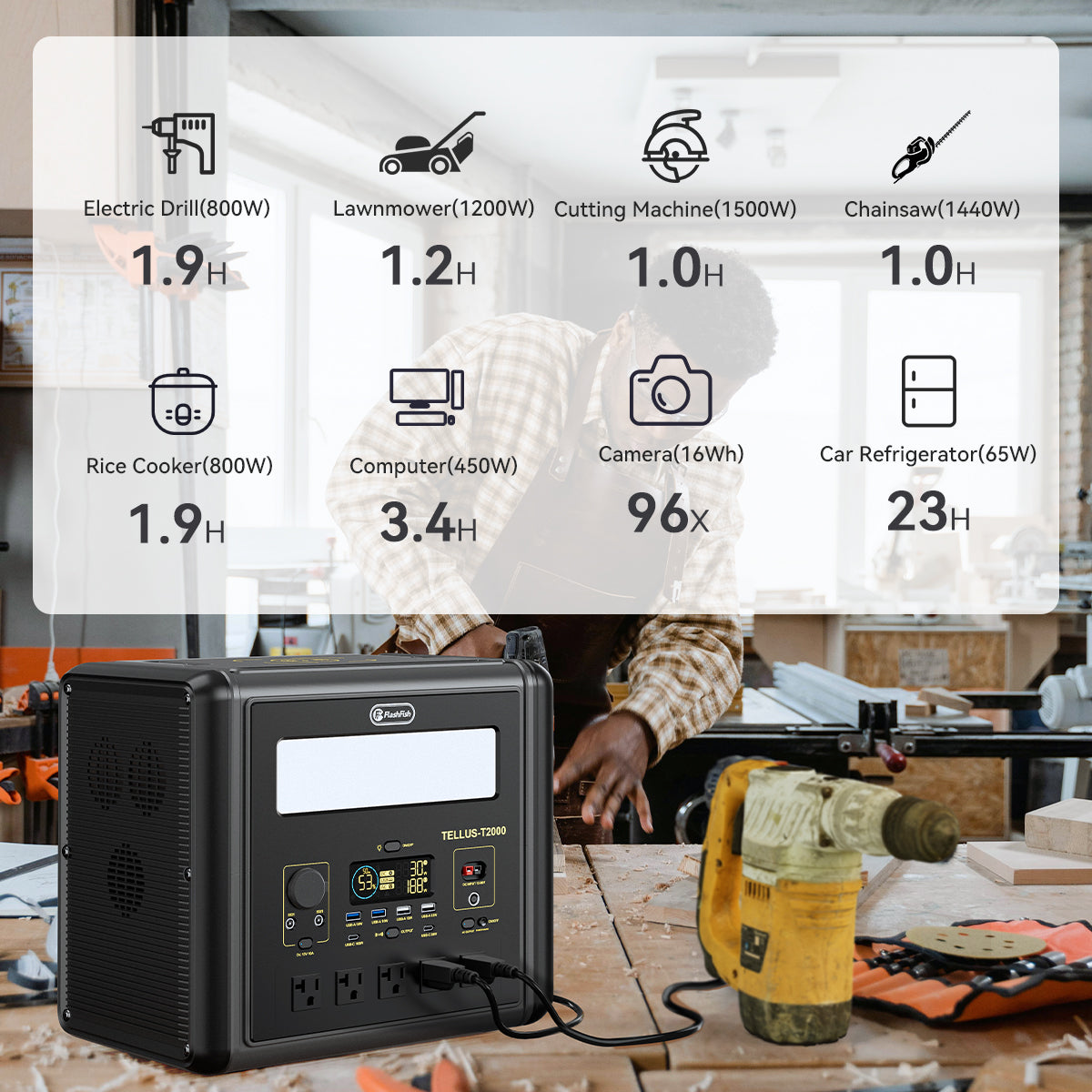
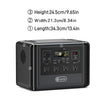
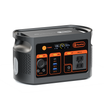
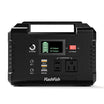
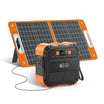
For an entry RV-light and phone setup, the FlashFish T300PRO is an active U.S. product with 230Wh capacity and 300W output in the bundled product database. Its U.S. product page also offers a T300PRO + TSP100 option. For more battery room, the FlashFish P63 product page lists 520Wh and 500W output, while the FlashFish T1200S is listed in the product database as a 768Wh LiFePO4 station with 1200W output.
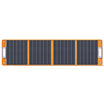
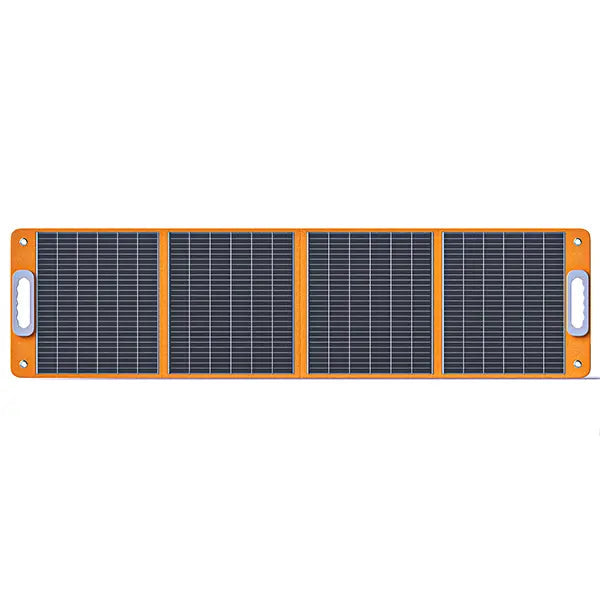
For solar pairing, compare the FlashFish TSP60 and FlashFish TSP100. The bundled product database lists them as foldable monocrystalline panels with 18V DC output at 60W and 100W respectively.
Product-Fit Table
| FlashFish option | Best fit | Important limit |
|---|---|---|
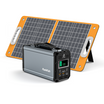
| E200 + TSP60 kit | Phones, lights, cameras, compact weekend setup | Small 151Wh station; keep loads light |
| T300PRO + TSP100 | RV lights, phones, small fan, LFP preference | Still a compact station; check device wattage |
| P63 + TSP100 | More reserve for lights, phones, fan, and laptop charging | Not a whole-RV backup system |
| T1200S + TSP100 | More serious campsite or outage reserve | Higher price and weight than small-generator setups |
Solar Recharging Expectations
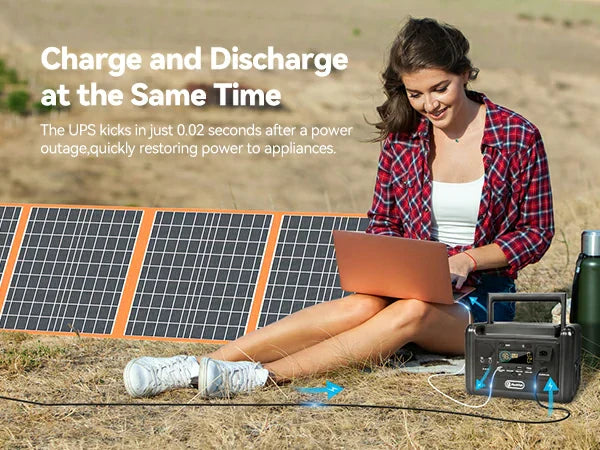
Solar panel wattage is not the same as guaranteed charging speed. The U.S. Department of Energy notes that clouds and atmospheric conditions can reduce direct solar radiation, and solar output depends on how much sun reaches the panel. For RV camping, shade from trees, panel angle, season, latitude, and station input limits all matter.
When A Small Solar Generator Fits
- You want quiet power for low-watt RV and campground essentials.
- You can place a portable panel in open sun and move it as needed.
- You have checked the watt labels on the devices you plan to run.
- You understand that solar is a top-off method, not a guaranteed full recharge every day.
When To Size Up
- You want to run a microwave, air conditioner, heater, coffee maker, or large RV appliance.
- You need backup power through multiple cloudy days.
- You want to support several people, laptops, fans, and lights at the same time.
- You need an integrated RV electrical-system solution rather than portable charging.
FAQ
Is a small solar generator enough for RV lights and phones?
Often yes, if the lights are LED, the phone load is modest, and you choose enough watt-hours for the number of evenings you need.
Should I choose a 60W or 100W solar panel?
A 100W panel can help more when the station can accept the input and sun is available. A 60W panel is easier to carry but generally charges more slowly.
Can I rely on solar alone for an RV weekend?
Do not assume that. Use solar as a recharge source, but plan battery capacity for your core loads because shade and weather can reduce output.
Sources
FlashFish specs and product availability were checked from live FlashFish U.S. product pages, Shopify discovery, and the bundled FlashFish product database on 2026-06-14. Electricity sizing uses the EIA explanation of watts and watt-hours. Solar output caveats use the U.S. Department of Energy solar radiation basics.


发表评论
此站点受 hCaptcha 保护,并且 hCaptcha 隐私政策和服务条款适用。