



Quick answer: For optional camping tasks, keep a low and high measured watt-hour value for each repeatable task, then multiply each end by the corresponding low and high task count. Add those task ranges and compare the total with an energy budget established for the same measurement boundary. If the budget falls inside the demand range, the fit remains unresolved. The highest recorded trial is a planning bound for those conditions, not a guarantee that future demand cannot exceed it.
This method is for campers who already have repeat logs for non-critical activities such as reading, photography, and entertainment. It turns variation into a decision about what to pack or postpone. It does not establish power for medical equipment, emergency communication, or other essential needs.
Start by making the measurements comparable
A task needs a clear beginning and end: charging one camera battery from a recorded starting level to a recorded ending level, for instance. A label saying “camera charge” is incomplete if one trial started nearly full and another nearly empty. Keep the device, charger, cable, port, settings, starting condition, and endpoint alongside every result.
Also record where energy was measured. A meter between the station and a charger measures a different boundary from a meter at the device. Neither should silently become battery energy removed from the station. Keep results from different boundaries in separate groups unless you have evidence that reconciles them.
Record the meter model and displayed resolution. A reading to one decimal place does not establish accuracy to one decimal place. If accuracy or capture behavior is unknown, label that uncertainty; extra digits in the spreadsheet will not resolve it.
Build the range one task at a time
For nonnegative energy values and task counts, use this arithmetic:
- Low task allowance = low observed Wh per task × low planned task count.
- High task allowance = high observed Wh per task × high planned task count.
- Total demand range = sum of low allowances through sum of high allowances.
The following worksheet is entirely hypothetical. These are invented planning inputs, not FlashFish tests or measured device results. Each row assumes comparable trials measured at the station output feeding the task.
| Task | Conditions held constant | Observed Wh per task | Count range | Demand range |
|---|---|---|---|---|
| Phone top-up | Same starting/ending levels, cable, and port | 8–12 Wh | 2–3 | 16–36 Wh |
| Reading session | Same duration and brightness | 4–6 Wh | 2–4 | 8–24 Wh |
| Camera battery charge | Same battery, charger, and endpoints | 10–15 Wh | 1–2 | 10–30 Wh |
| Total | Conditional envelope across the listed tasks | Not applicable | As above | 34–90 Wh |
Adding upper values gives an envelope that allows all listed highs to occur together. That combination may be broader than any single trip you observed. It is still transparent. Do not narrow it by assuming the tasks vary independently: longer campsite evenings could increase both reading sessions and phone use.
Three examples of decisions the range can support
Example 1: The full upper case fits the chosen allowance
Suppose the camper has separately established a 100 Wh allowance available for these optional tasks, after other commitments, at the same output boundary. The 34–90 Wh worksheet leaves 10 Wh above its upper case. The plan fits the stated assumptions. It does not establish the station's total delivered capacity or promise the same result under different conditions.
Example 2: The allowance cuts through the demand range
With a hypothetical 75 Wh allowance, the low case fits and the 90 Wh high case does not. Calling the plan “about 62 Wh” by averaging the endpoints hides the unresolved decision. Identify a controllable assumption instead. Reducing the maximum camera charges from two to one lowers that row's high allowance from 30 Wh to 15 Wh, bringing the total high case to 75 Wh. That leaves no room within this allowance for unlisted tasks or additional uncertainty.
Example 3: A changed task invalidates the old range
Suppose the phone logs covered one specific charge window, but a traveler now wants a full recharge from a lower starting level. The old 8–12 Wh range does not describe that task. Mark the new row unresolved and obtain comparable evidence for the new endpoint. Multiplying the old high by an arbitrary percentage would create precision without a supporting observation.
Resolve the assumption that changes the decision
When the upper case is too large, calculate the effect of one change at a time. Reducing a maximum count by one removes that row's high Wh value from the total high case. This shows which optional task limit has the largest effect without pretending to know the probability of each outcome.
Keep a separate line for energy outside the task measurements, including any relevant unmeasured station-on time. Do not add a universal efficiency factor or silently count losses twice. If demand is measured downstream while the budget refers to internal battery energy, the comparison is unfinished until the boundaries are reconciled.
How FlashFish T200 and T300Pro fit this worksheet
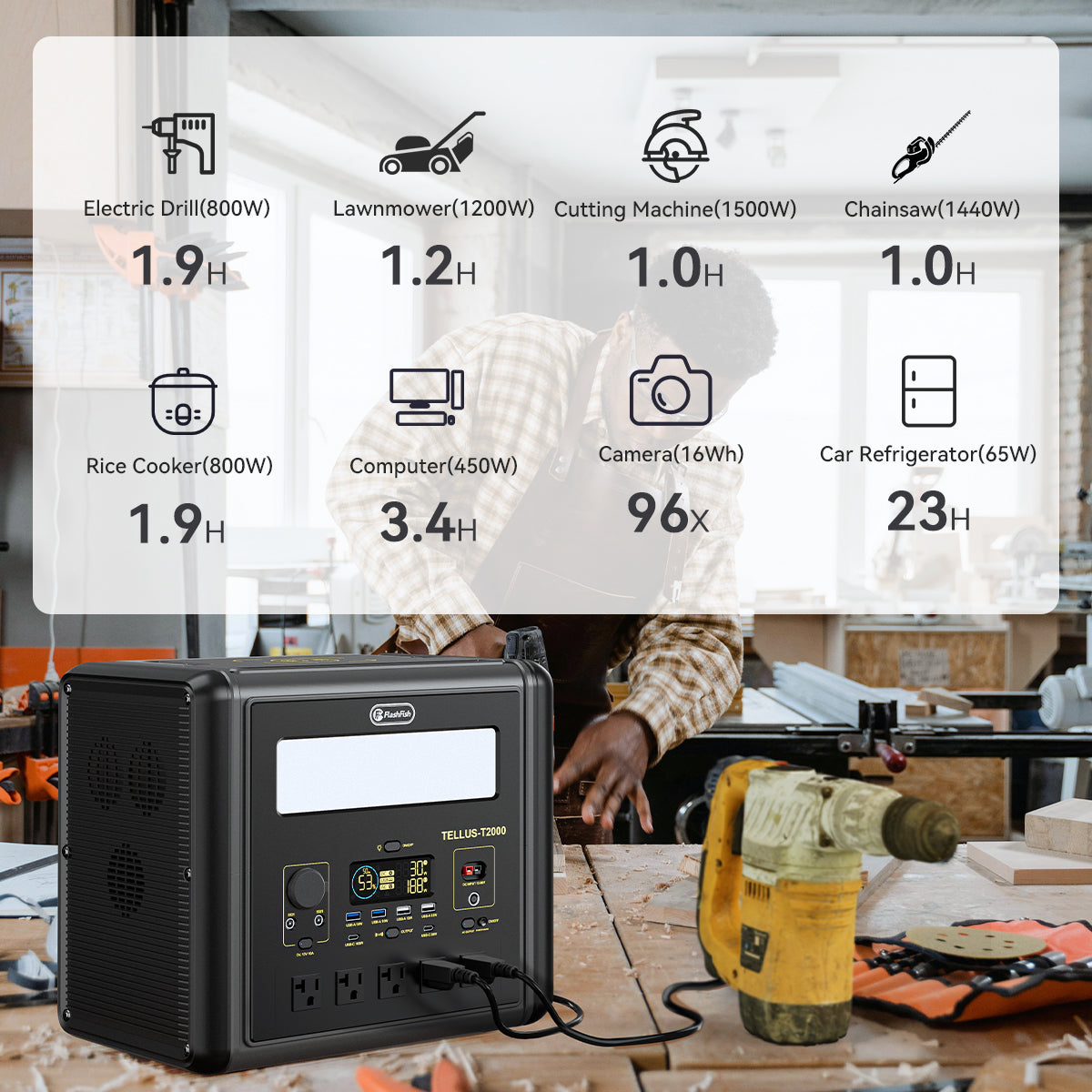
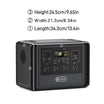
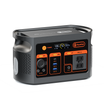
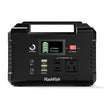
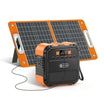
FlashFish T200, also identified as TELLUS-T200, has 153.6 Wh nominal battery capacity and 200 W continuous pure sine wave AC output. T300Pro, also identified as T300PRO, has 230 Wh nominal capacity and 300 W continuous pure sine wave AC output. Those figures describe capacity and output ratings; neither supplies the tested output-energy allowance used in these examples.
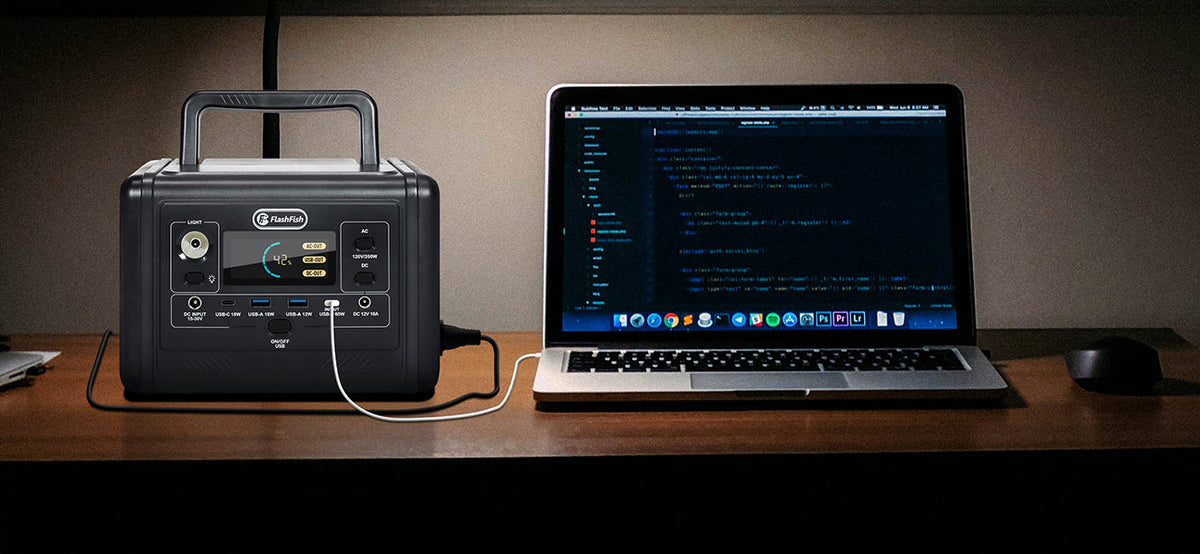
Use these models as candidates to compare after defining the task list. Check the exact U.S. model, required ports, charging protocols, and applicable output limits against your devices. A larger nominal Wh figure alone does not settle device compatibility, simultaneous loads, or the energy available under your conditions. No real device logs or station budget were supplied for this article.
Frequently asked questions
Is the observed range a confidence interval?
No. It summarizes the trials and counts you selected. It assigns no probability to future demand and does not prove that future values will stay inside the endpoints. Keep the conditions and missing evidence visible beside the range.
Can I use the station's nominal Wh as my allowance?
That would leave the measurement boundary unresolved. Use an allowance supported for the output path and conditions you are comparing, with other commitments accounted for. Nominal battery capacity does not provide that result by itself.
What if one unusually high trial looks wrong?
Check its log and meter record before excluding it. A different starting level may justify a separate task group. If no cause is established, preserve the reading and show how including it changes the decision rather than removing it for convenience.
Turn the worksheet into a shortlist
Write down your demand range, maximum optional counts, unresolved measurement terms, and required ports. Then compare the exact T200 and T300Pro specifications with that list. If the decision still depends on an unknown budget or device requirement, resolve that item before choosing a station or committing to the optional tasks.
Next step: Compare FlashFish T200 specifications with your equipment list.

发表评论
此站点受 hCaptcha 保护,并且 hCaptcha 隐私政策和服务条款适用。