


比较
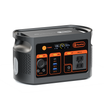
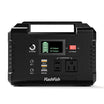
Quick answer: choose by continuous output first, then battery capacity. E200 and T200 cover compact needs; T300PRO adds 300W pure-sine output and EPS; T1200S suits higher-load portable use; T2000 provides the highest output and capacity in this comparison.
Specifications last verified July 21, 2026. Prices and inventory can change; use the linked product page for current availability.
Quick model recommendations
- E200: the lightest option here for basic charging needs. It uses modified-sine AC, so confirm compatibility for sensitive or motor-driven devices.
- T200: compact LiFePO4 model with 200W pure-sine AC and 60W USB-C.
- T300PRO: 300W LiFePO4 model with 100W USB-C and an EPS emergency-backup function.
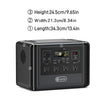
- T1200S: 1200W / 768Wh LiFePO4 model for higher-load portable, RV, and short backup use.
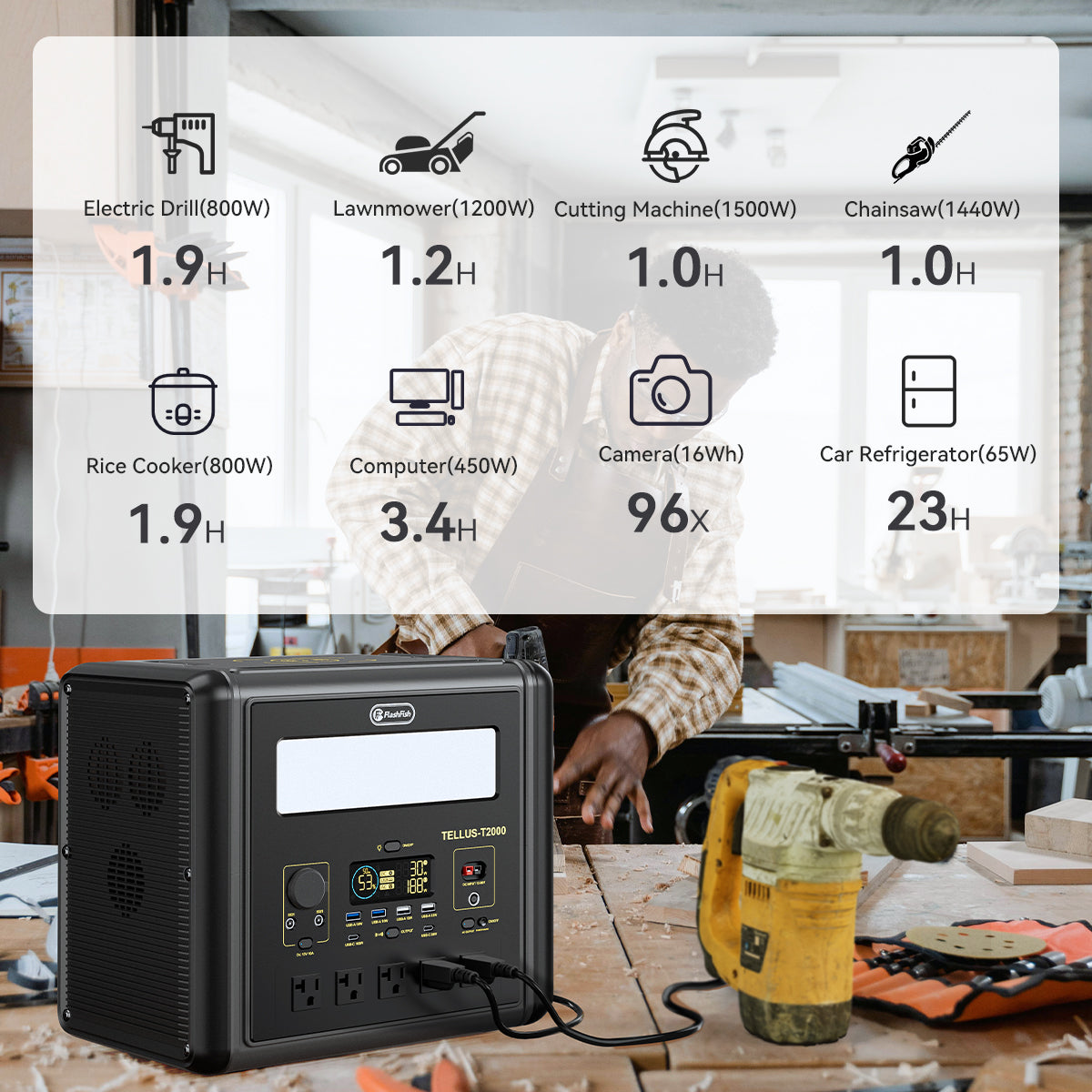
- T2000: 2000W / 1536Wh LiFePO4 model for the highest power and longest runtime in this group.
FlashFish portable power station comparison
On mobile: swipe the table left or right to view every model.
| Specification | E200 | T200 | T300PRO | T1200S | T2000 |
|---|---|---|---|---|---|
| Battery capacity | 151Wh | 153.6Wh | 230Wh | 768Wh | 1536Wh |
| Continuous / peak AC output | 200W / 400W | 200W / 400W | 300W / 600W | 1200W / 2400W | 2000W / 4000W |
| Battery chemistry | Lithium-ion | LiFePO4 | LiFePO4 | LiFePO4 | LiFePO4 |
| AC waveform | Modified sine wave | Pure sine wave | Pure sine wave | Pure sine wave | Pure sine wave |
| Listed cycle life | 800+ | 3,500+ | 3,500+ | 3,500+ | 3,500+ |
| Maximum solar / DC input | 40W | 60W | 120W | 400W | 600W |
| Maximum USB-C output | Not listed | 60W | 100W | 100W | 100W |
| Weight | 1.85kg | 2.5kg | 4.5kg | 12.45kg | 19.2kg |
| Dimensions | 208 × 110 × 158mm | 200 × 142 × 146mm | 256 × 169 × 169mm | 343 × 212 × 245mm | 344 × 223 × 300mm |
| Warranty | 12 months | 12 months | 12 months | 12 months | 12 months |
Cycle-life figures are the minimum values listed in the available product source material. Actual capacity, runtime, charging speed, and cycle life vary with load, temperature, battery age, charging conditions, and conversion losses.
How to choose the right model
1. Check continuous watts
Add the running wattage of devices that may operate at the same time and keep the total below the power station's continuous AC rating. Motors, compressors, pumps, and other inductive loads may need a higher startup surge.
2. Compare watt-hours for runtime
Wh measures stored energy. A planning estimate is usable hours ≈ battery Wh × 0.8 ÷ device watts. The 0.8 factor is only a planning allowance for conversion loss, not a guaranteed runtime.
3. Match waveform and ports
Choose pure-sine AC for broader device compatibility. Also check the required outlet type, voltage, USB-C wattage, and solar-input voltage range on the product page or manual before ordering.
4. Balance portability and capacity
Higher Wh and wattage generally increase size and weight. Choose the smallest model that safely covers the devices and runtime you actually need.
Still deciding? Email info@flashfishtech.com with each device's running and startup watts for pre-sales compatibility help.
Buying guide
Portable Power Station Comparison FAQ
Use these answers to compare power, capacity, battery type, and charging compatibility.
What is the difference between watts and watt-hours?
Watts (W) measure how much power a device needs at one time. Watt-hours (Wh) measure stored energy and help estimate runtime. Check both before choosing a power station.
Which compared FlashFish models use LiFePO4 batteries?
T200, T300PRO, T1200S, and T2000 use LiFePO4 batteries. E200 uses a lithium-ion battery.
Can I use a device above the continuous AC rating?
No. The combined running load should remain below the model's continuous AC rating. Also check startup surge for motors, compressors, pumps, and similar loads.
How can I estimate device runtime?
A planning estimate is battery Wh × 0.8 ÷ device watts. Actual runtime varies with load, temperature, battery condition, and conversion loss, so the result is not guaranteed.
Can all five models charge from a solar panel?
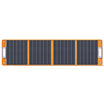
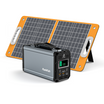
Yes, using a compatible panel and connector within the model's supported input range. The maximum listed solar or DC inputs in this comparison range from 40W on E200 to 600W on T2000. Check the product manual before connecting a panel.