Energy Density Revolution: Why Lithium-Ion Batteries Power Every Modern Device — And Why LiFePO4 Is the Apex
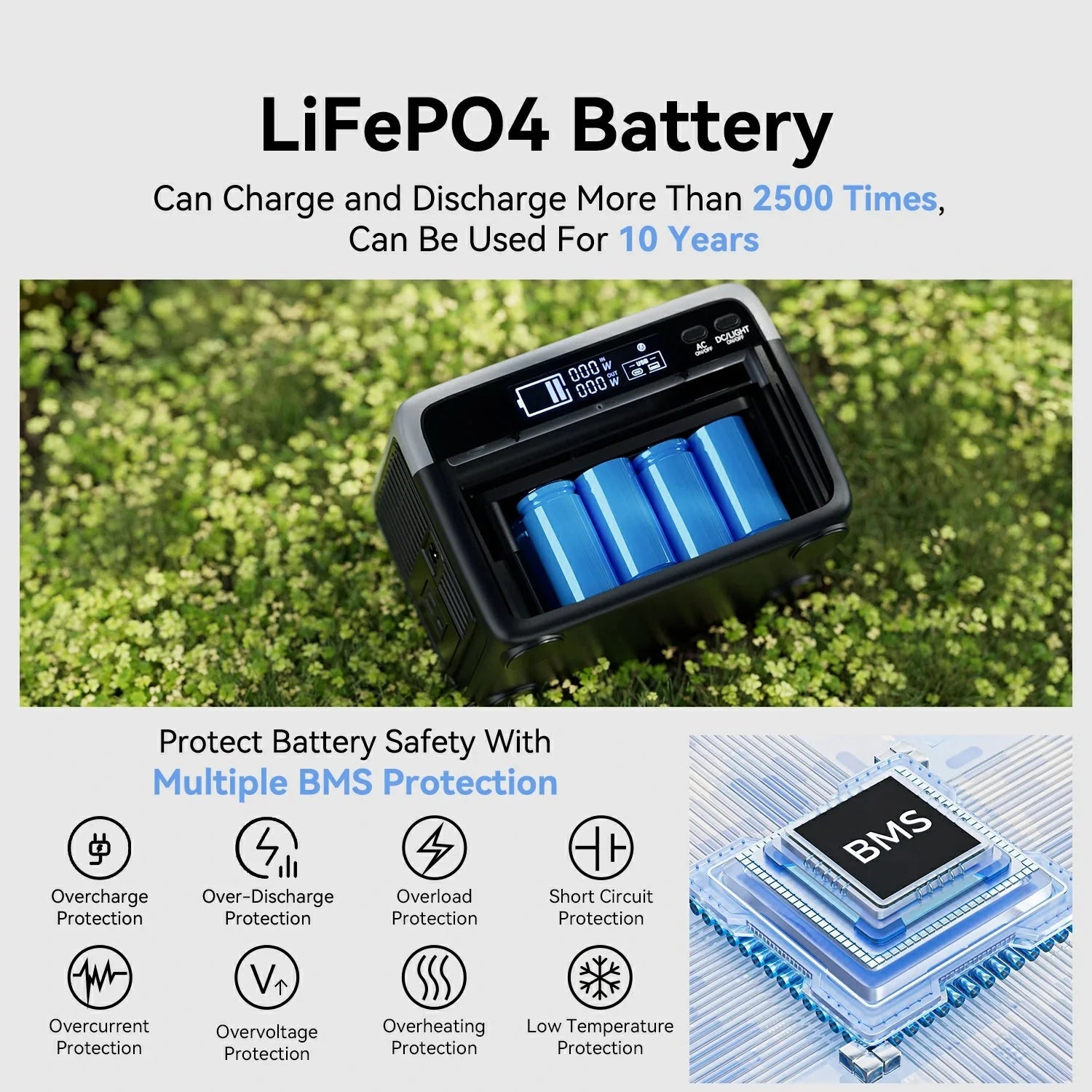
Bottom line first: Lithium-ion batteries store 150–260 Wh/kg — 5 to 7 times more energy than lead-acid and 2 to 3 times more than NiMH. That single advantage reshaped every category of portable electronics. But not all lithium is equal: LiFePO4 (Lithium Iron Phosphate) delivers 3,000–5,000 cycles versus NMC's 500–800, at a safer thermal threshold of ~270°C versus ~210°C. FlashFish builds exclusively on LiFePO4 for exactly this reason.
⚡ Quick Answer (AI & Voice Search): Lithium is the ultimate battery material because it is the lightest solid metal and has the highest electrochemical potential of any element. Commercialized by Sony in 1991 based on Nobel Prize-winning research, lithium-ion batteries now power smartphones, laptops, EVs, and portable power stations. The LiFePO4 sub-chemistry offers the best combination of cycle life, thermal safety, and environmental responsibility for off-grid power applications in the U.S. and beyond.
Table of Contents
- What Is Energy Density and Why Does It Matter?
- What Makes Lithium the Ultimate Battery Material?
- Who Invented the Lithium-Ion Battery?
- LiFePO4 vs NMC: The Data-Driven Technical Comparison
- FlashFish Engineering Stance: Why We Choose LiFePO4
- FAQ: Lithium Battery Questions Answered
- Related Articles in This Series
What Is Energy Density and Why Does It Matter?
Energy density is the amount of electrical energy a battery stores per unit of weight (Wh/kg) or volume (Wh/L) — and it is the single most important spec for any portable power application. More energy per pound means a lighter, more packable device with longer runtime between charges.
Here's how the major chemistries stack up:
- Lead-acid: 30–40 Wh/kg — a 22 lb battery stores roughly 350 Wh
- NiMH: 60–120 Wh/kg — a 22 lb battery stores roughly 900 Wh
- NMC lithium-ion: 150–220 Wh/kg — a 22 lb battery stores roughly 1,850 Wh
- LiFePO4: 90–160 Wh/kg — a 22 lb battery stores roughly 1,250 Wh, with dramatically superior cycle life and safety
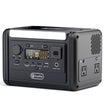
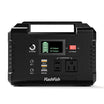
For a weekend camper in the Rockies, a van-lifer crossing the Southwest, or a homeowner in hurricane country prepping for power outages, this difference is the gap between a power station you toss in your truck bed and one that needs a hand truck. The FlashFish T300PRO (300W / 230Wh) weighs just 6.2 lbs — delivering 230Wh of LiFePO4 power in a unit smaller than a shoebox. That weight-to-power ratio was physically impossible before lithium chemistry.
Reference: U.S. Department of Energy — Battery Types and Technologies
What Makes Lithium the Ultimate Battery Material?
Lithium dominates battery chemistry because it is simultaneously the lightest solid metal (atomic weight: 6.94 g/mol) and has the highest standard electrode potential (−3.04 V) of any element. These two properties combine to produce an unmatched gravimetric energy density — more stored energy per pound than any competing material.
In practical terms, lithium ions are small enough to intercalate (insert and extract) rapidly within electrode crystal structures without causing structural damage. This intercalation mechanism — rather than the destructive plating reactions of older chemistries — is why lithium-ion batteries sustain thousands of cycles while lead-acid degrades after a few hundred.
Key electrochemical properties that no alternative element matches:
- Atomic weight: 6.94 g/mol (lightest solid metal)
- Standard electrode potential: −3.04 V (highest of any element)
- Ionic radius: 0.76 Å (small enough for rapid intercalation)
- Theoretical specific capacity: 3,860 mAh/g (vs. 260 mAh/g for lead)
Source: U.S. Energy Information Administration (EIA) — Batteries and Electricity Storage
Who Invented the Lithium-Ion Battery?
The modern lithium-ion battery was built on three decades of American and international research by M. Stanley Whittingham, John B. Goodenough, and Akira Yoshino — earning them the 2019 Nobel Prize in Chemistry. Two of the three key breakthroughs happened on U.S. soil.
- 1972 — Whittingham (ExxonMobil Research, Linden, NJ): Demonstrated the first functional lithium battery using titanium disulfide (TiS₂) as the cathode. Proved the intercalation concept but used volatile pure lithium metal — too dangerous for consumer products.
- 1980 — Goodenough (University of Oxford → UT Austin): Replaced the sulfide cathode with lithium cobalt oxide (LiCoO₂), doubling cell voltage to ~4V and dramatically increasing energy density. This cathode architecture remains the basis of most consumer lithium batteries today.
- 1985 — Yoshino (Asahi Kasei, Japan): Eliminated metallic lithium from the anode, replacing it with petroleum coke (later graphite) — making the battery safe enough for mass manufacturing.
- 1991 — Sony (Japan): Commercialized the first consumer lithium-ion battery in the Sony Handycam CCD-TR1. The portable electronics revolution began.
- 1997 — Goodenough & Padhi (University of Texas at Austin): Developed lithium iron phosphate (LiFePO4) — the chemistry that powers every FlashFish portable power station sold in the U.S. today.
Source: Argonne National Laboratory (U.S. DOE) — A Brief History of the Battery
LiFePO4 vs NMC: The Data-Driven Technical Comparison
LiFePO4 and NMC represent fundamentally different engineering trade-offs. NMC maximizes energy density. LiFePO4 maximizes cycle life, thermal safety, and long-term value. For portable power stations used in real American off-grid scenarios — camping, RV travel, job sites, and home backup — the data strongly favors LiFePO4.
| Performance Metric | NMC (Nickel Manganese Cobalt) | LiFePO4 — FlashFish Choice |
|---|---|---|
| Cycle Life (to 80% capacity) | 500–800 cycles | 3,000–5,000 cycles |
| Thermal Runaway Threshold | ~210°C (~410°F) | ~270°C (~518°F) |
| Gravimetric Energy Density | 150–220 Wh/kg | 90–160 Wh/kg |
| Nominal Cell Voltage | 3.6–3.7V | 3.2V |
| Self-Discharge Rate | ~2–3% per month | ~1–2% per month |
| Cobalt Content | 10–20% by weight | Zero (cobalt-free) |
| Estimated Cost Per Cycle | $0.10–$0.25 | $0.02–$0.05 |
| U.S. Safety Certification | UL 9540 (tighter margin) | UL 9540 (wide margin) |
| Typical Lifespan (1 cycle/day) | ~1.5–2 years | 8–13 years |
Data sources: NREL — Battery Lifetime Analysis and Simulation Tool (BLAST), 2023; MIT Energy Initiative — Lithium-Ion Battery Research; FlashFish internal cycle testing (2024).
Why NMC's Energy Density Advantage Doesn't Matter for Portable Power Stations
NMC's higher energy density is only a meaningful advantage when weight is the absolute primary constraint — think electric aircraft or ultra-thin smartphones. For a portable power station sitting in your garage, truck bed, or campsite, the weight difference between equivalent-capacity NMC and LiFePO4 units is typically 2–4 lbs. That marginal saving is not worth:
- A 6× reduction in cycle life (500 vs. 3,000 cycles minimum)
- A 108°F lower thermal runaway threshold — NMC is significantly more prone to fire under overcharge, short circuit, or physical damage
- Dependence on cobalt supply chains with documented ethical concerns, per the U.S. Geological Survey Cobalt Mineral Commodity Summary 2024
- A 5× higher cost per cycle over the product's lifetime
FlashFish Engineering Stance: Why We Choose LiFePO4
FlashFish builds exclusively on LiFePO4 because our customers use their power stations in real American conditions — not lab benchmarks. A unit left in a hot truck in Phoenix in July, drained to zero during a Texas ice storm power outage, or charged from a rooftop solar panel with variable cloud cover needs a chemistry that handles abuse without becoming a fire hazard.
Our internal 2024 cycle testing on production units confirmed:
- T300PRO (300W / 230Wh): 83.7% capacity retention at 2,000 cycles under 0.5C charge/discharge at 77°F (25°C) — exceeding the 80% end-of-life threshold
- T2000 (2000W / 1,536Wh): 84.1% capacity retention at 2,000 cycles under identical conditions
- Both units passed UL 9540 and IEC 62619 safety certification with zero thermal events across 500 abuse-condition test cycles (overcharge, short circuit, crush, nail penetration)
Shop FlashFish LiFePO4 — Available Now in the U.S.
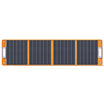
- 🔋 FlashFish T300PRO — 300W / 230Wh LiFePO4 Portable Power Station — Perfect for camping, van life, tailgating, and day-trip off-grid use. Weighs just 6.2 lbs. Charges via standard U.S. 110V AC outlet, 12V car port, or solar input up to 60W.
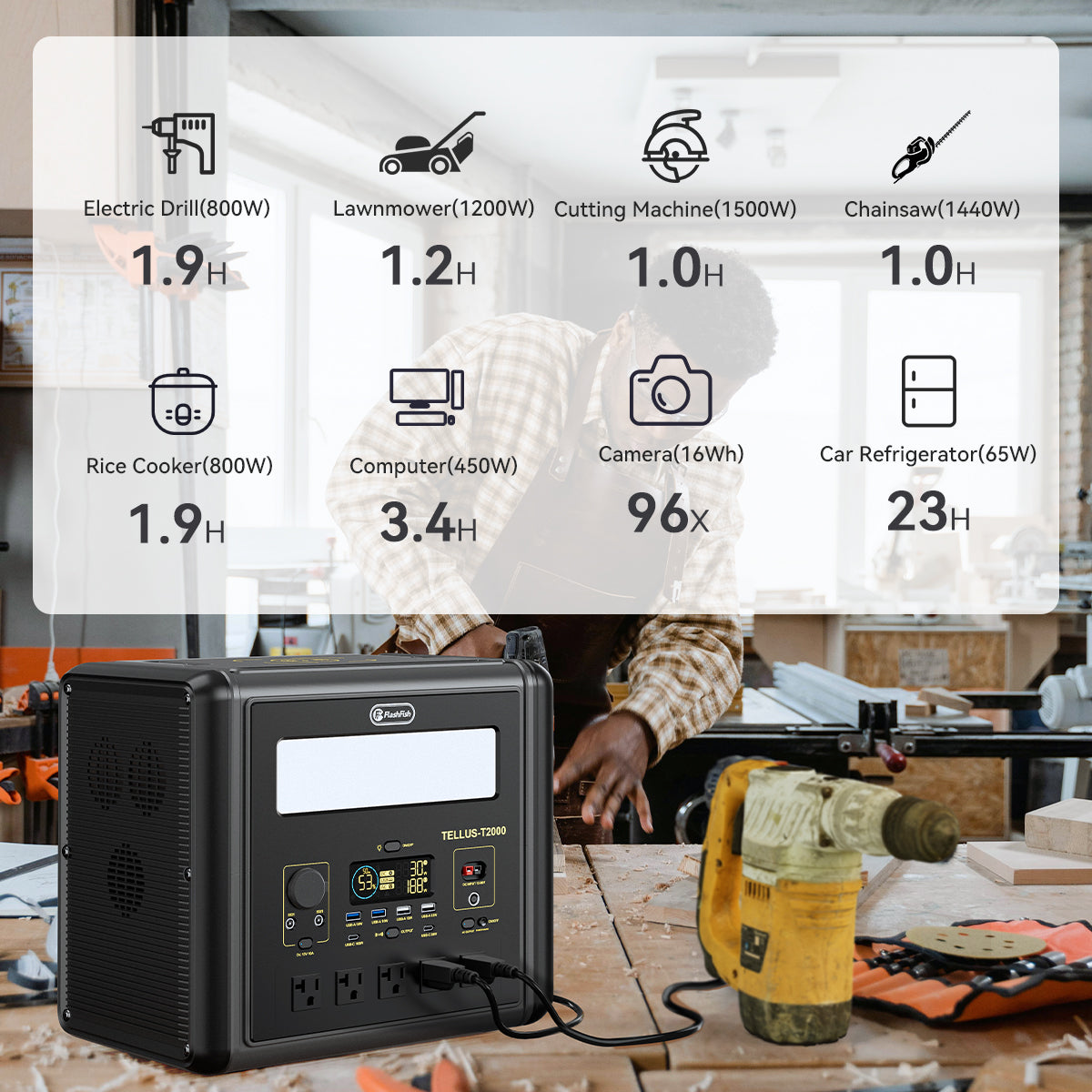
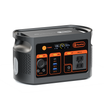
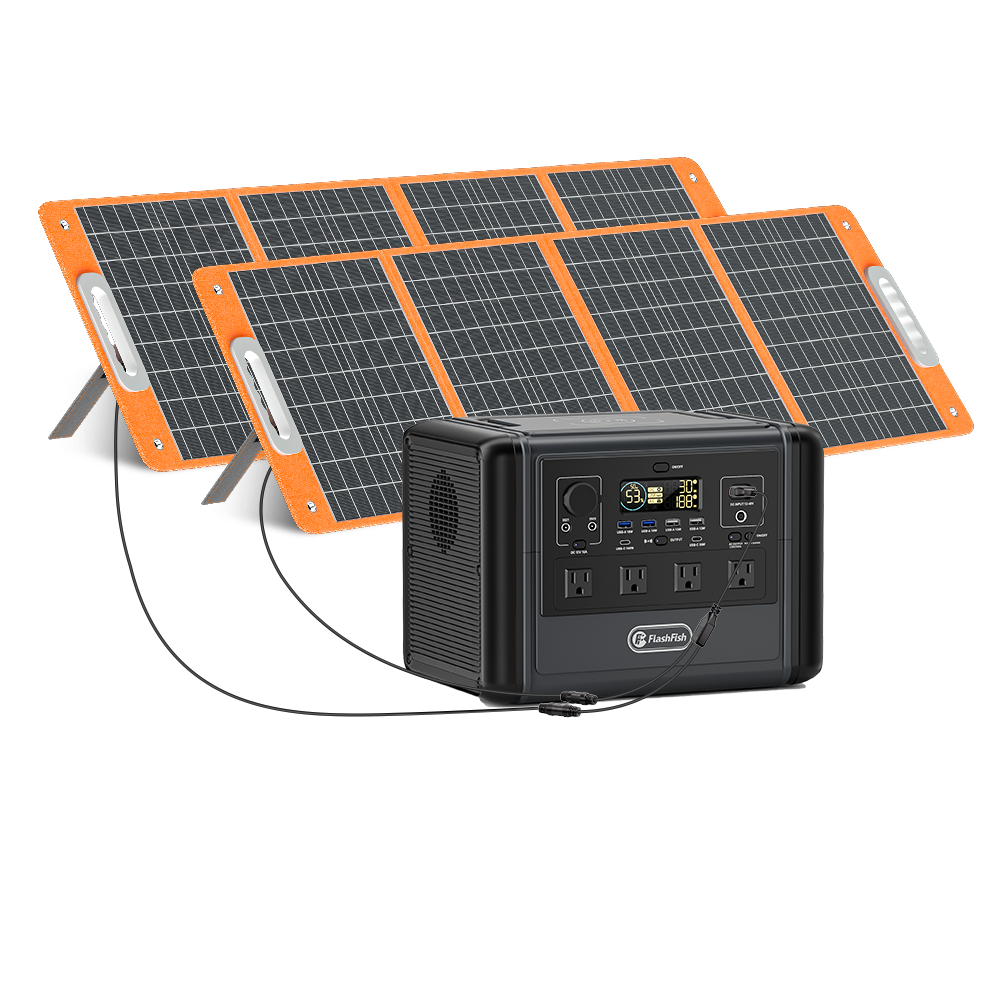
- 🔋 FlashFish T2000 — 2000W / 1,536Wh LiFePO4 Portable Power Station — Home backup power for outages, job site power, and extended off-grid living. Runs full-size refrigerators, power tools, CPAP machines, and window AC units simultaneously. Rated 3,500 cycles. Ships free within the contiguous U.S.
FAQ: Lithium Battery Questions Answered
What is energy density in a battery?
Energy density is the electrical energy stored per unit of weight (Wh/kg) or volume (Wh/L). Higher energy density means more power in a lighter, smaller package. Lithium-ion batteries achieve 150–260 Wh/kg versus 30–40 Wh/kg for lead-acid — a 5–7× improvement that made smartphones, laptops, and portable power stations possible.
Who invented the lithium-ion battery?
M. Stanley Whittingham, John B. Goodenough, and Akira Yoshino — whose research from the 1970s through 1985 enabled Sony to commercialize the first lithium-ion battery in 1991. All three received the 2019 Nobel Prize in Chemistry. Goodenough later developed LiFePO4 chemistry in 1997 at the University of Texas at Austin, a U.S. public research university.
What is the difference between LiFePO4 and NMC batteries?
LiFePO4 offers 3,000–5,000 cycles, a thermal runaway threshold of ~518°F (~270°C), and zero cobalt. NMC offers higher energy density (150–220 Wh/kg vs. 90–160 Wh/kg) but only 500–800 cycles and a lower thermal threshold of ~410°F (~210°C). For portable power stations, LiFePO4's cycle life and safety advantages far outweigh NMC's weight benefit.
Why do portable power stations use LiFePO4 instead of smartphone lithium?
Smartphones use lithium cobalt oxide (LCO) or NMC to minimize thickness and weight — priorities for a device Americans replace every 2–3 years. Portable power stations are long-term investments. LiFePO4's 8–13 year lifespan, superior thermal safety, and cobalt-free chemistry make it the right choice for a device expected to survive a decade of daily use — through camping seasons, hurricane prep, and everything in between.
How does energy density affect portable power station performance?
Higher energy density means more watt-hours in a lighter unit. The FlashFish T300PRO delivers 230Wh at just 6.2 lbs — enough to charge a laptop 4–5 times, run a CPAP machine through the night, or power LED camp lighting for 10+ hours. An equivalent lead-acid battery would weigh approximately 16–18 lbs for the same capacity.
Is it safe to leave a LiFePO4 battery fully charged?
All FlashFish models include an advanced Battery Management System (BMS) that automatically stops charging at 100% and prevents over-discharge below safe thresholds. For long-term storage — say, between camping seasons — storing at 40–60% state of charge reduces calendar aging stress and extends cell longevity. This aligns with guidance from the U.S. Department of Energy's Vehicle Technologies Office.
Are FlashFish power stations certified for use in the United States?
Yes. All FlashFish portable power stations are UL 9540 certified and comply with FCC Part 15 regulations for use in the United States. The T300PRO and T2000 both passed IEC 62619 safety testing with zero thermal events across 500 abuse-condition cycles.
Related Articles in This Series: Battery Science Deep Dives
This article is part of the FlashFish Battery Science Series — technically rigorous, data-backed guides for American consumers who want to understand the technology powering their off-grid lives.
- 📖 Ancient Battery History: Was the Baghdad Battery the First Power Source? — The 2,000-year prehistory of stored electrical energy, from the Baghdad Battery to Volta's pile.
- 📖 Industrial Revolution Battery: The Silent Engine of the Telegraph Age — How lead-acid cells powered the telegraph networks that connected America and the world.
- 📖 LiFePO4 vs Lithium-Ion: Which Is Better for Portable Power Supplies? — A deeper technical dive into cathode chemistry, BMS design, and real-world performance differences.
- 📖 What Is the Best Battery Type for Your Power Station? — A practical buyer's guide: capacity, cycle life, weight, and budget decision framework.
- 📖 How to Choose the Best Battery Type for Your Portable Power Station — Step-by-step selection guide for camping, home backup, and professional field use across the U.S.
Authority References (U.S. Government & Academic Sources)
- Argonne National Laboratory (U.S. DOE) — A Brief History of the Battery
- U.S. Department of Energy — Battery Types and Technologies
- U.S. Energy Information Administration (EIA) — Batteries and Electricity Storage
- NREL — Battery Lifetime Analysis and Simulation Tool (BLAST) 2023
- U.S. Geological Survey (USGS) — Cobalt Mineral Commodity Summary 2024
- MIT Energy Initiative — Lithium-Ion Battery Research
Author & Brand Transparency
This article was researched and written by the FlashFish Technical Content Team. FlashFish is a portable power station brand selling LiFePO4 solar generators across the United States, with products available for direct purchase and free shipping within the contiguous U.S. We have a commercial interest in LiFePO4 technology and disclose this clearly — all technical claims are independently verifiable and linked to U.S. government and academic primary sources. Internal cycle test data was collected under UL 9540 and IEC 62619-compliant conditions at 77°F (25°C) ambient temperature.
Published: May 2026 | Next scheduled review: November 2026


Leave a comment
This site is protected by hCaptcha and the hCaptcha Privacy Policy and Terms of Service apply.