

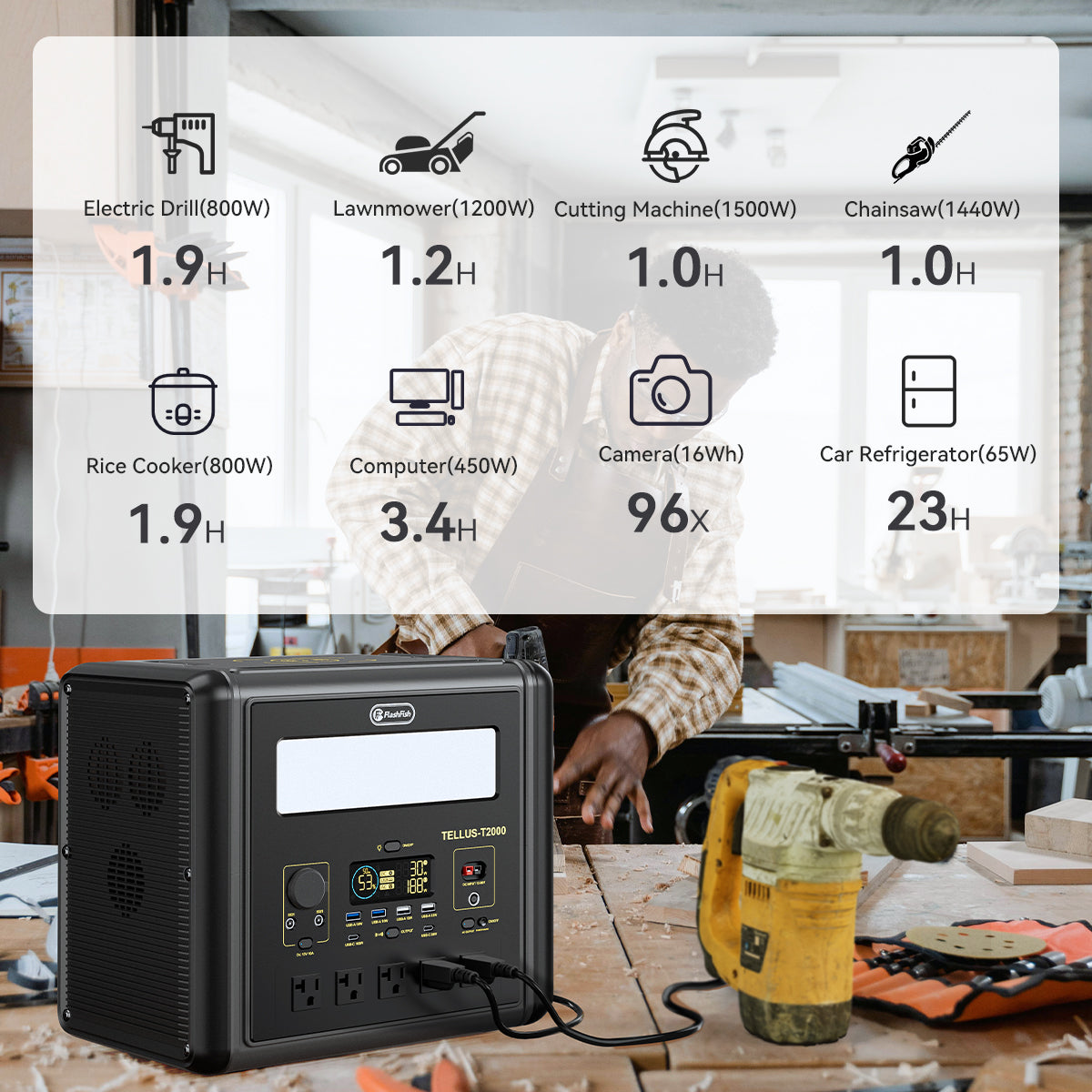


A charged, manufacturer-approved spare camera battery provides finite energy already packed for the session. A documented solar top-up path offers a way to replenish energy when its required conditions and components are available. Compare the interruptions each route actually bypasses. If both routes still need the same unavailable charger, cable, or working camera, carrying both does not remove that shared dependency.
This comparison is for non-critical camera use with manufacturer-approved removable batteries. It does not identify an approved battery for an unspecified camera or establish a working panel-to-station-to-camera connection. The useful result is a dependency map you can check against your own manuals before buying more equipment.
Start with the task you need to keep doing
Define the task narrowly: continue taking photos after the installed battery is depleted, recharge depleted batteries between sessions, or keep a documented external charging path available. Those are different requirements. A spare can address the first requirement only when it is the correct battery, has usable charge, and can be installed according to the camera's instructions.
For replenishment, write out every required component. A proposed route might include a panel, a station input, a station output, an approved camera-battery charger, a cable, and a removable battery. That is a planning diagram, not a connection instruction. Every arrow needs documentation for the actual products.
Use three labels beside each arrow: documented, observed in the approved setup, or unresolved. A previous observation applies to that setup and those conditions; it is not a forecast for the next outing. Leave the route unresolved if an essential manual, connector detail, or device approval is missing.
Compare paths in a dependency table
| Option | Required approved components | Energy source | Shared node to check | Interruption addressed | Unresolved evidence |
|---|---|---|---|---|---|
| Precharged spare installed in camera | Exact approved battery and documented replacement procedure | Charge stored before departure | Camera and battery interface | Depleted installed battery, while spare charge remains usable | Exact battery approval, charge state, task duration |
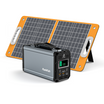
| Solar replenishment through a station and charger | Documented panel input path, station output path, charger and battery | Solar input under the applicable conditions; station storage tracked separately | Any common charger, cable and camera | An unavailable original charging source only if the alternative path is usable | Full connection approval, observed input and charging completion |
| Both options packed | All components needed by each route | Finite precharged inventory plus conditional replenishment | Mark every component reused by both routes | Only the interruptions bypassed by at least one documented usable route | Common dependencies and energy required for the planned task |
This table describes component dependencies. It assigns no failure probability and does not establish that one choice is more reliable. An unresolved connection is an evidence gap, not proof that the equipment will fail or work.
Follow the shared components
Draw each route from its energy source to the working camera. Circle components that appear in more than one route. Then ask what remains usable if a circled component is unavailable. If both replenishment routes use one charger, changing the upstream energy source leaves the charger dependency in place.
An already charged spare may bypass that charger for the immediate replacement step, subject to the camera instructions. Once the spare is depleted, replenishing it can bring the charger dependency back. Evaluate the immediate task and the next charging task separately instead of calling the whole kit independent.
Also distinguish equipment packed from energy available. A panel rating does not document how much energy will enter a battery during your session. The FlashFish panel manual says conversion depends on sunlight angle, temperature, weather, and charging time. No weather forecast or solar yield is assumed here.
What the FlashFish specifications establish
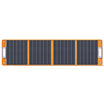
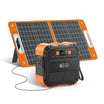
The TSP18V60W manual describes a 60W panel with an 18V DC output and a USB-C output up to 45W. It says the panel converts sunlight and does not store energy. Its listed DC cable configuration varies by model, and the available specifications do not give an open-circuit voltage value.
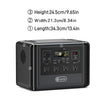
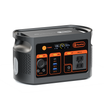
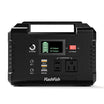
The T200 manual, under the name TELLUS-T200, lists 153.6Wh capacity and a solar input of 15–30V, 4A, and 60W maximum through DC6530. These independent specifications do not establish that the TSP18V60W and T200 form an approved pair. A panel's operating voltage and a station's input range are only part of a connection review.
The available panel connector list does not establish the required DC6530 route. Exact cable, connector, polarity, panel electrical limits, and original-manual approval remain unresolved for this proposed pairing. No adapter recommendation follows from the numbers above. Similarly, the panel's USB-C rating does not establish approval for an unspecified camera or battery charger.
Use these specifications to prepare questions for the exact product documentation. Do not count a solar route as ready until the panel, receiving input, output, cable, charger, and device requirements are resolved. Without the exact camera and charger manuals, the proposed connection remains unresolved. No charging test is claimed here.
Three hypothetical packing decisions
1. Only the installed battery is depleted
A photographer has a charged spare explicitly approved for the camera and follows its replacement procedure. The spare offers a separate immediate energy inventory. It does not establish that either battery will last for the remainder of the outing; the photographer still needs a task plan.
2. Both charging routes use one charger
A planned solar route and a planned wall-powered route both end at the same charger. If that charger is unavailable, neither diagram provides replenishment through it. A precharged approved spare may still support the camera, but its later recharge remains a separate unresolved task.
3. The panel connection is undocumented
A kit contains a panel and station with apparently promising wattage labels, but the exact cable and input approval are missing. Mark the solar route unresolved. Plan the session around documented available energy and approved equipment rather than counting an unverified top-up as part of the day's supply.
Frequently asked questions
Does adding solar remove the need for spare batteries?
That depends on the task and the documented device path. Replenishment and immediate battery replacement solve different constraints. A proposed solar route does not establish that a replacement battery will be ready when needed.
Can matching wattage prove panel compatibility?
No. Resolve the original electrical requirements, exact connectors and cables, polarity, and applicable instructions. The TSP18V60W and T200 specifications above leave important connection evidence missing.
Can I assign a reliability percentage to this table?
This dependency map contains no measured reliability data. The table identifies components and conditional routes only. It cannot estimate weather, component failure rates, charging yield, or the probability of completing a photo session.
Choose the missing capability first
Complete the dependency table with your camera and approved battery information. If your immediate gap is replacement inventory, resolve that requirement first. If it is replenishment, gather the full charging-path documentation. Then compare the exact FlashFish panel or station specifications against that path, with every unresolved connection still visible.
For the wider equipment budget, use the outdoor photography power-planning guide alongside this checklist.
Next step: Compare FlashFish TSP18V60W specifications with your requirements.

Commenta
Questo sito è protetto da hCaptcha e applica le Norme sulla privacy e i Termini di servizio di hCaptcha.