

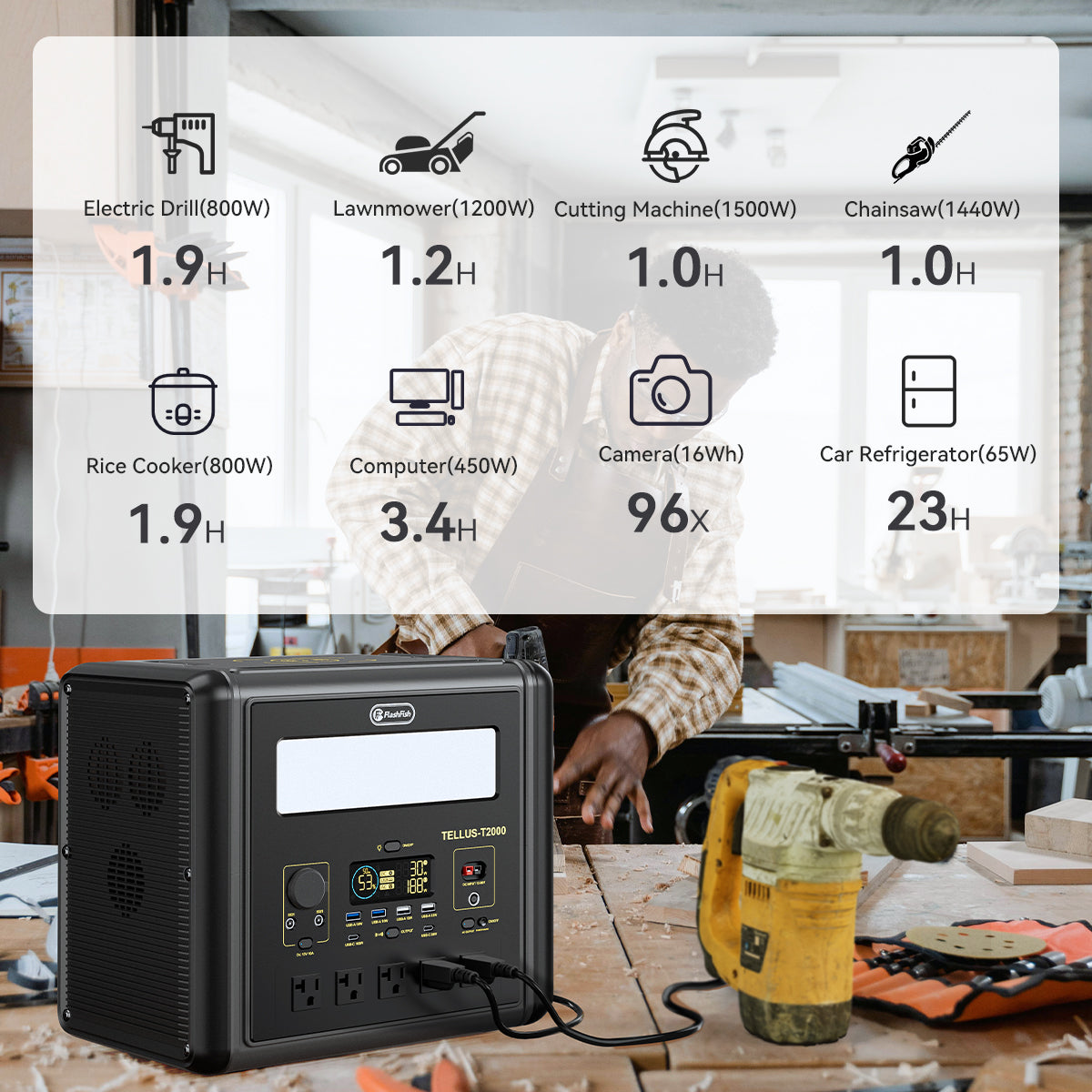
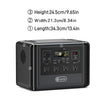


Product Dimensions vs Retail Box Dimensions: Which Space Must Fit?
Check the unpacked station and its package separately. A101 supplier variants and E200 packaging revisions show why device, inner-box and master-carton dimensions cannot substitute for one another.

AC Plug Meter vs USB Inline Meter: Choose the Right Measurement Boundary
Choose the instrument by the energy boundary you need: adapter-input energy for a supported AC plug meter, or energy crossing a documented USB meter location. Different boundaries cannot establish ...
Station Battery Percentage vs Delivered Watt-Hours: What Each Reading Answers
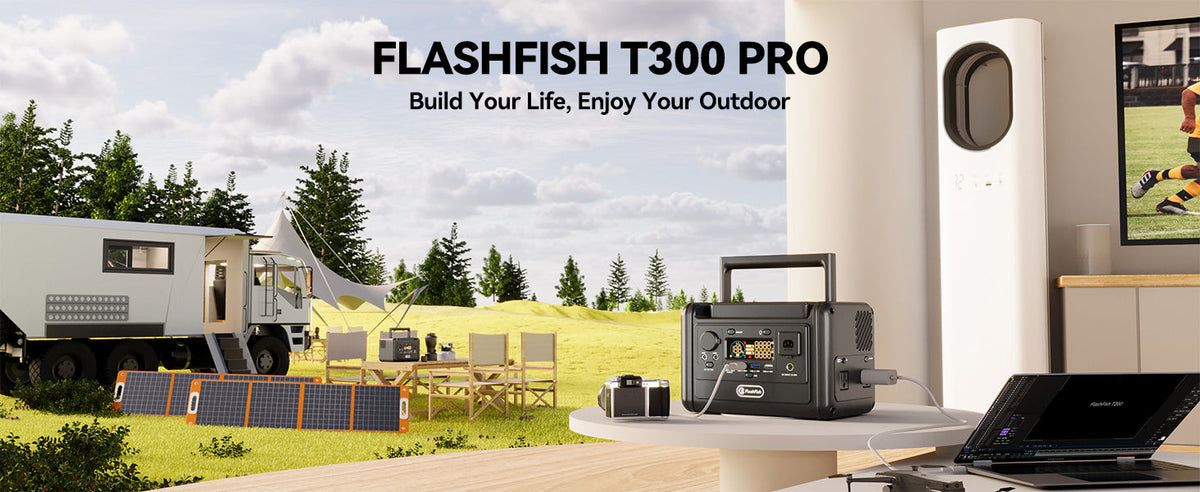
Battery percentage and delivered watt-hours answer different questions. Record the charge trend and measured-path energy separately; leave uncalibrated conversions unknown.

Controlled Runtime Test vs Real-Use Rehearsal: Two Different Decisions
A controlled runtime test compares defined conditions; a real-use rehearsal checks a particular task. Learn which result supports your decision and where comparisons stop.
FlashFish A201 vs T200 for a Cabin Reading-Lamp and Phone Plan
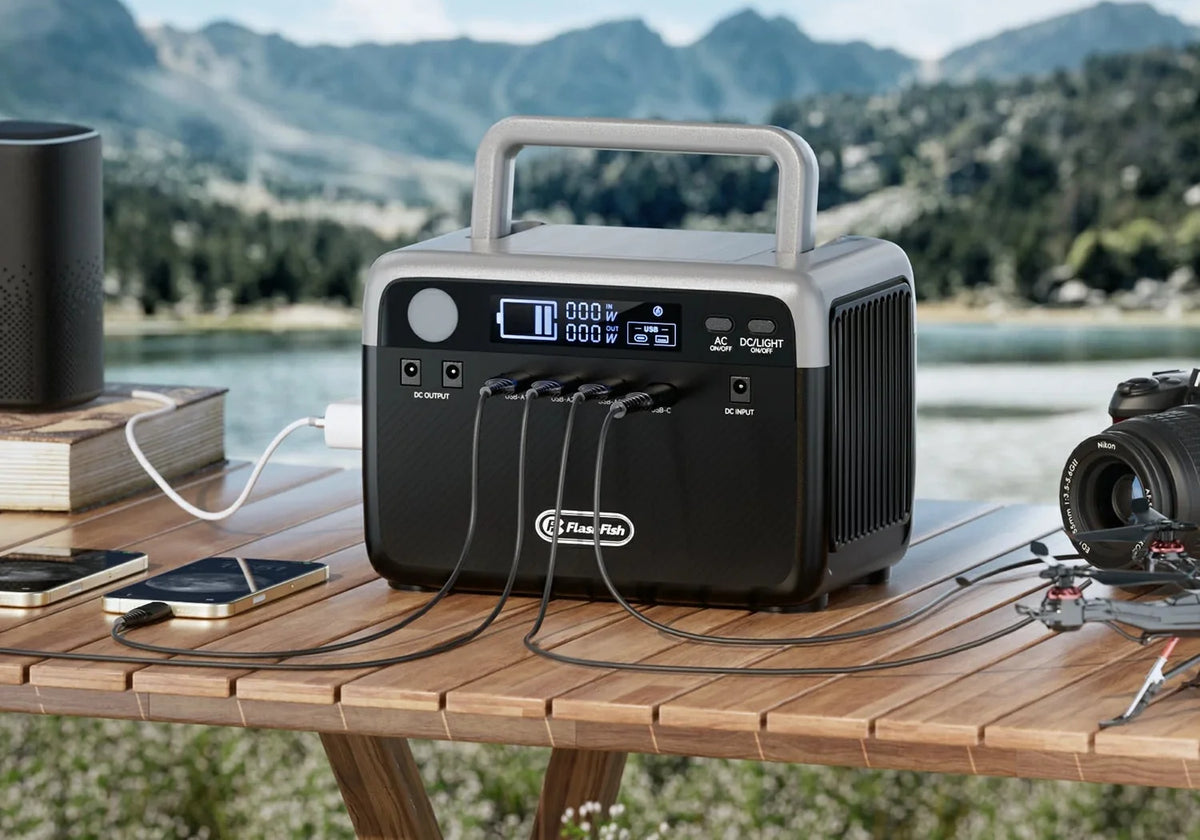
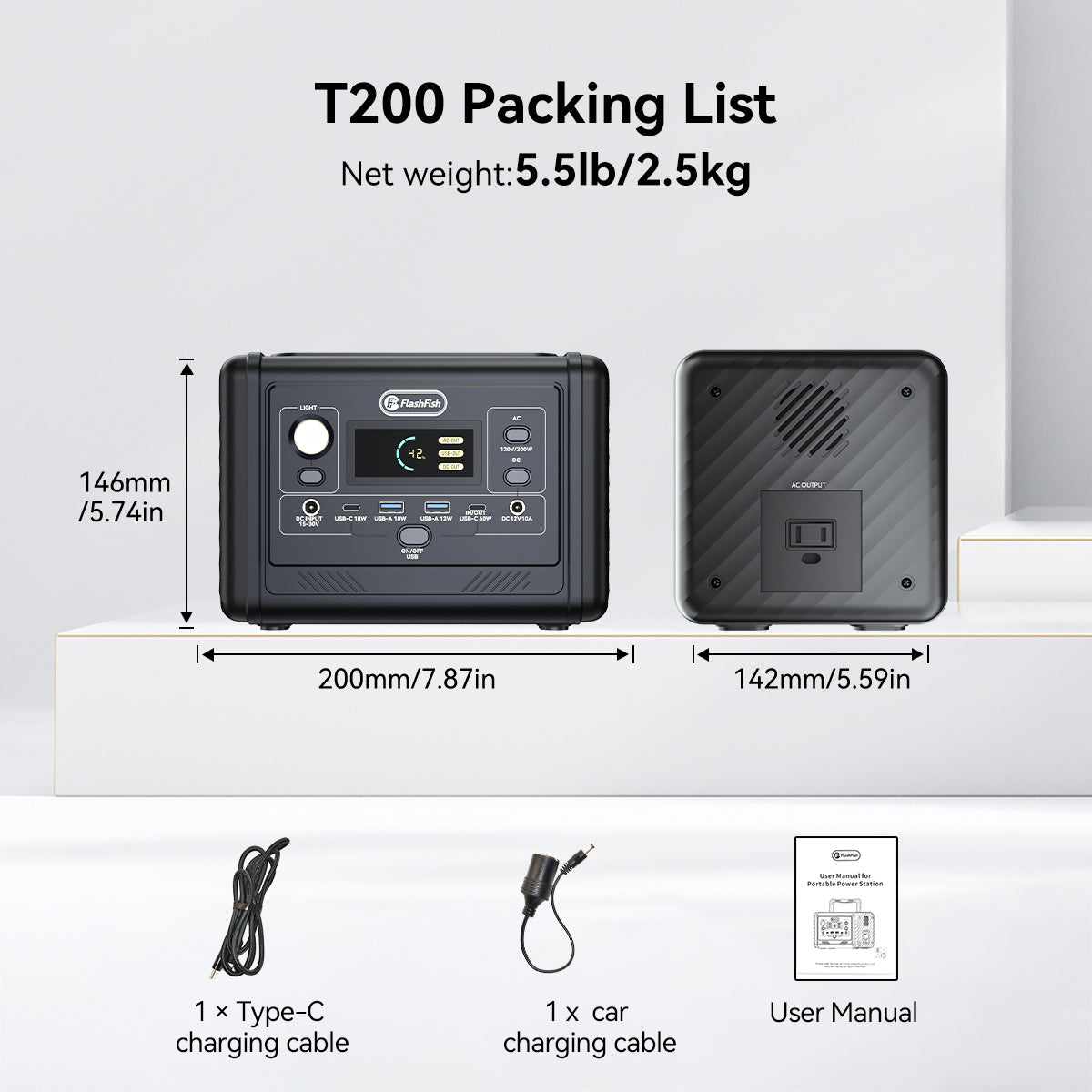
Compare A201 and T200 by lamp input, phone charging profile, nominal capacity, and carrying weight. Confirm the exact regional AC configuration before choosing.
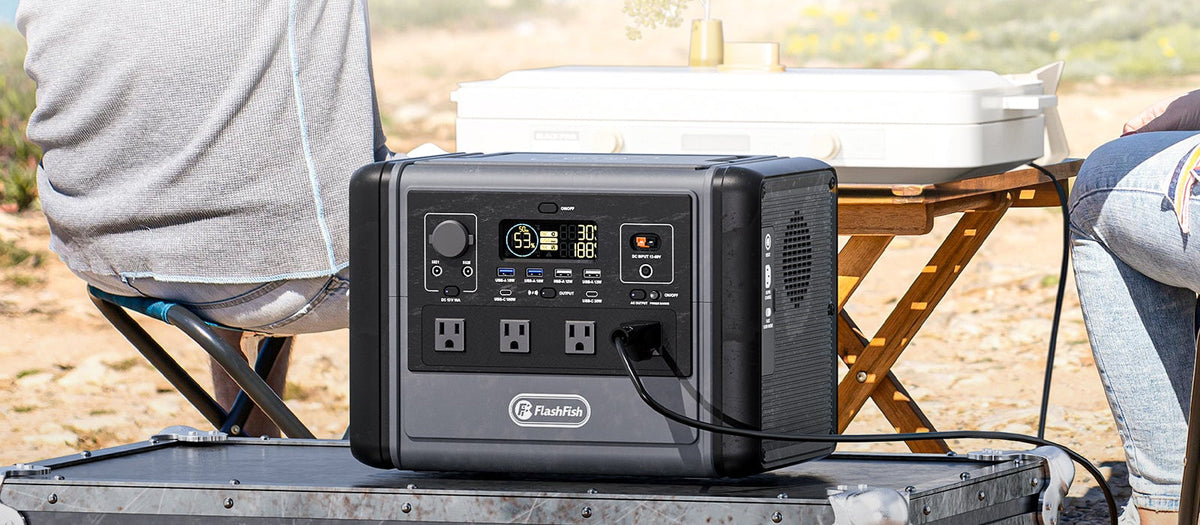
T300Pro vs T1200S: Does a Bigger Battery Mean Faster USB-C?
T300Pro and T1200S list the same USB-C ceilings: up to 100W and 30W. Compare capacity and carrying weight separately, and verify device profiles and shared-output limits.
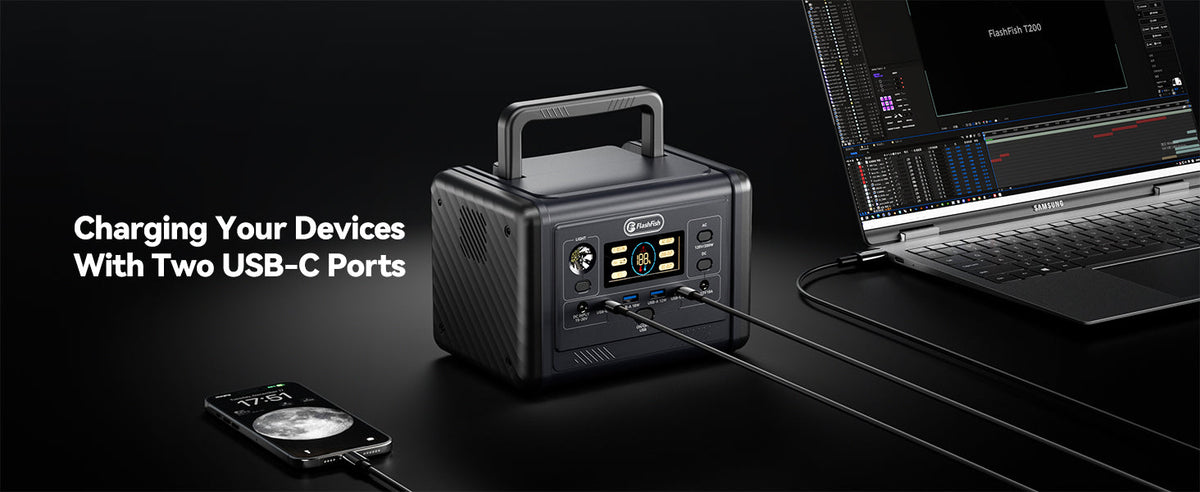
FlashFish E103 vs T200 for a Community Workshop Device Table
Choose E103 when the checked workshop setup needs more stored energy or AC output headroom. Choose T200 when a smaller, lighter station and more documented USB connector positions fit the device li...

T1200S vs T2000: Do Three DC Ports Mean Three Power Budgets?
T1200S and T2000 each share a 130W DC ceiling across three connections. Compare voltage, plugs, and concurrent accessory requirements before choosing capacity.
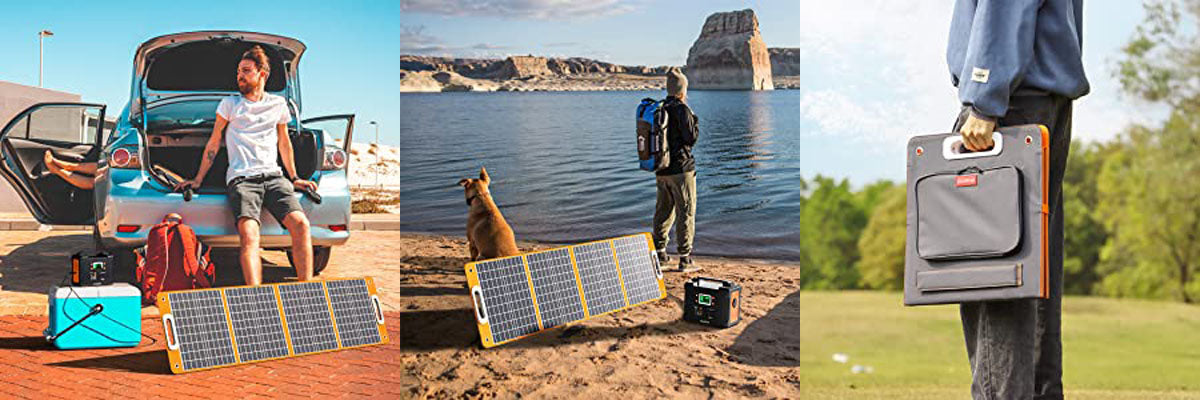
FlashFish TSP60 vs TSP100 for a Weekend Daylight-Charging Plan
For a weekend daylight plan, compare the FlashFish TSP18V60W and TSP18V100W by their documented panel rating, folded and unfolded footprint, weight, and the exact station-input documentation you wi...
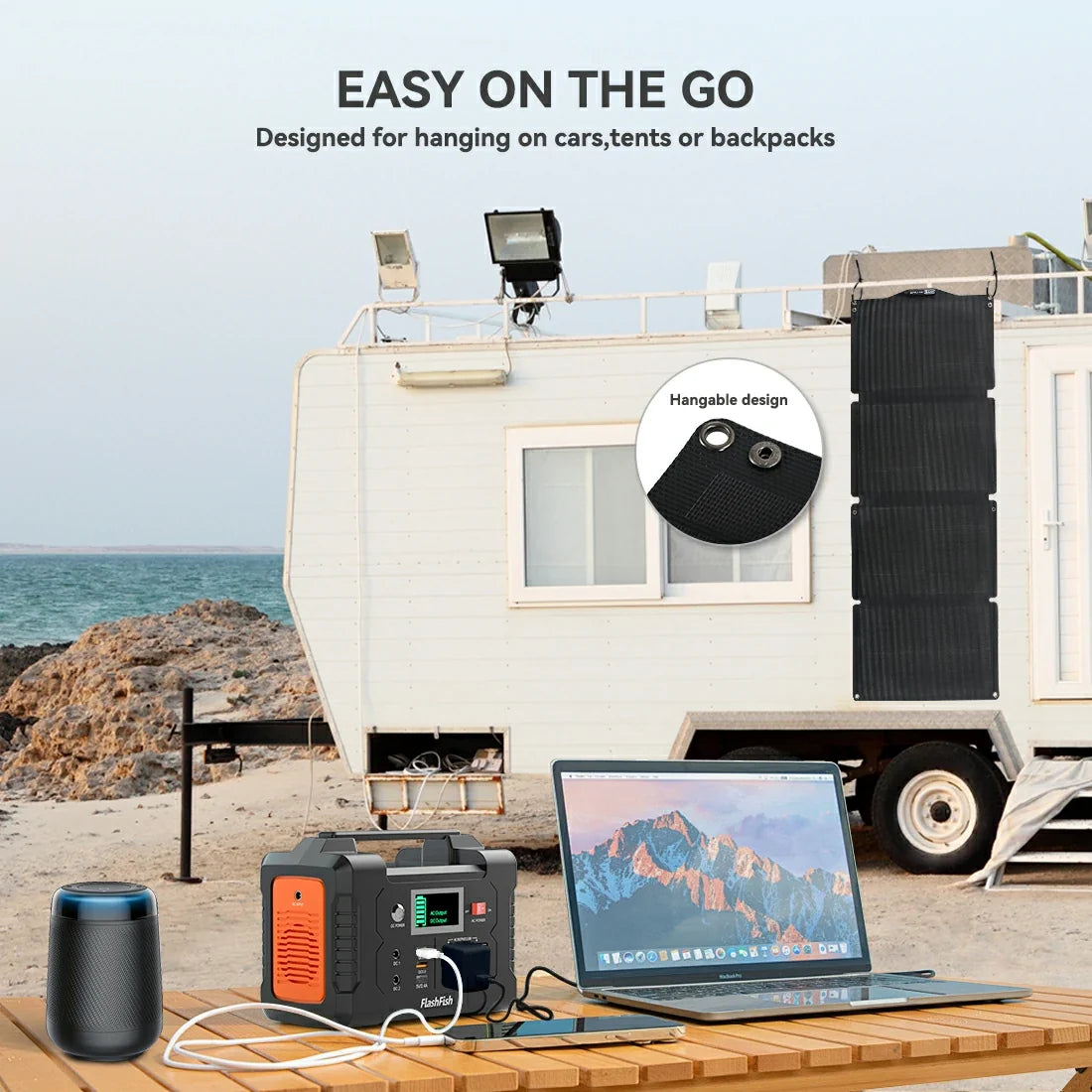
FlashFish A201 vs E200 for a Compact Car-Camping Device Kit
Compare A201 and E200 by capacity, documented ports, output labels, and packed weight. The A201 record is based on a 230V manual, so confirm the exact U.S. variant before using its AC details. Devi...
FlashFish E200 vs A101 for a Portable Translation Device Kit
Choose FlashFish A101 when a translation-device kit prioritizes lower carry weight and direct USB-C output; choose E200 when the checked plan needs more stored energy or AC output headroom.

FlashFish E103 vs T300Pro for a Weekend Craft Classroom
Short answer: For a craft classroom, compare the E103 and T300Pro by the labeled inputs on the actual devices, the documented output configuration, the table layout, and the lifting plan. Neither m...

Wall Charging vs Portable Solar Planning for a Day-Use Device Kit
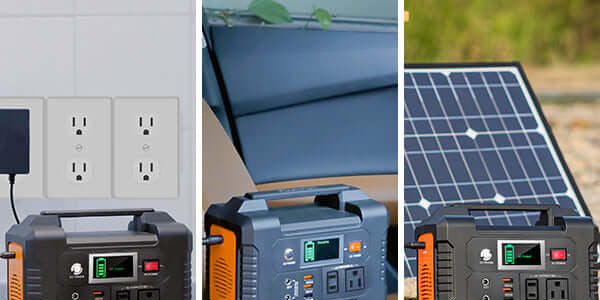
Short answer: Use wall charging when you have a permitted, reliable outlet and documented charger; consider portable-solar planning only after confirming the station’s exact input limits, connector...
FlashFish E103 vs T300Pro for a Laptop-and-Worklight Table
Direct answer: For a laptop-and-worklight table, compare the E103 and T300Pro by the documented outputs, capacity, connection needs, and carrying preferences—then verify the labels and manuals for ...
USB-C Charger vs. AC Outlet for a Portable Device Kit
Quick answer: Use a direct USB-C path when the exact device and cable document that it is suitable; use the device's AC adapter when that is the documented charging method. Compare labels and port ...
FlashFish E200 vs A201 for a Field Audio-Recorder Kit
Direct answer: Separate the FlashFish E200 and A201 by the connections your recorder, phone, and charging accessories actually require, then compare the documented output labels, capacity, and carr...
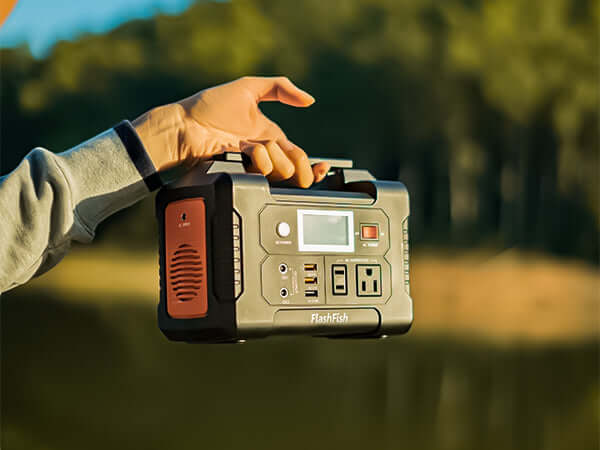
FlashFish E200 vs T200 for Light Camping Loads
Short answer: the FlashFish E200 and T200 are close in stored energy and both list 200W continuous and 400W peak AC output, but they are not interchangeable. The E200 is lighter and uses modified-s...

FlashFish E200 vs E103 for a Compact Audio-Recording Kit
For a compact field-audio kit, compare FlashFish E200 and E103 by matching their documented outputs to the labels on the recorder, phone, and original chargers. The E200 record lists 151Wh and 200W...
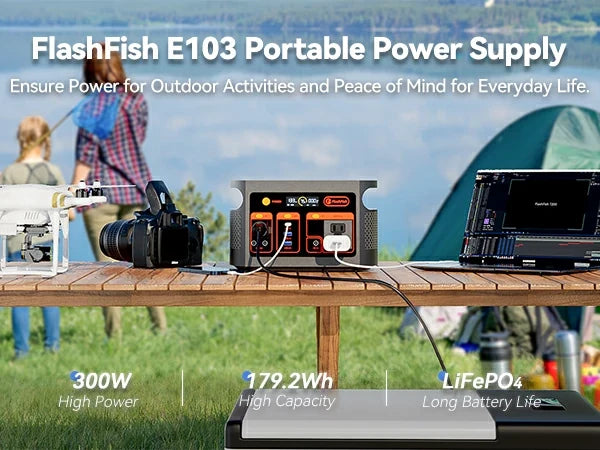
Portable Power Station vs Power Bank for a Portable Monitor
Short answer: use a power bank when the portable monitor has a documented USB charging path that the bank and cable can supply. Consider a portable power station when the monitor requires its AC ad...
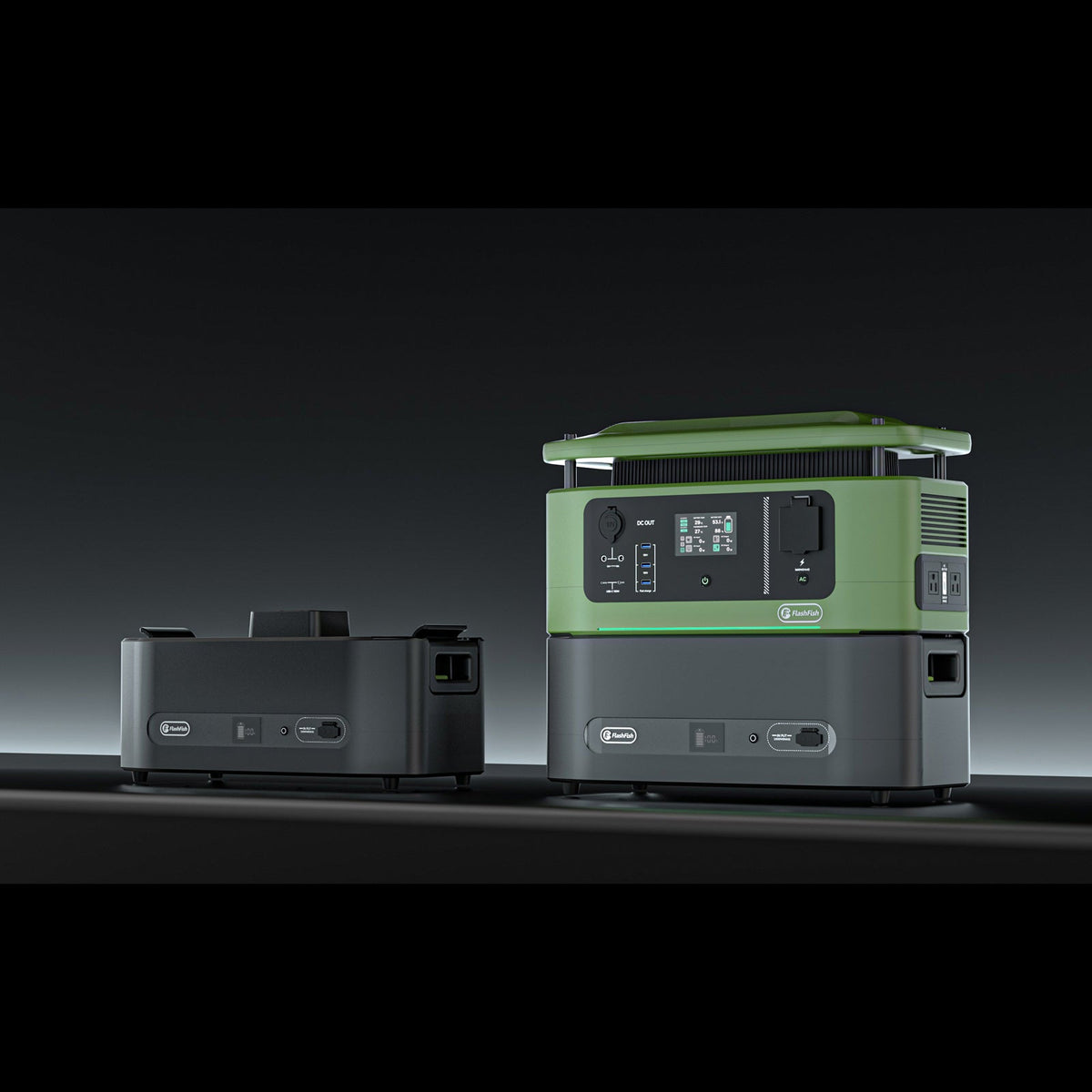
FlashFish E103 vs T1200S for a Portable Listening Station
Short answer: Compare the FlashFish E103 and T1200S by matching their documented capacity, output, ports, and transport weight to a verified equipment list. Neither model’s specifications alone pro...
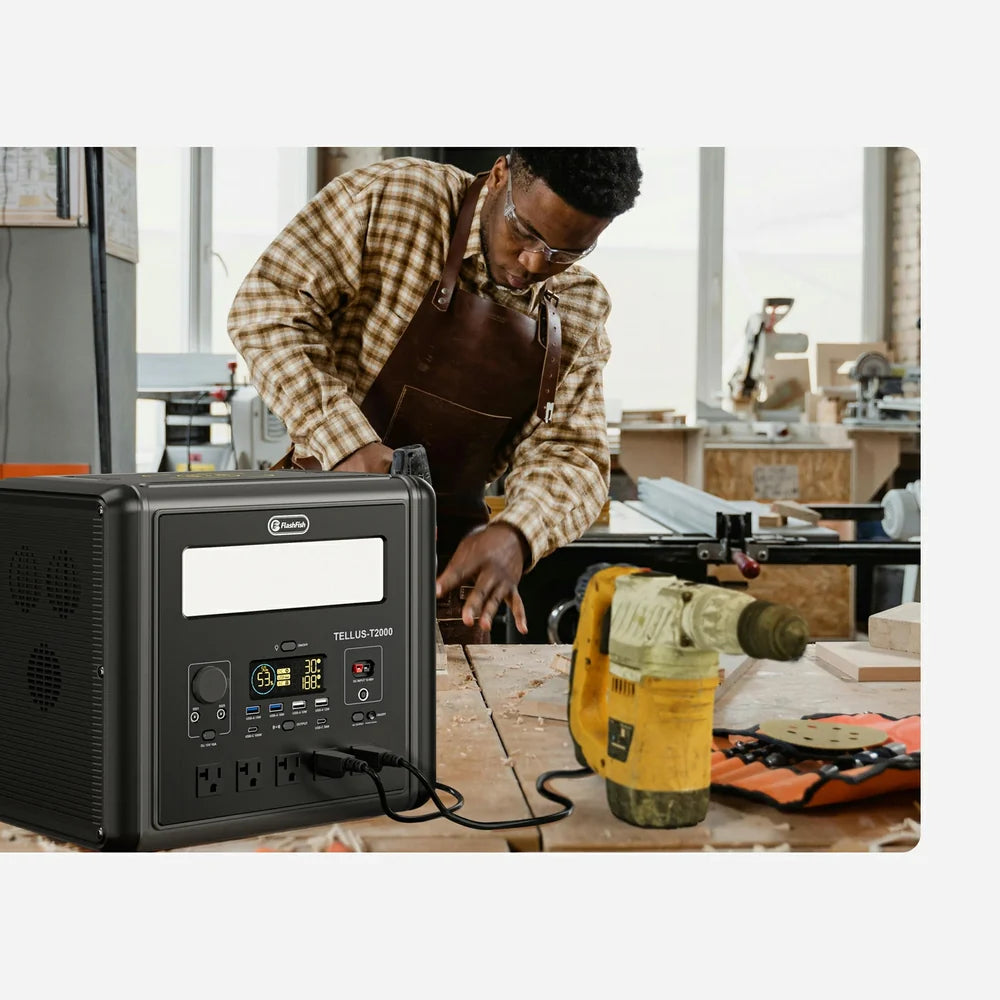
Power Bank vs Portable Power Station for a Sign-Up Tablet and Label Printer
A portable power station can be a better fit than a power bank for a sign-up tablet and label printer when the documented device paths call for outputs the power bank does not provide, or when the ...
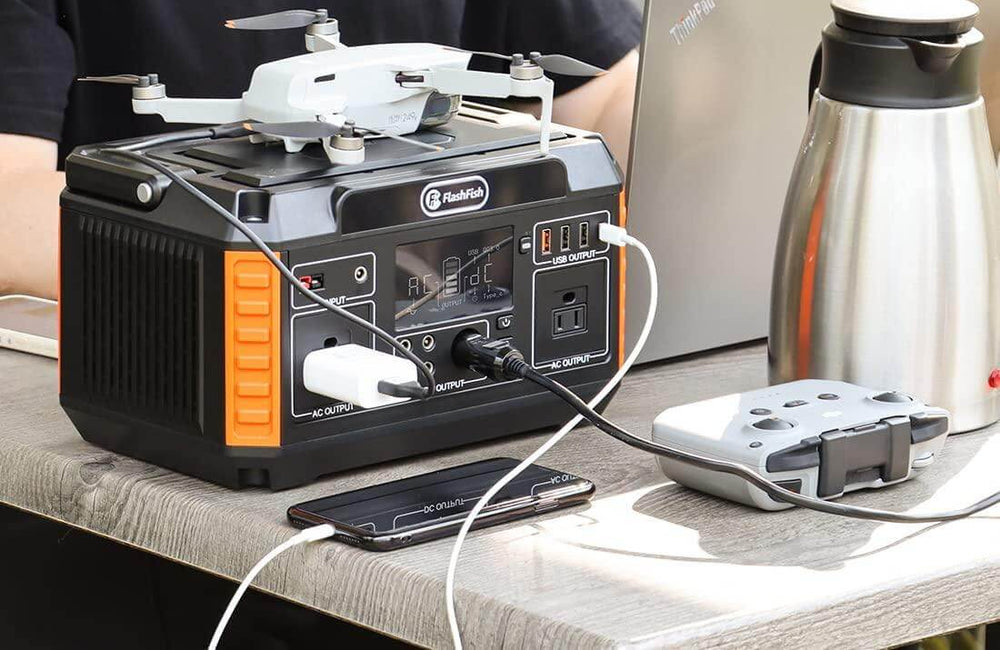
Portable Power Station vs. Vehicle Inverter for a Parked-Car Work Break
A portable power station can fit a parked-car work break better than a vehicle inverter when you want a separate, documented power path for a laptop and phone and do not want the plan to depend on ...
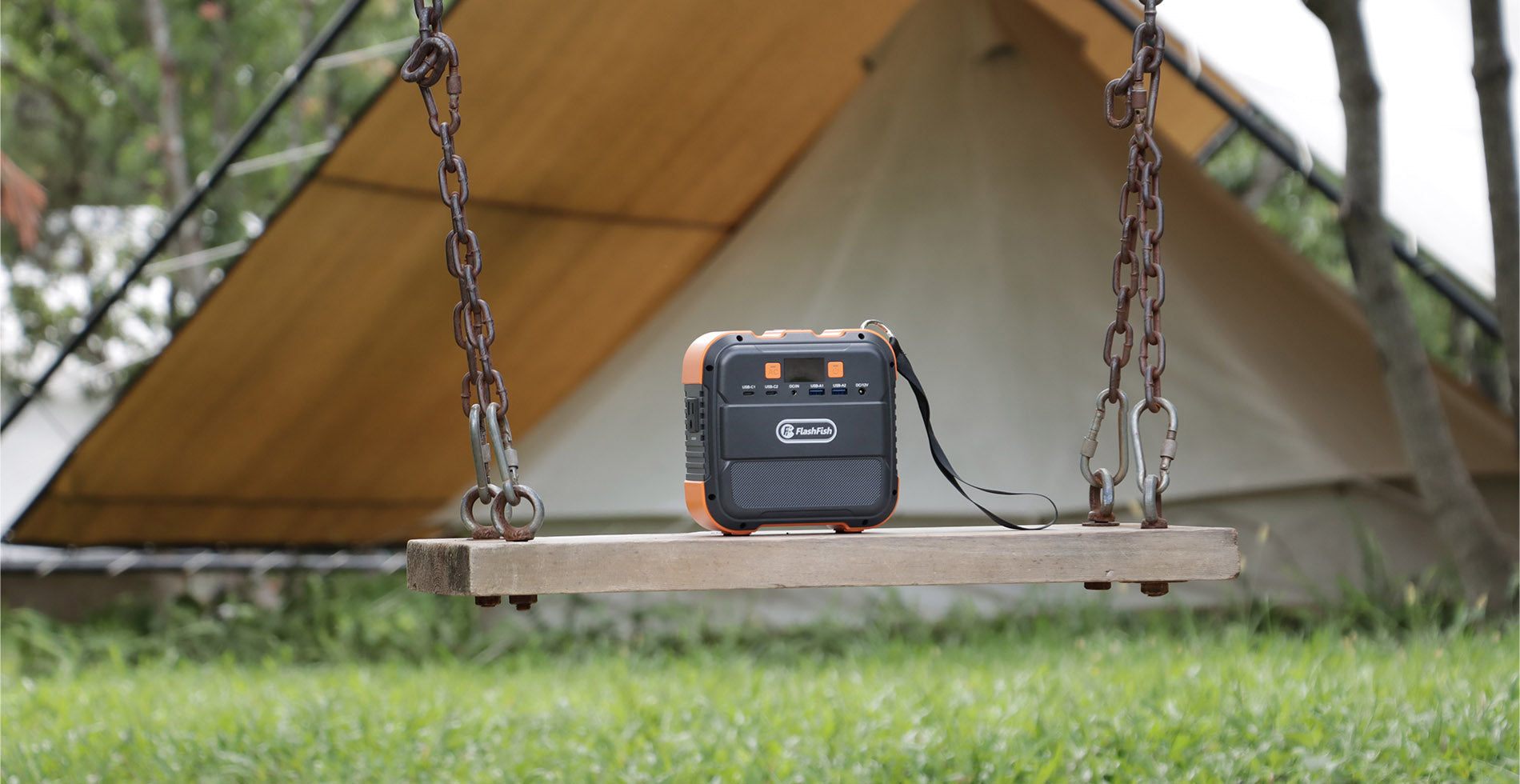
Portable Power Station vs. Power Bank for a Remote Workday
Quick answer: A power bank is usually the simpler choice when every device can be charged directly by USB and its own charging requirements are already understood. A portable power station becomes ...