


Quick answer: A Field Day power plan needs separate receive and transmit measurements, an honest duty cycle, and a connection check for the exact transceiver or DC supply. Add logging equipment, chargers, networking, and lights, then reserve energy for the last operating period. Before choosing a battery station, also check the current ARRL class and power-source rules and test the full setup for radio-frequency noise.
Do not size from transmitter output power
A “100W radio” describes RF output under specified conditions, not necessarily what the radio draws from its supply. The DC input can require much more current while transmitting than while receiving, and an AC power supply adds conversion loss. Use the radio and power-supply manuals or measured input values for the exact operating mode. Record maximum current, nominal voltage, connector, fuse requirements, and the maker's grounding instructions.
Repeat the process for the laptop, monitor, USB interface, network device, battery chargers, and lights. Field Day loads that seem minor on their own can become meaningful when they run for many hours.
Estimate average watts from duty cycle
Receive and transmit demand should not be averaged by guesswork. Start with a likely operating pattern for the station and mode, then revise it after a rehearsal. A simple planning formula is:
Average radio watts = receive watts x receive share + transmit watts x transmit share.
For an illustrative example only, assume a complete radio supply path uses 15W while receiving and 100W while transmitting, with an 80 percent receive and 20 percent transmit duty cycle. The estimated radio average is (15 x 0.80) + (100 x 0.20) = 32W. Add a 25W laptop and 8W light, and the station average becomes 65W.
With a conservative 75 percent usable-energy factor, a 230Wh battery budget would be 172.5Wh, or roughly 2.7 hours at that assumed 65W. A 768Wh budget would be 576Wh, or roughly 8.9 hours. These are teaching calculations, not measured T300PRO or T1200S runtimes. Real results depend on the radio, mode, duty cycle, supply efficiency, cable loss, temperature, battery condition, and every connected load.
Check the power path before choosing AC or DC
| Path | Advantage | Required check |
|---|---|---|
| AC outlet to the radio's approved supply | Uses the radio maker's normal supply path | Supply input watts, station continuous output, and conversion loss |
| Documented DC output | May avoid an AC conversion stage | Exact voltage, current limit, polarity, connector, fuse, and radio requirements |
| USB-C for laptop or accessories | Can simplify low-voltage device charging | Required PD profile, cable rating, and device support |
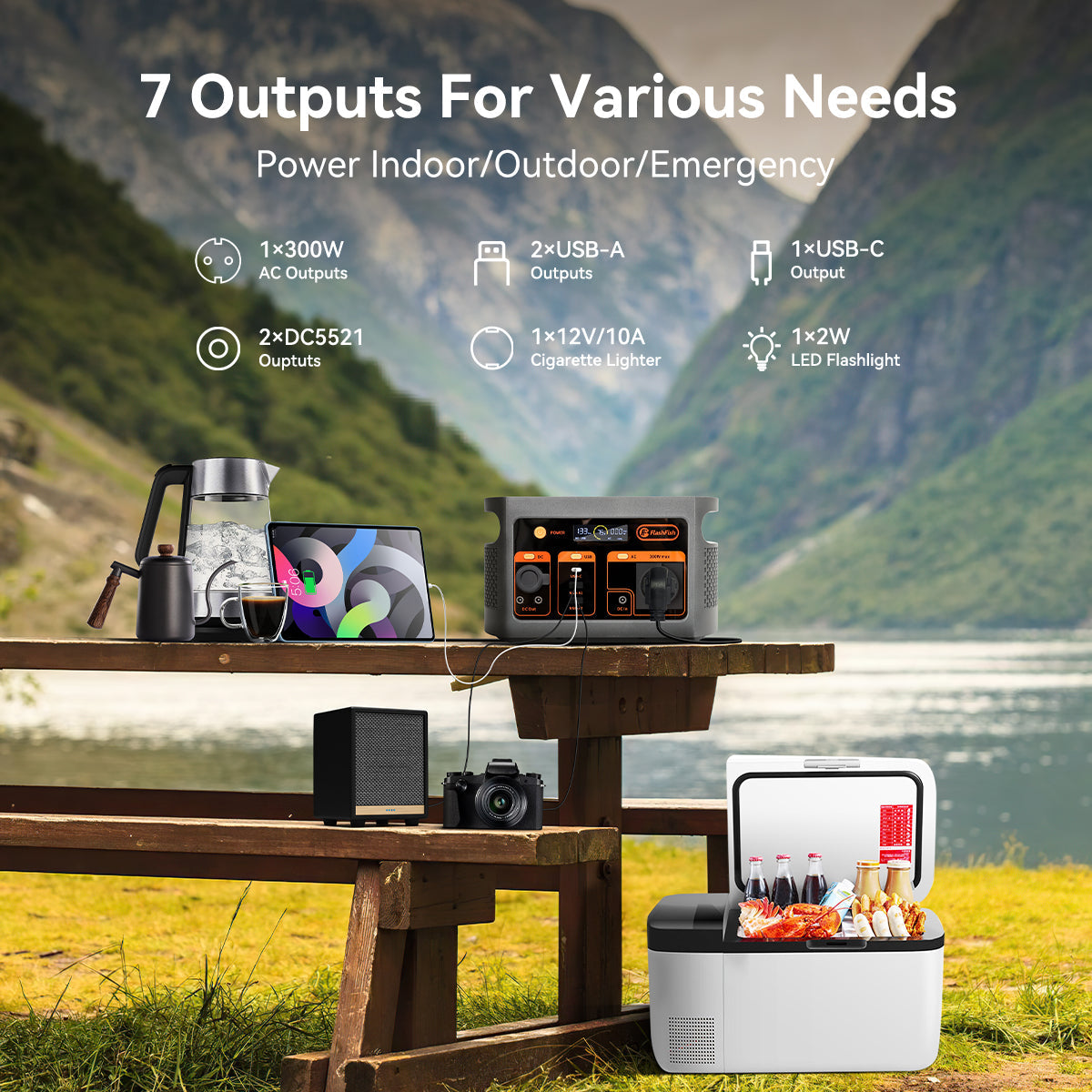
Do not assume a 12V-looking connector is suitable for a 13.8V transceiver. The T300PRO local record lists its DC outputs as shared at 12V, 10A, 120W maximum. The T1200S record lists shared DC outputs at 13V, 10A, 130W maximum. Those are station-side limits only. A transceiver or supply that requires a different voltage, higher transmit current, connector, or polarity needs another documented solution.
Where T300PRO and T1200S may fit
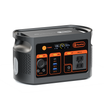
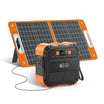
The FlashFish T300PRO is documented at 230Wh, 300W continuous pure-sine AC output, two AC outlets, and about 9.9 lb. It can be a candidate for a verified lower-load or shorter operating period where portability matters.
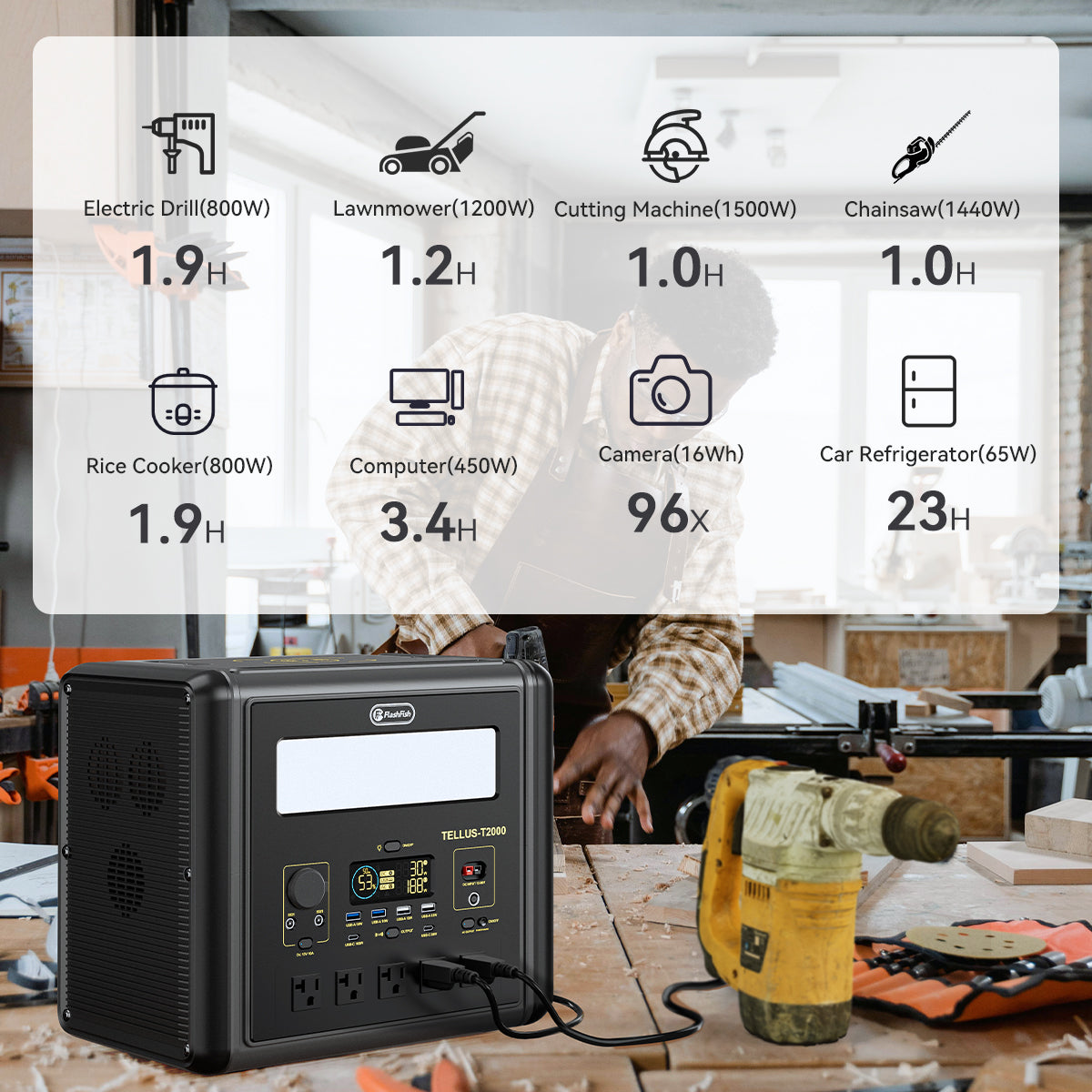
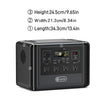
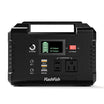
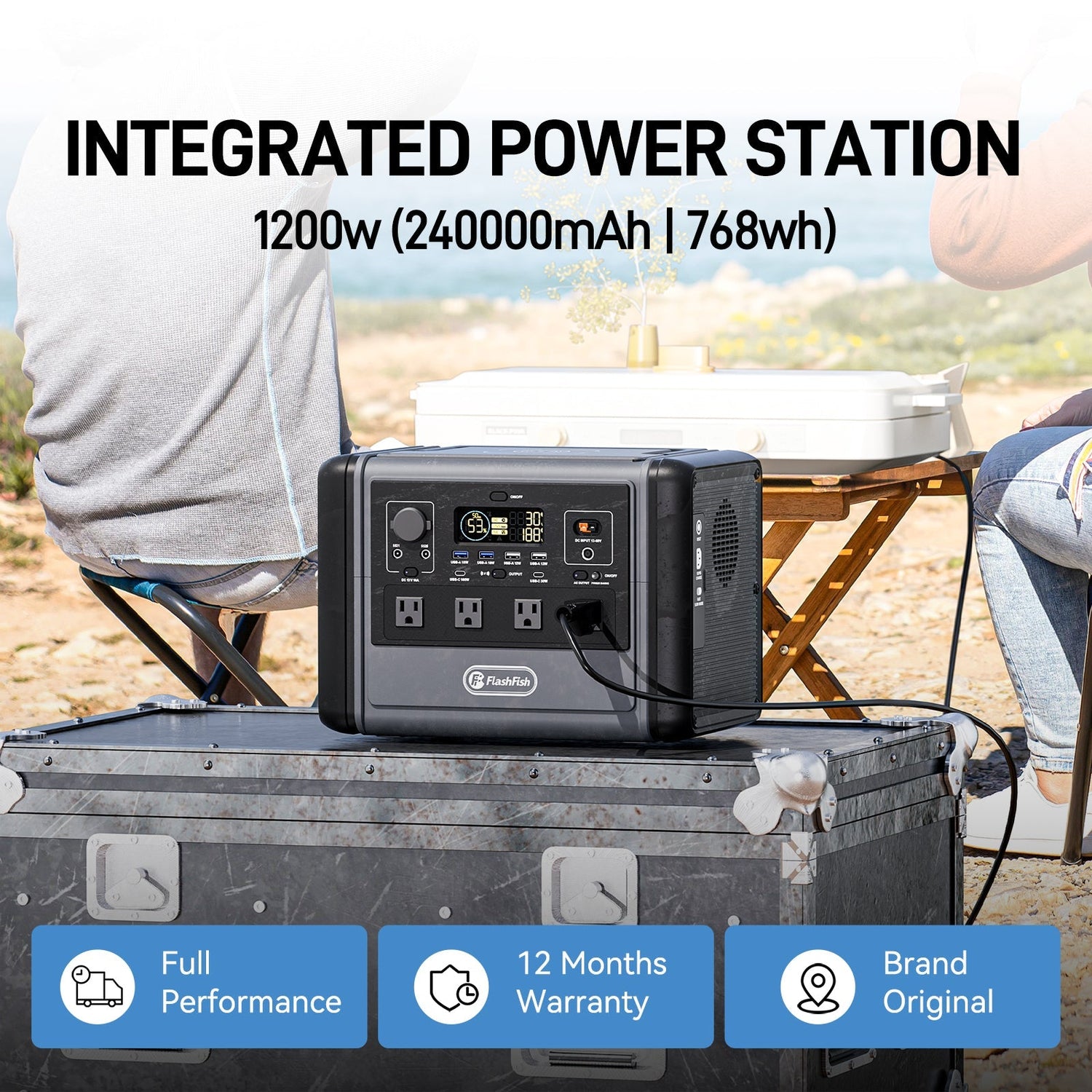
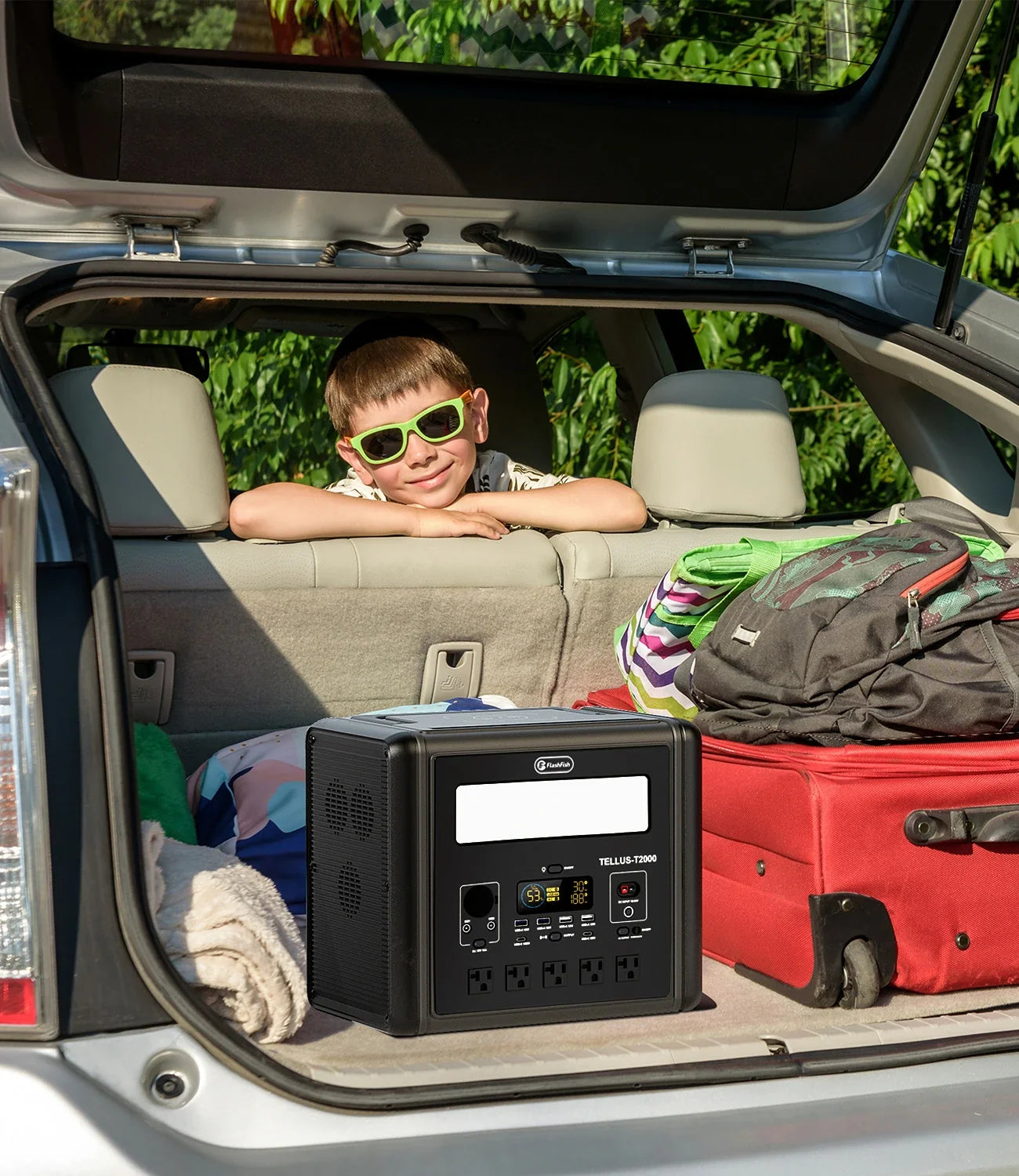
The FlashFish T1200S is documented at 768Wh, 1200W continuous pure-sine AC output, four AC outlets, and about 27.45 lb. Its larger energy budget may fit a longer session, multiple accessories, or more reserve, but the team must plan the additional weight and still verify every connection.
Neither model record proves compatibility with a particular transceiver, linear amplifier, power supply, antenna system, computer, or operating class. High-power amplifiers and other heavy loads require their own engineering and should not be inferred from a general Field Day article.
Run an RF-noise rehearsal
Power electronics, USB chargers, displays, networking gear, and cables can introduce noise that is not obvious in a simple output calculation. Assemble the station exactly as it will be deployed. Listen across the intended bands with each accessory off, then switch on one item at a time. Test receive and transmit operation at the planned power level, and move cables or equipment only in ways consistent with the radio and station manuals.
Record which device, port, cable, or charging mode changes the noise floor. If a problem appears, do not promise that a generic ferrite or different cable will solve it. Diagnose the source and use components suited to the frequency, current, and installation.
Confirm current Field Day rules
Power-source choices can affect operating class, multiplier, or bonus eligibility. The ARRL Field Day Help page distinguishes commercial, battery, solar, vehicle, and motor-driven sources in specific class contexts. Read the current year's rules and FAQ before the event; this article does not assign your class or scoring treatment.
Keep event compliance separate from electrical compatibility. A battery source may fit a rule category but still be electrically unsuitable for the radio, and a technically suitable source may not produce the scoring treatment the team expects.
Field deployment checklist
- Document receive, transmit, computer, network, and lighting loads.
- Calculate average watts for each operating position and the planned hours.
- Verify voltage, current, polarity, connectors, fusing, and grounding from original manuals.
- Test the full system for overload, heat, cable drop, and RF noise before the event.
- Assign reserve energy and a load-shedding order.
- Bring approved spares, printed diagrams, and a log of the tested configuration.
- Confirm the current ARRL class and power-source rules.
- Create a weather stop plan and identify safe shelter.
The National Weather Service recommends that outdoor organizers identify who monitors weather, when activity stops, and where people shelter. A tent, antenna shelter, or open pavilion is not a safe lightning shelter. Disconnecting or saving equipment should never delay moving operators to a substantial building or hard-topped vehicle.
For smaller handheld-radio charging, see the existing two-way radio label guide. A Field Day station adds transmitter duty cycle, station accessories, rule classification, and RF-noise testing.
FAQ
Can a portable power station run an amateur radio transceiver?
Possibly, but radio output class does not define the station-side requirement. Verify the transceiver or power-supply voltage, maximum current, connector, grounding guidance, and transmit load against the exact power station output, then test the complete setup for overload and RF noise.
How do I estimate battery runtime for Field Day?
Measure or document receive and transmit watts, estimate the actual receive/transmit duty cycle, add computers and lights, and divide a conservative usable-energy budget by the resulting average watts. Keep reserve and validate the estimate in a rehearsal.
Is the FlashFish T300PRO or T1200S a better Field Day option?
T300PRO is easier to carry and may suit a verified lower-load station. T1200S provides substantially more energy and output for a larger documented load. The radio's supply path, transmit demand, event length, RF-noise test, and current Field Day rules determine the better choice.

コメントを書く
このサイトはhCaptchaによって保護されており、hCaptchaプライバシーポリシーおよび利用規約が適用されます。