

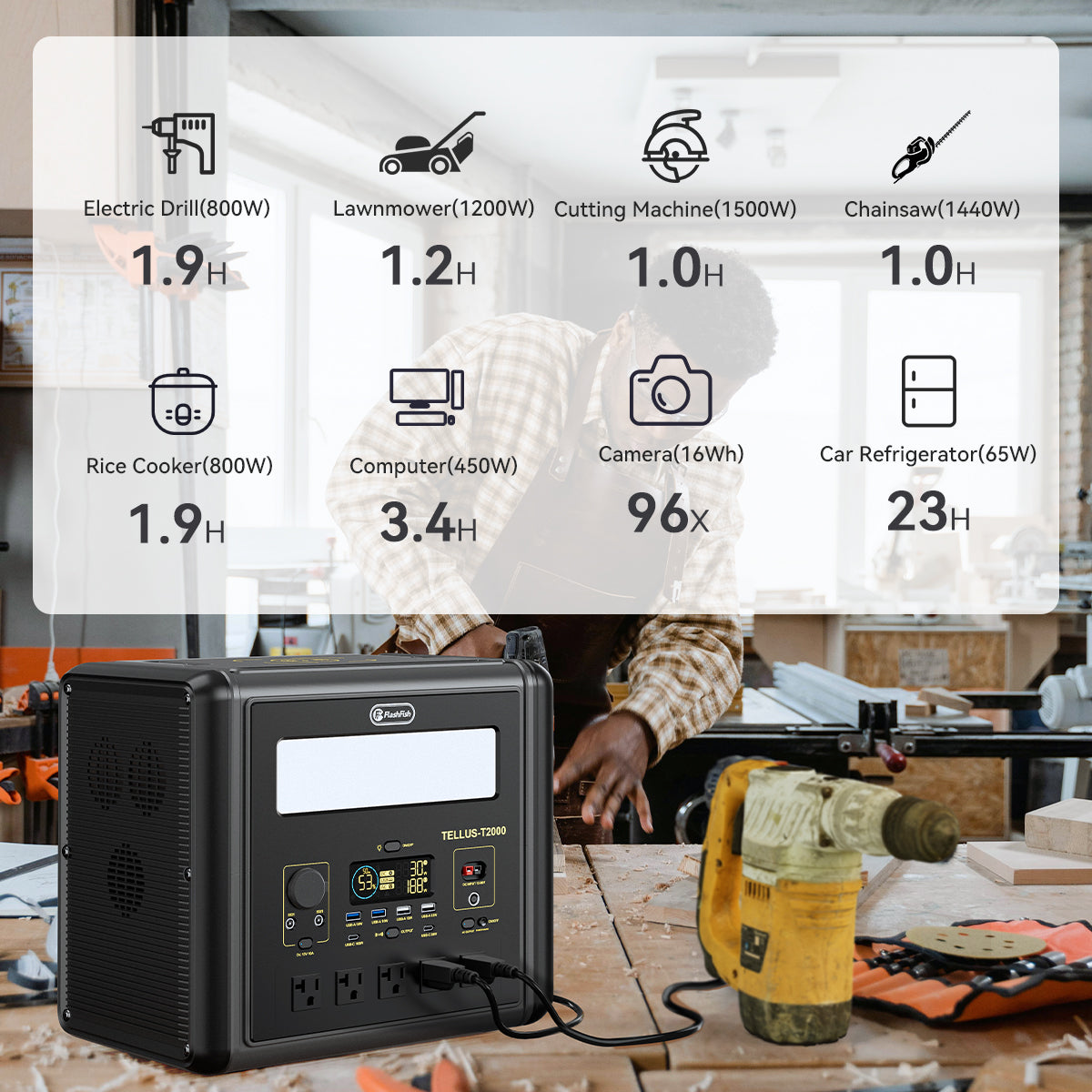
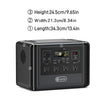
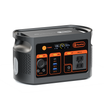
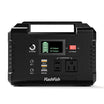

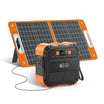
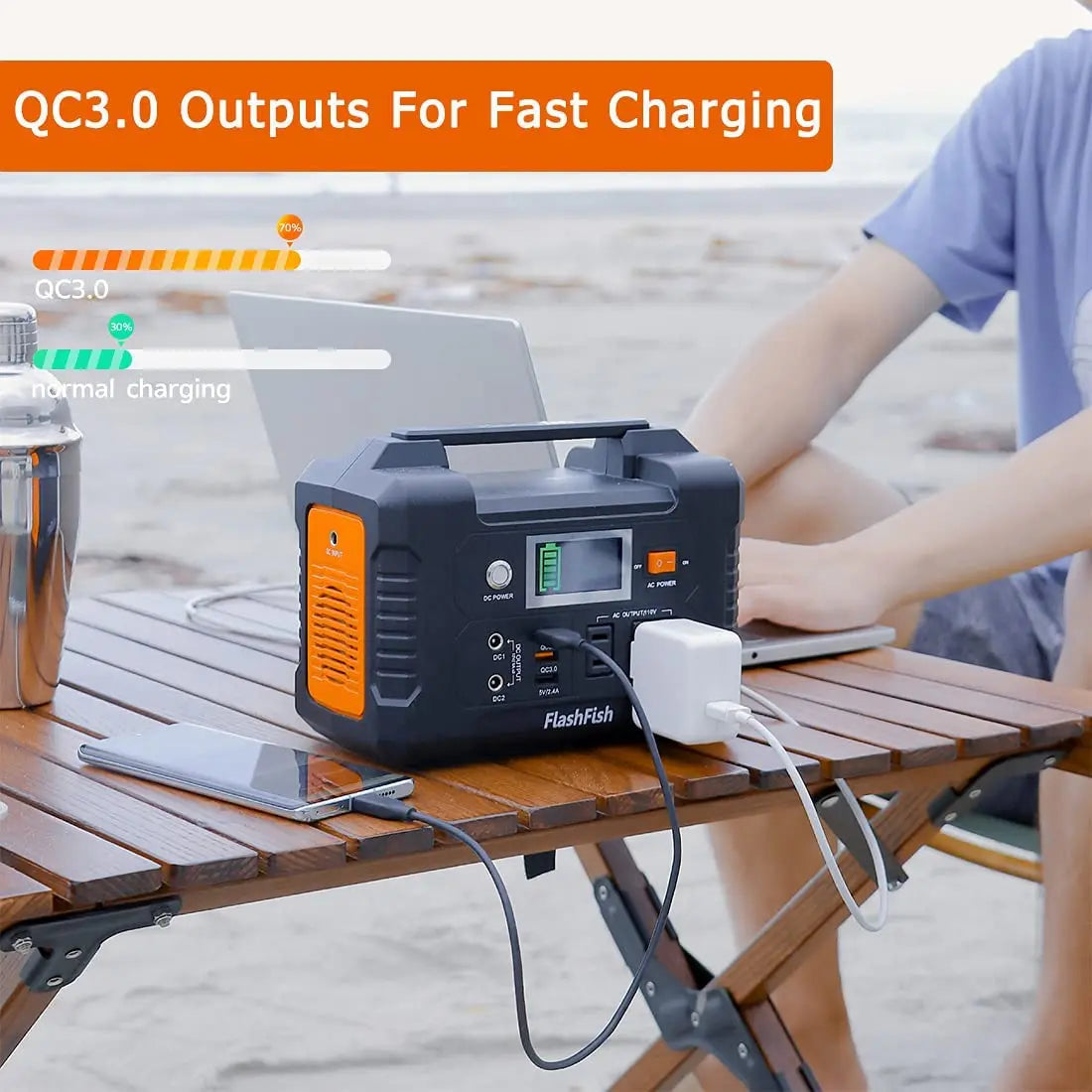
Short answer: running watts are the steady output a portable power station can supply, while surge or peak watts are short bursts some devices may need when they start. Choose a station by matching your device's running watts first, checking startup surge second, and using watt-hours only to estimate how long the battery may last. In the FlashFish lineup, compact models such as E200 and T200 sit in the 200W continuous class, while larger models such as T1200S and T2000 are built for higher-output planning.
Many shoppers compare only the largest number on a product page. That can lead to the wrong match. A label like 200W / 400W peak does not mean the station is designed to run a 400W device continuously. It means the normal AC output limit is 200W, with limited short-term headroom for startup behavior. Battery capacity is a separate number, measured in watt-hours, and it affects duration rather than the maximum load the inverter can support.
The three numbers to read before you plug anything in
| Spec | What it means | How to use it |
|---|---|---|
| Running watts / continuous output | The steady AC output the station is rated to supply. | Compare this with the device's normal operating wattage first. |
| Surge watts / peak output | A short burst of headroom for some devices during startup. | Use it as a screening point for startup loads, not as the normal limit. |
| Watt-hours | The battery capacity available for planning runtime. | Use it to estimate duration after you know the device can run within the output limit. |
The U.S. Energy Information Administration describes watts as a measure of electric power and watt-hours as energy used over time. For portable power station shopping, that distinction matters: watts help decide whether a device can be powered; watt-hours help estimate how long a battery may support the load.
FlashFish output examples from the product database
| FlashFish model | Battery capacity | Continuous AC output | Peak output | Planning role |
|---|---|---|---|---|
| E200 | 151Wh | 200W | 400W | Compact budget power for low-draw electronics after checking device wattage. |
| T200 | 153.6Wh | 200W | 400W | Compact LiFePO4 option with pure sine AC output in the product database. |
| T300PRO | 230Wh | 300W | 600W | A step up for shoppers who need more output than the 200W class. |
| T1200S | 768Wh | 1200W | 2400W | Higher-output planning for mixed essential loads within manual limits. |
| T2000 | 1536Wh | 2000W | 4000W | Larger-capacity, higher-output planning for heavier portable power needs. |
These numbers are useful for sorting the lineup, but they are not a promise that every device in a broad category will work. Two fans, monitors, routers, or small appliances can have different wattage requirements. Some devices also behave differently when starting, switching modes, or running under load.
A practical device-check workflow
- Find the device's running watts. Check the device label, charger label, or manual. The Department of Energy recommends using labels or a wattage meter when estimating appliance and electronics energy use.
- Check whether the device has startup surge. Motors, compressors, pumps, and some appliances may draw more power at startup than while running.
- Compare normal load with continuous output. A device should fit under the station's continuous AC rating, not just under the peak number.
- Treat peak output as short-term headroom. Do not use peak watts as the planned running load.
- Use watt-hours for duration planning only after output fit is clear. A higher-capacity battery can last longer, but it does not change the inverter's continuous output rating.
- Check ports and waveform when AC power matters. Some electronics may require pure sine AC, while USB or DC devices may not use the AC inverter at all.
When compact models may fit
Compact 200W-class stations such as FlashFish E200 and T200 are best approached as low-draw planning tools. They can make sense for phones, lights, many laptop chargers, small fans, routers, camera batteries, and other small electronics when the device label confirms the load fits within the station's output and port limits.
The E200 is listed in the product database as a 151Wh lithium-ion station with 200W modified sine AC output, 400W peak output, and 40W max solar/DC charging. The T200 is listed as a 153.6Wh LiFePO4 station with 200W pure sine AC output, 400W peak output, and 60W max solar input. Both share the same 200W continuous AC class, so the difference is not only watts; waveform, battery chemistry, charging input, ports, and weight also matter.
When higher-output models may be needed
If the load list includes multiple devices, larger displays, RV electronics, tools, or selected appliances, start by adding the running watts and then checking each device's startup behavior. FlashFish T300PRO, T1200S, and T2000 occupy higher output tiers in the product database, but the same rule still applies: continuous output is the normal limit, peak output is temporary headroom, and watt-hours are for duration planning.
For outage planning, keep the list narrow and realistic. A portable power station can support selected devices when they fit the station's limits, but it is not a whole-home backup system, a transfer switch, or a guarantee for hardwired circuits, HVAC, heaters, or medical equipment.
What watt-hours can and cannot tell you
Watt-hours help estimate battery duration, but the final result depends on the connected load, conversion losses, ambient conditions, battery state, and device behavior. It is safer to use watt-hours as planning context than to promise exact runtime. For example, a low-draw device generally lasts longer than a high-draw device on the same battery, but the article should not turn that into a guaranteed number without a verified wattage assumption and test boundary.
Related power-rating guides
Use these current FlashFish pages and guides to continue your comparison:
- Browse current FlashFish portable power stations
- Review portable power station ratings
- Separate watt-hours from output watts
FAQ
What is the difference between running watts and surge watts?
Running watts are the steady output a station can provide during normal operation. Surge or peak watts are short bursts that may help some devices start, but they are not the normal operating limit.
Can I use peak watts as the normal power limit?
No. Plan around the station's continuous output rating. Peak output should be treated as temporary headroom for startup behavior.
Does a higher surge rating mean longer runtime?
No. Surge rating relates to short startup power. Runtime planning depends mainly on watt-hours, the connected load, and real operating conditions.
Which FlashFish models list peak output in the product database?
The product database lists E200 at 400W peak, T200 at 400W peak, T300PRO at 600W peak, T1200S at 2400W peak, and T2000 at 4000W peak.
What should I check before plugging in a fan, router, laptop, or appliance?
Check the device label or manual for power requirements, confirm whether startup surge applies, compare the load with the station's continuous output, and follow both the device manual and the power station manual.


コメントを書く
このサイトはhCaptchaによって保護されており、hCaptchaプライバシーポリシーおよび利用規約が適用されます。