


Keep energy already in device batteries separate from future station top-ups. Count each refill once, using comparable measured Wh when available. A charged phone's initial battery is not another station expense.
A camping checklist can accidentally charge the station twice for one task. You list a phone's full battery as a requirement, then add its planned evening recharge as another requirement. But the phone arrived charged from home. That starting charge belongs in an opening inventory, while the evening refill belongs in the station-demand ledger.
Choose the account before entering a number
Use two accounts: energy brought in devices and future energy supplied by the station. The first records what you start with. The second supports your station choice. A device can appear in both accounts without its initial charge becoming a new station expense.
Write the trip's start and end beside the ledger. A recharge before departure is outside the trip's station-demand window if it comes from another source. A refill after returning home is outside that window too. This prevents a full-charge entry from drifting into a weekend budget merely because it appears on your general equipment checklist.
Battery percentage is useful as an observation, but it is not a common energy unit across different devices. A phone at 80% and a light at 80% do not establish equal stored energy. Likewise, mAh values at different battery voltages cannot simply be added. Keep those readings in the evidence column rather than treating them as station-delivered Wh.
Build a ledger around charging events
| Device | Initial battery evidence | Planned task | Recharge trigger | Measured top-up Wh | Station allocation |
|---|---|---|---|---|---|
| Phone | Departure percentage and battery documentation | Maps and photos | Chosen evening target | Comparable session, if available | Future session count × measured session Wh |
| Rechargeable light | Departure status and exact model | Reading after dinner | Planned refill before next use | Measurement at the stated charging boundary | Only refills supplied by the station |
| Spare device | Initial status recorded | Optional use | No scheduled refill | Unknown until measured | Separate contingency entry; do not assume zero demand |
Name each event, such as “phone, Friday evening.” If a single session charges two devices through an adapter, record either the combined measurement or separate measurements with a documented boundary. Do not add the combined total and its component totals.
Measure the future top-up at a consistent boundary
For a supported USB charging setup, an appropriate inline energy meter may record energy passing through its measurement point. Confirm the meter's electrical ratings, protocol support and instructions for that exact setup. Record whether the meter sits at the station output or nearer the device; do not combine results from different positions as though they describe the same quantity.
A device-input measurement does not reveal the station's internal battery depletion. Cable, conversion and operating losses may sit outside your measurement. There is no universal efficiency factor in this method. If usable station delivery under your conditions has not been established, keep that gap visible rather than converting nominal capacity into a guaranteed trip budget.
Use a charging session resembling the planned starting level, ending target and device activity. A measured partial top-up should not be silently reused as a full-recharge figure. Label an unmeasured row “unknown” and prioritize measuring it before choosing a station.
Three hypothetical camping entries
These examples illustrate bookkeeping only. They are not measurements of a FlashFish product or a named device.
Example 1. A phone arrives charged and needs one refill
Suppose the phone's documented nominal battery capacity is 15Wh and a comparable future top-up measures 9Wh at your chosen output boundary. The station allocation for that one event is 9Wh. Adding 15Wh + 9Wh would produce 24Wh by treating the starting battery as another station delivery.
Example 2. A light needs two distinct top-ups
Suppose two comparable sessions each measure 4Wh. Allocate 2 × 4Wh = 8Wh. Record the light's starting charge in the opening inventory, without adding it again. Combined with the phone's 9Wh event, these planned measured deliveries total 17Wh at the same boundary; that total is not a station-runtime promise.
Example 3. A backup device has no charging log
Leave its top-up demand unknown. A full icon does not establish that it will need no station energy during the trip. Keep it outside the measured subtotal and list its contingency separately. The ledger should show “17Wh measured-plan subtotal, plus unresolved backup demand,” rather than a falsely complete 17Wh total.
Where A101 and T200 fit
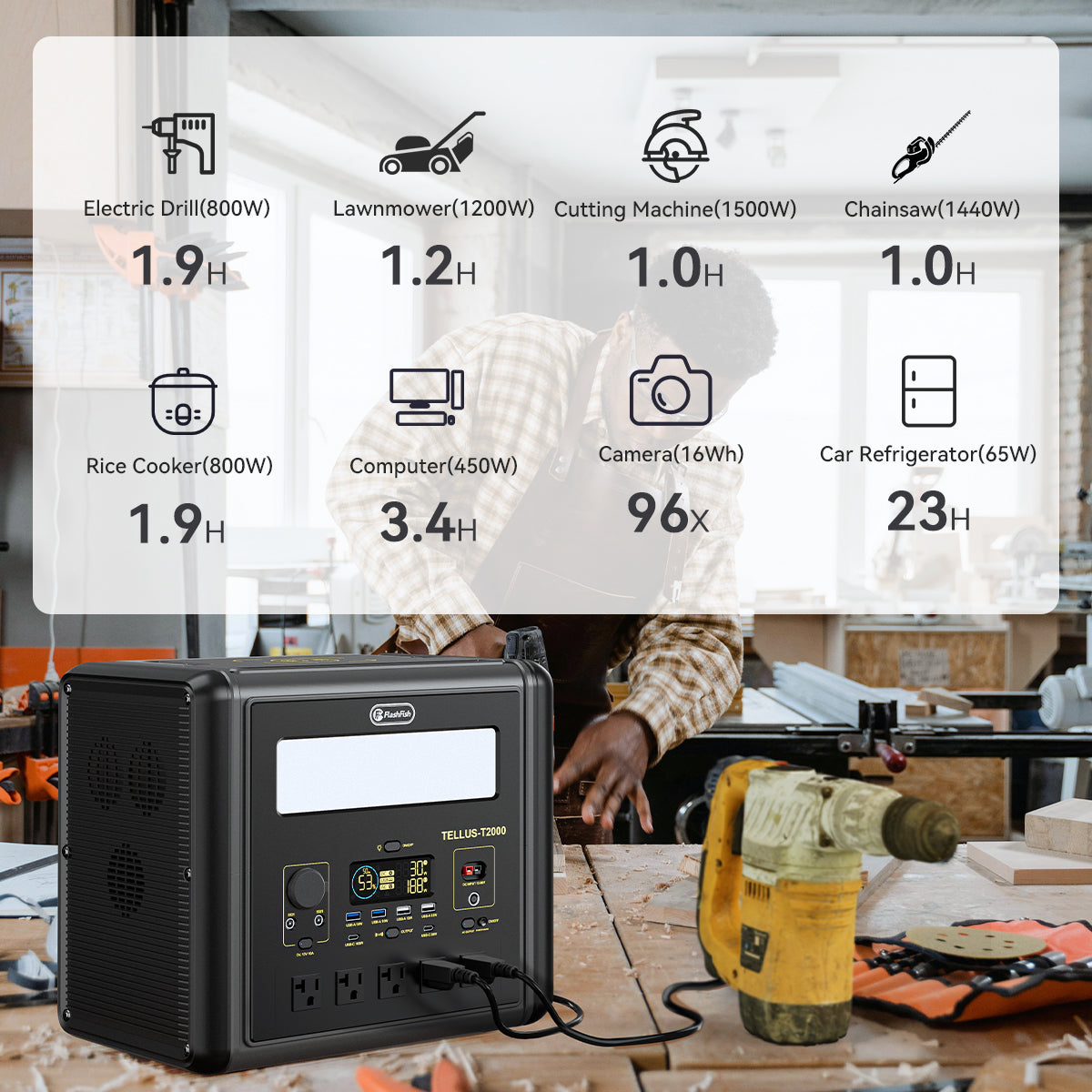
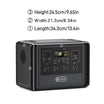
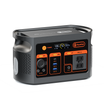
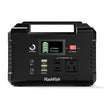
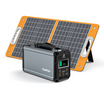
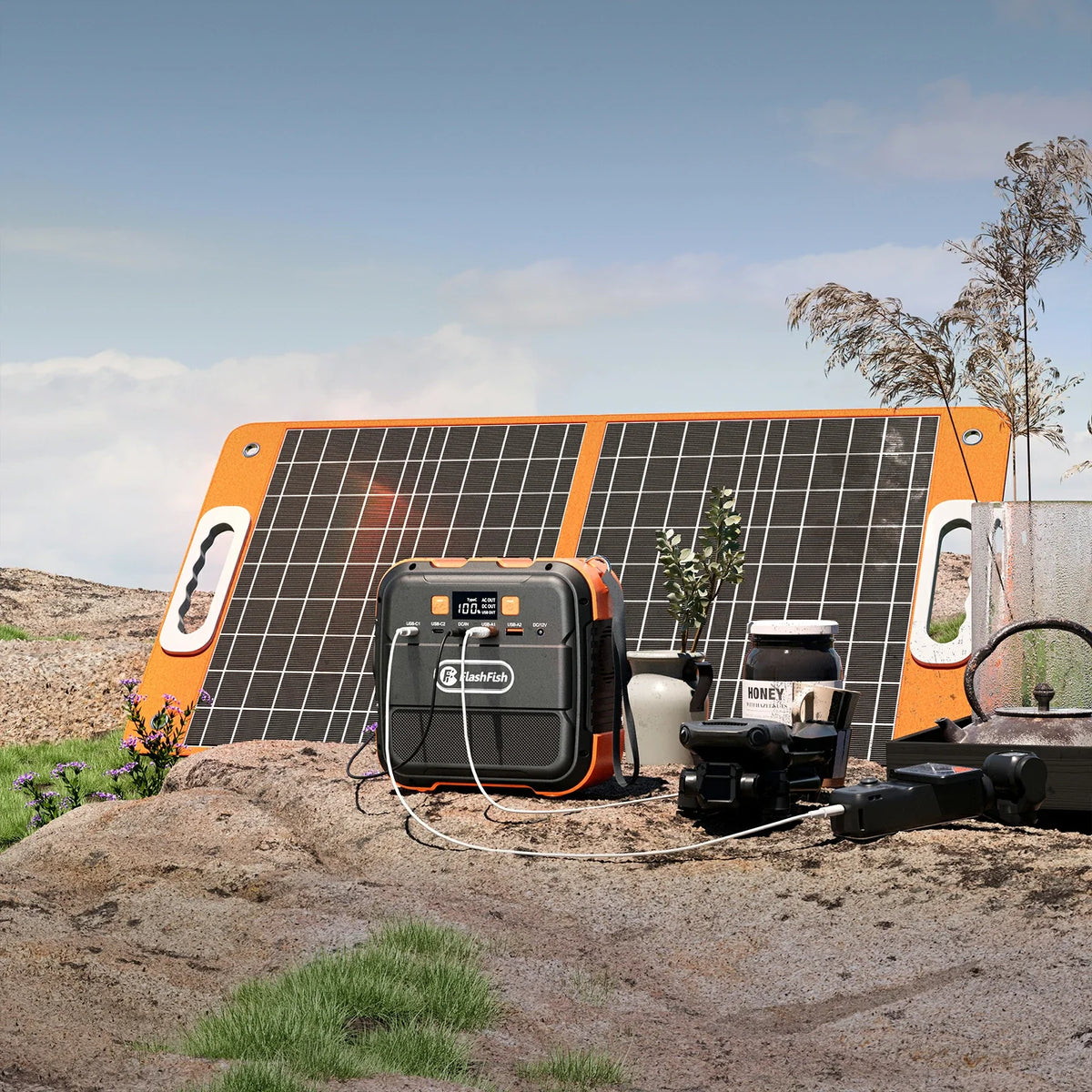
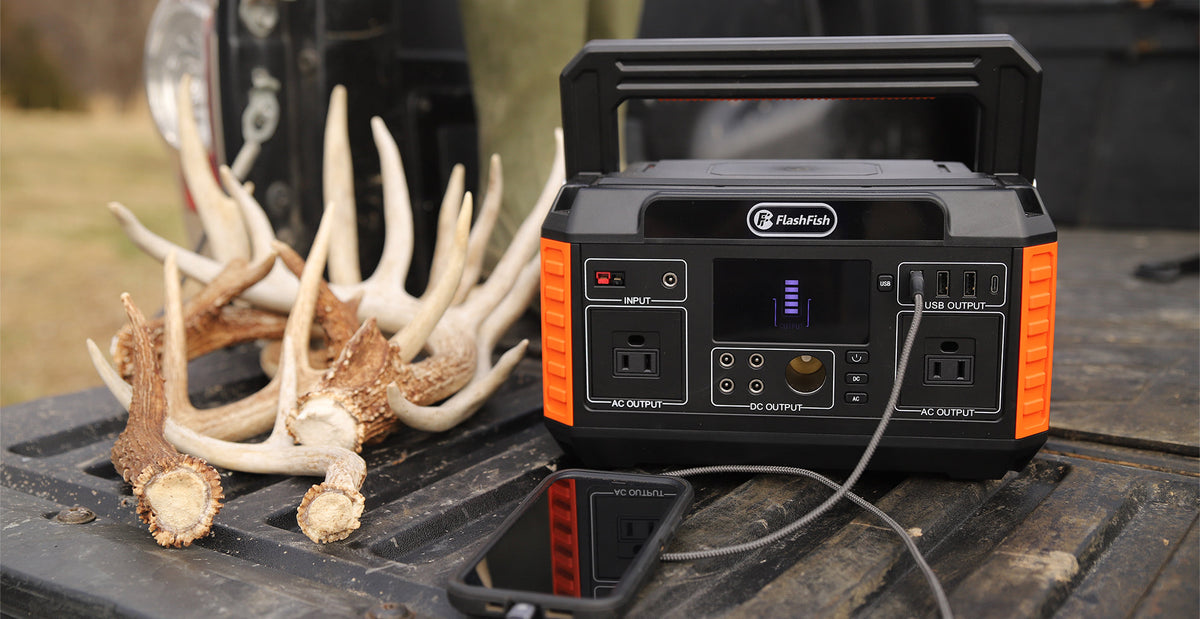
FlashFish's available model records list A101 at 97.68Wh, with two USB-C PD outputs up to 18W each and two USB-A QC 3.0 outputs up to 18W each. The T200 record, also named TELLUS-T200, lists 153.6Wh, a USB-C1 PD output up to 60W and a USB-C2 PD output up to 18W.
These specifications help form a shortlist after you identify each device's supported charging path. Nominal battery Wh and individual port maxima do not establish delivered trip energy, simultaneous output totals or compatibility with your equipment. Verify the exact U.S. unit and original documentation before making the final match.
Frequently asked questions
Should I subtract every device's full battery from station demand?
No. If your ledger already counts only future station top-ups, the initial device energy was never included in that demand. Subtracting it again would introduce a different accounting error.
Can I count energy from a campsite outlet or another battery?
Record it as a separate supply source and assign each charging event to one source. Do not allocate the same refill to the campsite outlet and the portable station.
Does the measured subtotal tell me which station will last all weekend?
It gives a better-defined demand estimate, not a duration guarantee. Unmeasured loads, different charging sessions and station-side losses remain relevant.
Turn the ledger into a purchase decision
First remove duplicated events. Next measure the largest unresolved top-up and confirm its charging path. Then compare the resulting demand, port requirements and unresolved contingency against the exact A101 or T200 documentation. Keep nominal capacity separate from measured usable delivery so the decision rests on evidence you actually have.
For the wider trip calculation, use the camping power station runtime worksheet. Keep this event ledger as the demand input, rather than adding initial device batteries to it.
Next step: Compare FlashFish A101 specifications with your equipment list.


コメントを書く
このサイトはhCaptchaによって保護されており、hCaptchaプライバシーポリシーおよび利用規約が適用されます。