


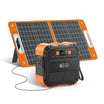
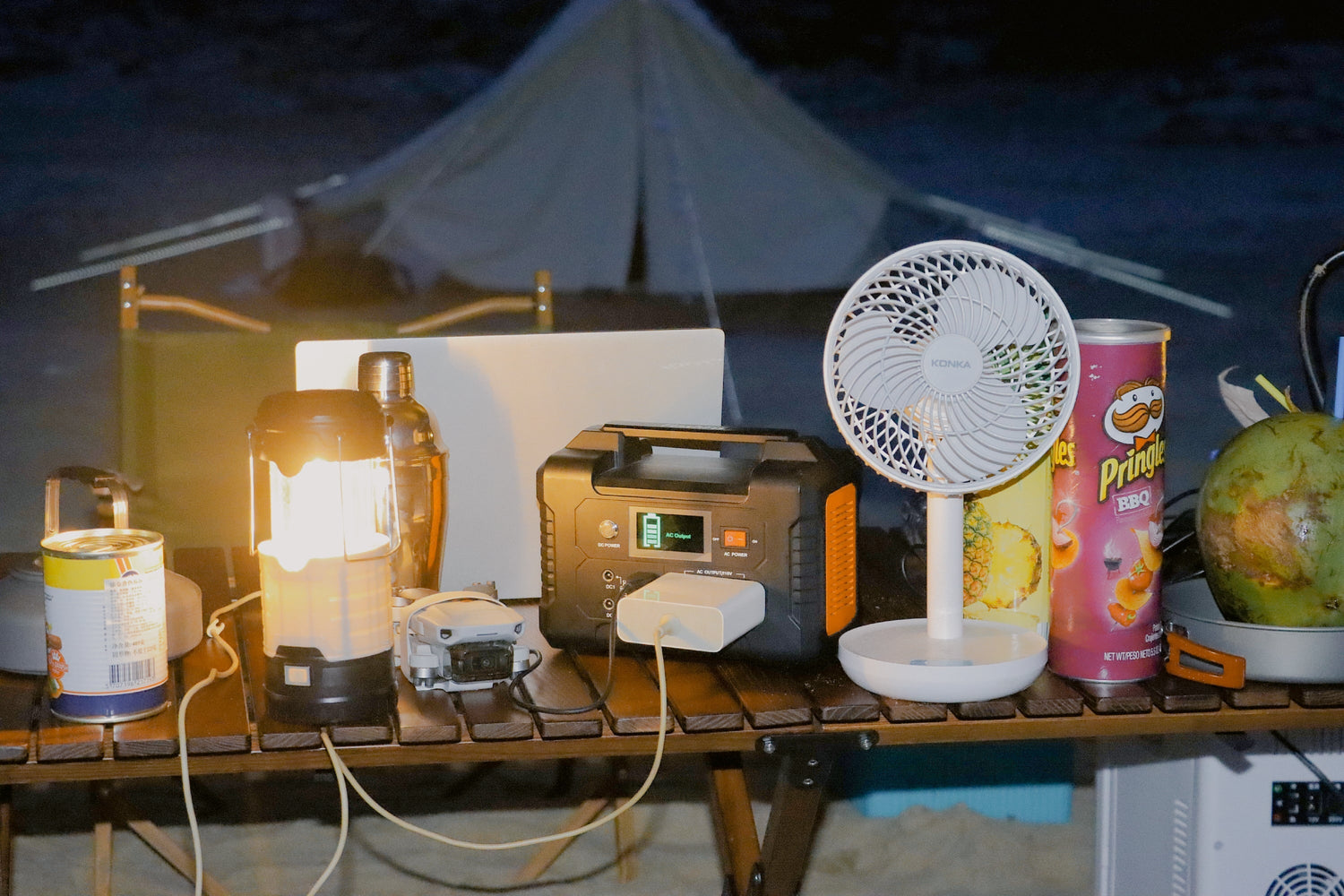
Short answer: A portable solar panel can charge or power a camping fan directly only when the fan input, panel output, connector or cable, and sunlight conditions all match. For evening use, cloudy conditions, or multiple devices, a portable power station is usually the better buffer because the panel itself converts sunlight but does not store energy.
Why direct panel power is different from stored battery power
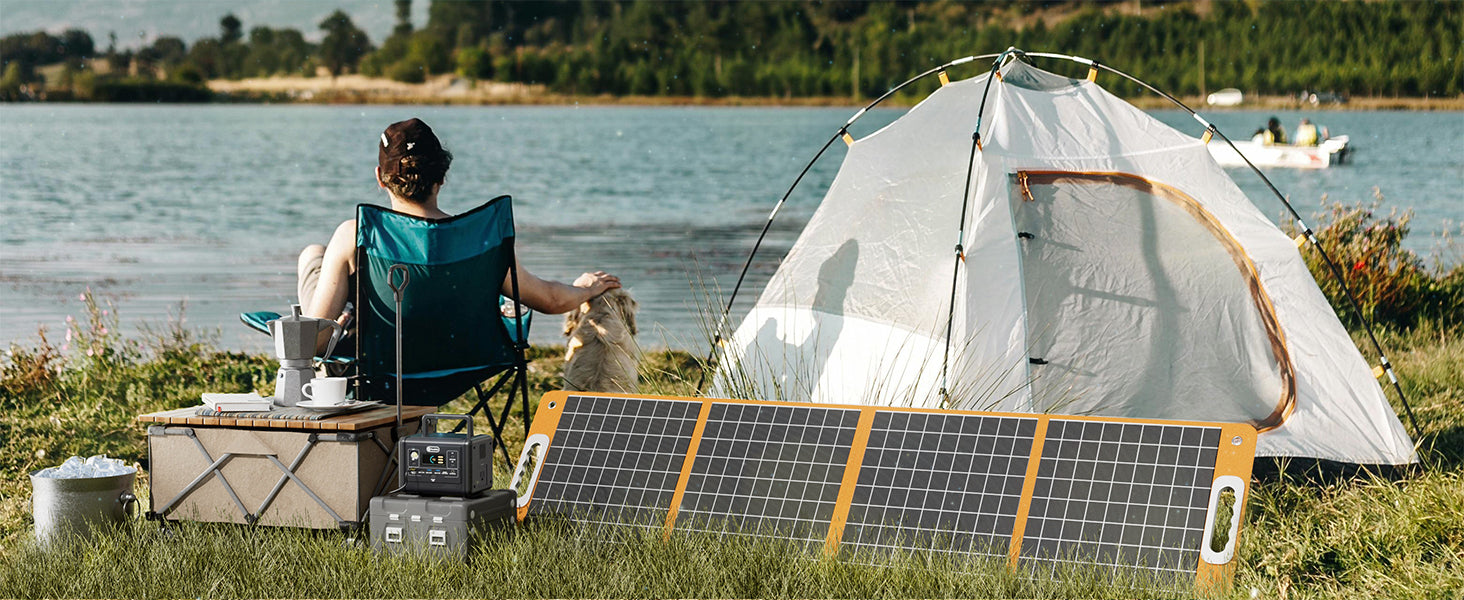
A portable solar panel is a charging source, not a battery. It can produce power when sunlight is available, but the output changes with sun angle, shade, clouds, panel position, cable path, and the device's own charging behavior. That is why direct solar-to-fan use is a conditional setup, not a universal yes.
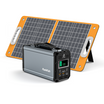
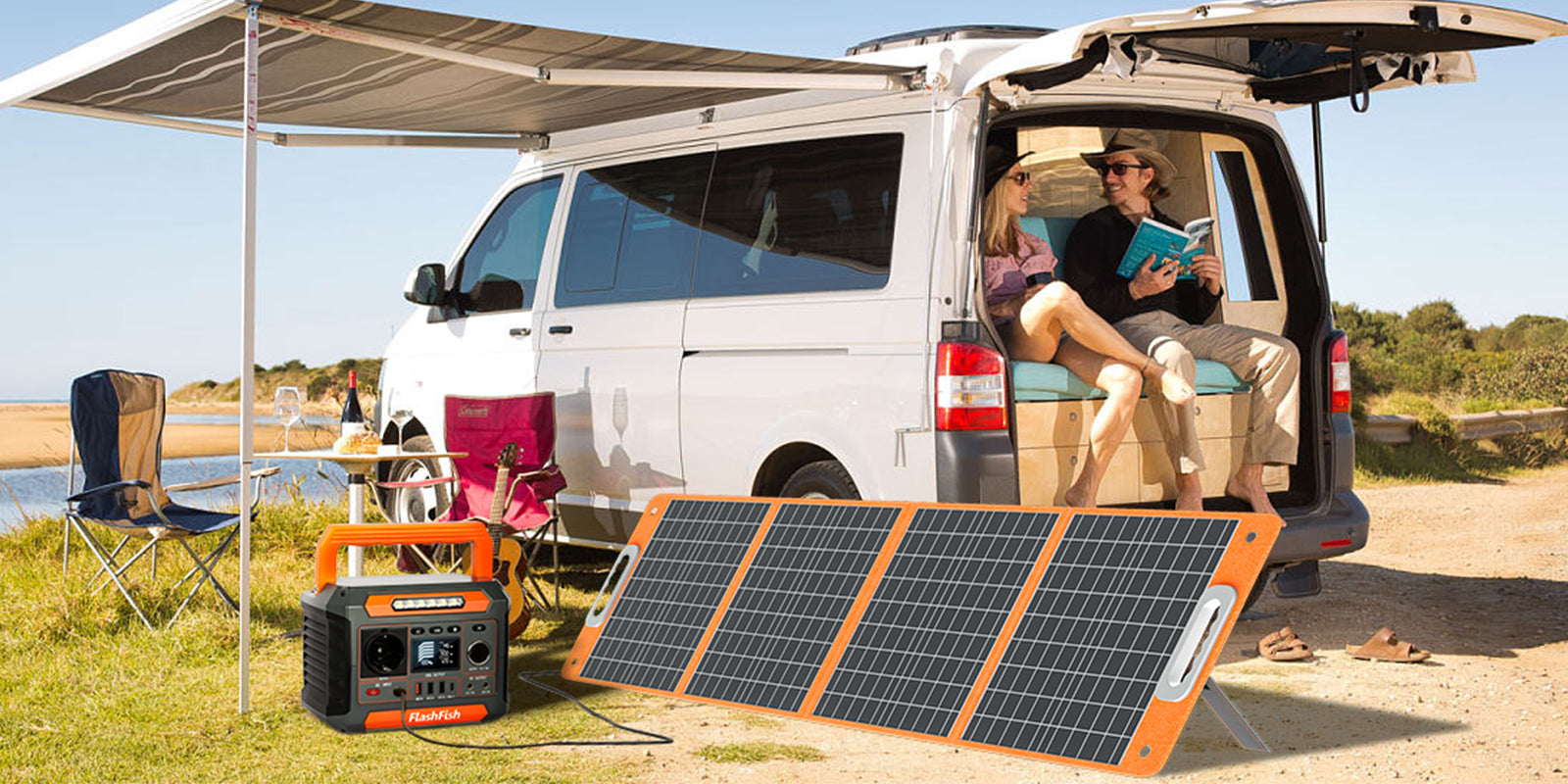
A power station changes the plan. The panel charges the station when sun is available, and the station supplies stored energy later through matched USB, DC, or AC outputs. That buffer is usually cleaner for camp evenings, variable weather, and trips where the fan is only one of several devices.
Check the camping fan input first
Start with the fan, not the panel. Look for the fan's required voltage, current, connector, and charging behavior. A USB-C port does not automatically mean every USB-C power source will work, and a fan that runs while charging may behave differently from a fan that only charges its internal battery.
For a FlashFish example, the FlashFish X60 camping fan has a 5V/2A Type-C input and a 5V/2A, 10W USB output. Those figures are useful for planning, but they still do not prove every direct solar setup, cable, or sunlight condition will charge it reliably.
Check the solar panel output second
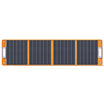
Next, compare the panel outputs with the fan input. The FlashFish TSP60 is a 60W foldable monocrystalline panel with 18V DC output, USB-C output up to 45W, and USB-A output up to 18W. The FlashFish TSP100 is a 100W foldable monocrystalline panel with 18V DC output, USB-C output up to 65W, and USB-A output up to 18W.
Those are output limits, not guarantees that a particular fan will draw that amount. The device decides what it accepts, and sunlight affects what the panel can provide at any moment.
Direct solar-to-fan versus a power-station buffer
| Decision factor | Direct solar-to-fan path | Power-station buffer path | Boundary |
|---|---|---|---|
| Fan input | Must match panel USB or DC output | Station output must match fan input | No universal fan claim |
| Sunlight | Needs stable direct sun | Station can store energy charged earlier | No solar-yield guarantee |
| Evening use | Weak fit without stored battery | Better fit if the station is charged | No runtime promise |
| Multiple devices | Port and output limits matter quickly | More flexible if the station has needed ports | Port max is not device draw |
| FlashFish example | X60 Type-C input with TSP USB output only after checks | E200, T200, or T300PRO can act as separate buffers where supported | No exact recharge time |
When a power station is the cleaner buffer
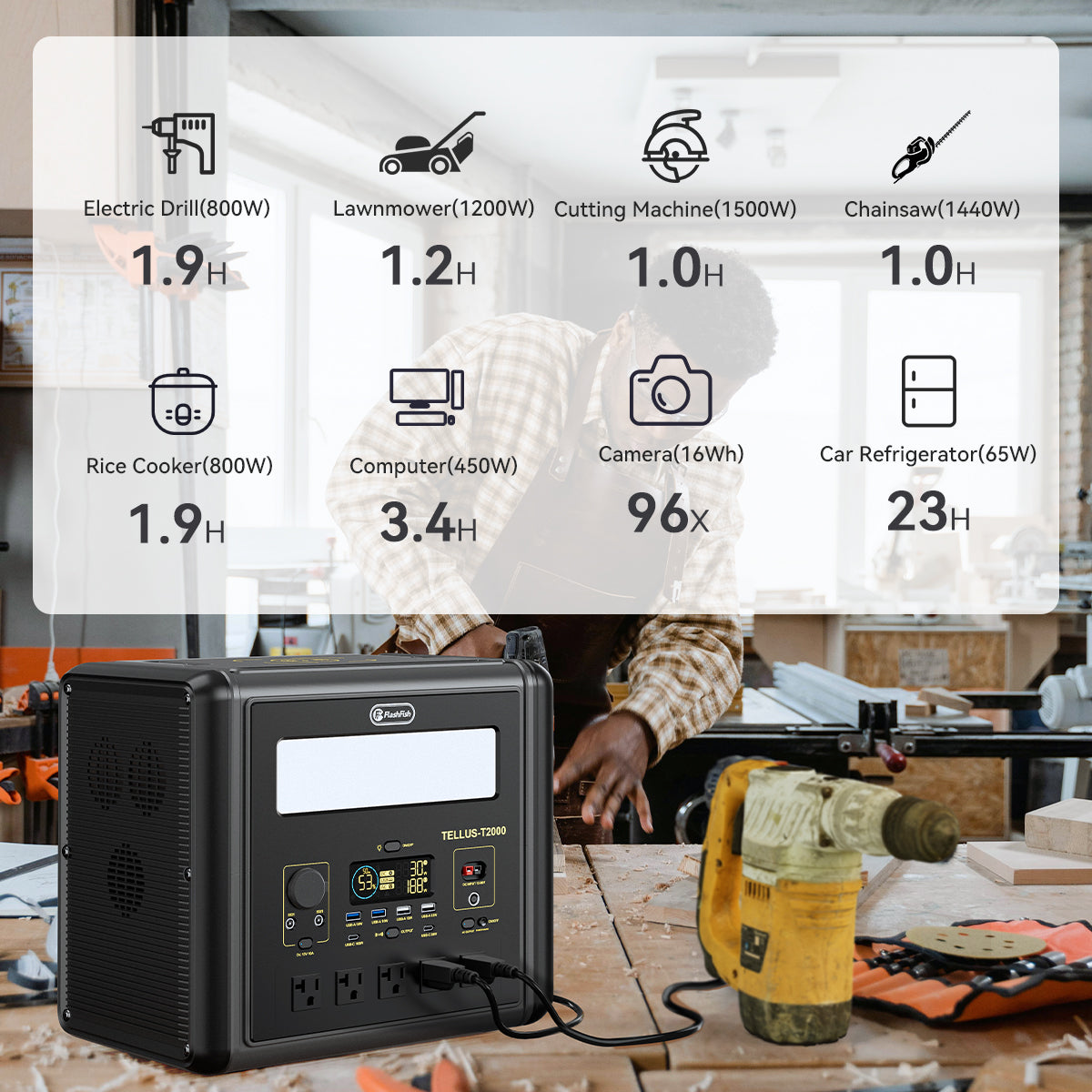
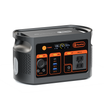
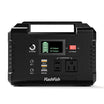
Use a power-station buffer when the fan needs to run after sunset, when clouds or shade are likely, when you also need phones or lights, or when you do not want the fan to depend on a live sunlight path. The FlashFish portable power stations collection is the better fit for stored energy and multi-port planning.
Compact station examples include the FlashFish E200, FlashFish T200, and FlashFish T300PRO. Pick by output path and load list first, not by assuming a fixed fan runtime.
FlashFish X60, TSP60, and TSP100 planning examples
If you already own X60, first check its 5V/2A Type-C input against the panel's USB output and the cable you plan to use. If you are choosing a panel, compare portability, output path, and whether a station will be part of the setup. TSP60 is lighter and lower wattage; TSP100 offers a higher 100W DC panel path and higher USB-C maximum, but neither panel stores power.
For a small solar-generator path, pair the panel with a compatible station rather than treating the panel alone as a backup source. For a quick accessory top-up in bright sun, direct USB may be useful after compatibility checks, but it should not be the only plan for comfort or safety.
When direct charging may not fit
Skip the direct panel-to-fan plan when the fan input is unknown, the cable path is uncertain, the campsite is shaded, the fan must run at night, the fan is high-draw, or the use case involves medical cooling, heat-safety needs, weather exposure, or any critical comfort requirement. A solar panel can help with charging, but it is not a guarantee of stable fan operation.
When FlashFish fits and when it may not fit
FlashFish fits when you want a clear small-solar planning path: X60 for rechargeable fan comfort, TSP60 or TSP100 for sunlight charging, and a portable station when stored energy is needed. It may not fit when you need guaranteed direct-device compatibility, exact recharge times, weatherproof operation, or a one-piece solution for every campsite condition.
Related solar and camping guides
For station pairing, read How to Pair a FlashFish Solar Panel With a Power Station. For panel behavior in difficult light, use Can a Portable Solar Panel Charge Through a Window or Shade?. For the station-versus-kit decision, see Portable Power Station or Solar Generator Kit First?.
FAQ
Can a portable solar panel power a camping fan directly?
Sometimes, but only when the fan input, panel output, connector or cable, and sunlight conditions match. Do not assume every USB fan or every panel will work directly.
Is it better to use a power station between the panel and fan?
Often yes. A charged station gives stored energy and output stability for evening use, cloudy conditions, and multiple devices.
Can FlashFish X60 work with a solar panel?
X60 has a 5V/2A Type-C input, so any solar path must match that input and the cable. This guide does not promise direct solar charging or a specific recharge time.
Can TSP60 or TSP100 charge USB devices directly?
They include USB outputs, with TSP60 rated up to 45W USB-C and 18W USB-A, and TSP100 rated up to 65W USB-C and 18W USB-A. The connected device still must accept the output.
What should I check before using solar for a fan at camp?
Check fan input, panel output, connector or cable, sunlight exposure, whether you need evening use, and whether other devices need the same charging path.

コメントを書く
このサイトはhCaptchaによって保護されており、hCaptchaプライバシーポリシーおよび利用規約が適用されます。