


A lower charge indication after storage does not, by itself, identify self-discharge or standby use. First audit the records you already have: the exact unit, documented shutdown or output state, elapsed interval, display indication, and any changed conditions. If the state or endpoints are uncertain, the supported conclusion is simply that a lower indication was observed. It is not a measured loss rate or a battery-health result.
This guide compares the evidence needed for different explanations. It does not report a storage experiment, prescribe an unattended discharge trial, or supply a normal daily loss percentage for FlashFish products.
Keep the observation separate from its explanation
“The display looked lower when I returned” is an observation. “The battery self-discharged” assigns a mechanism. “The controls consumed the missing energy” assigns another. Moving from the first statement to either explanation requires evidence that the display alone does not provide.
For an evidence review, keep three questions open: Was the unit in its documented off state? Were any controls or outputs enabled during the interval? What does the manufacturer say the displayed indication represents? Those questions help organize a support request without pretending to divide the observed change into separate causes.
Do not assume an unrecorded condition stayed constant. A cable found disconnected at the end does not establish when it was disconnected. A note saying “screen dark” documents screen appearance, but it does not establish shutdown unless the matching instructions make that relationship clear.
Find the state instructions for your exact unit
Use the model, regional version, and revision on your product and documentation. FlashFish's U.S. manual-matching guidance explains these checks and advises contacting support when the label and manual conflict. A similar model's controls cannot fill a gap in your own record.
Then transcribe the relevant instruction and compare it with what your existing log actually records. If your note says only “put away,” leave the operating state unknown. Do not reconstruct a button sequence from memory and enter it as a confirmed action.
Storage-maintenance instructions are another separate question. Follow the matching instructions for your unit; this evidence worksheet does not replace them or create a new storage interval, charge target, or shutdown sequence.
Audit the existing observations
| Field | Useful evidence | Limit to retain |
|---|---|---|
| Observation dates | Original start and end timestamps | Approximate dates leave the interval approximate |
| Unit and state | Exact unit plus recorded actions matched to its instructions | A dark screen alone is not documented shutdown |
| Outputs and connections | What was enabled and connected, with known change times | The ending arrangement does not prove the entire interval |
| Indicator boundary | Original display wording, segments, or photographs | Keep the display's own units and resolution |
| Changed conditions | Recorded use, charging, location changes, and missing periods | Unlogged conditions remain unknown |
| Supported conclusion | A lower indication under the documented conditions | Mechanism, energy quantity, and health may remain unavailable |
Preserve the original record alongside your interpretation. For a segmented display, describe the segments rather than inventing precise percentages. If a photograph is unclear, label it unreadable instead of selecting the value that makes the story consistent.
Why the comparison cannot become a loss calculation
Dividing a display change by elapsed days would give a number, but that number would not isolate self-discharge from enabled-state use or uncertainty in the observations. Likewise, multiplying a guessed percentage by nominal capacity does not establish measured watt-hours lost.
Even a more complete record needs a manufacturer-supported interpretation before a cause is assigned. Better notes can remove an ambiguity about a connection or action. They do not automatically measure the remaining causes. Do not grade a battery as healthy or degraded from this worksheet.
A useful support summary is short: identify the unit and matching document, report the original endpoint indications and dates, describe the recorded state, and list gaps. Ask which additional evidence the manufacturer needs. There is no need to run a new discharge experiment to make that first request.
Three hypothetical records and their limits
Example 1: Shutdown was recorded, but the display meaning was not
An owner has dated notes of the documented shutdown action and a later lower indication. The exact meaning and resolution of the two display readings were not retained. The owner can report the observation and recorded action, but cannot calculate a self-discharge rate from them.
Example 2: An output was left enabled
A log records an enabled output at the start and a lower indication later. No measurement identifies consumption during that interval. The enabled state belongs in the record; it does not justify assigning all of the difference to standby use or declaring a model defective.
Example 3: Two units have unmatched records
One E200 note covers an approximate interval and says “screen off.” A T200 note covers a different interval and records a shutdown action. The owner cannot rank the models' storage losses from those notes. The useful result is a list of missing conditions, not a winner.
What E200 and T200 specifications contribute
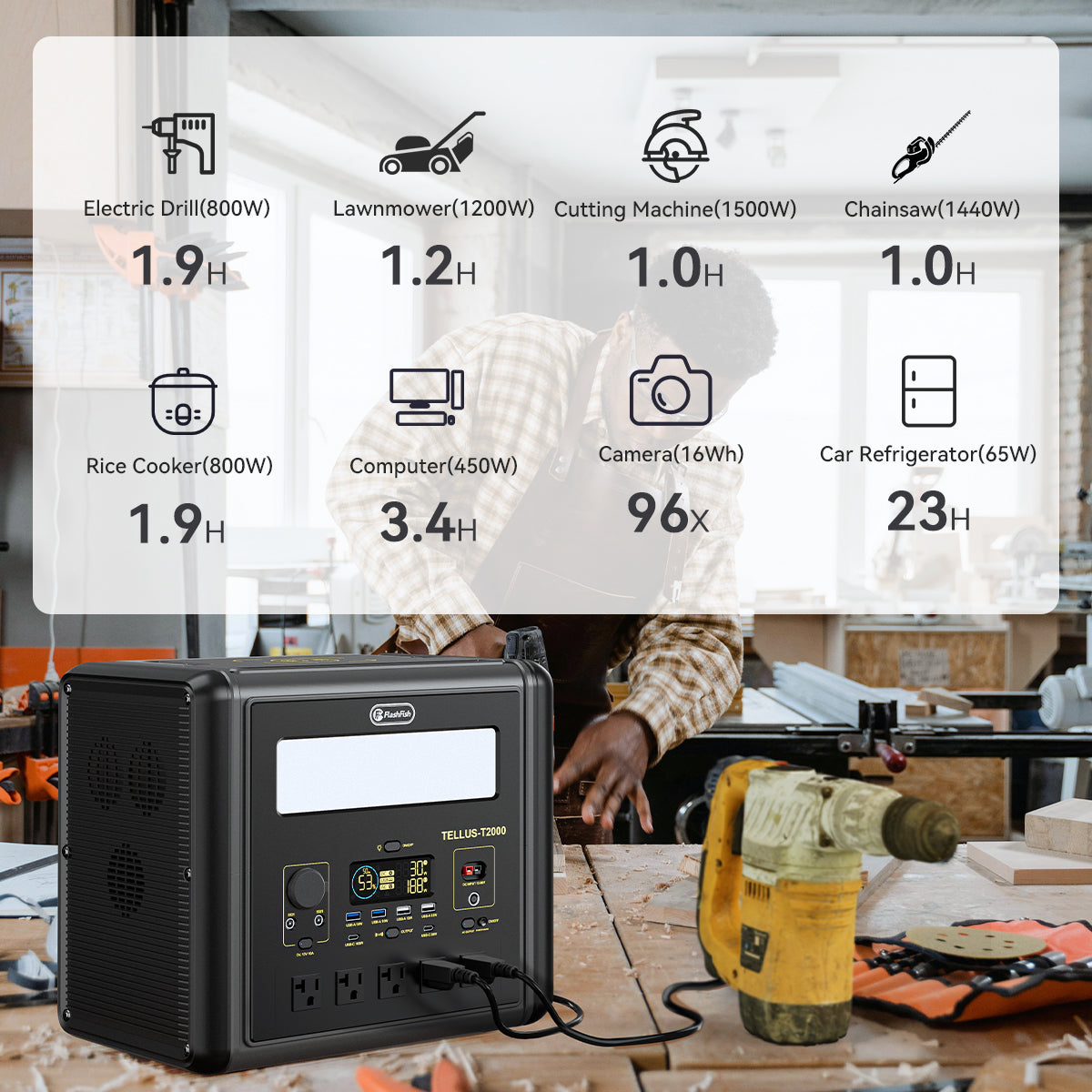
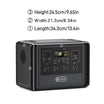
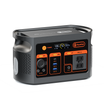
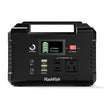
FlashFish E200 has a documented 151Wh capacity and lithium-ion chemistry. T200, also named TELLUS-T200, has a documented 153.6Wh capacity and LiFePO4 chemistry. These facts identify the products being discussed. They do not supply a measured storage-loss rate or an enabled-state power draw for either unit.
No model-specific self-discharge rate or standby power measurement is available for this comparison. A missing value is unknown, not zero. Capacity and chemistry therefore cannot settle which model loses less charge in a reader's particular storage conditions.
Frequently asked questions
Does a dark screen prove the station used no energy?
No. Record it as a screen observation. Establish the unit's operating state from its matching instructions and the actions actually documented. Neither screen appearance nor an absent power-draw value establishes zero consumption.
Can I compare a segmented display with a percentage display?
Keep each observation in its original form. Do not assign an exact percentage to a segment without a manufacturer-defined mapping. Different indicator formats do not create comparable energy measurements just because both can be described as charge displays.
Is a lower indication enough to diagnose a battery problem?
No. This record review does not establish a fault or battery health. Give support the original observations, unit identity, documented state, and unresolved conditions so they can advise on the appropriate next step.
Turn the record into a useful decision
Classify your existing record as documented off state, documented enabled state, or unknown state. Retain the original indication and leave the cause unassigned where evidence is incomplete. When considering E200 or T200, ask for exact storage and control documentation rather than choosing from an unsupported loss-rate claim.
Next step: Compare FlashFish E200 specifications with your requirements.


Leave a comment
เว็บไซต์นี้ได้รับการคุ้มครองโดย hCaptcha และมีการนำนโยบายความเป็นส่วนตัวของ hCaptcha และข้อกำหนดในการใช้บริการมาใช้