


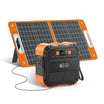

For one verified charging path, schedule essential devices by deadline using timed charging intervals, not port wattage. Add cable-change and packing time, test each finish against its deadline, and mark unmet targets before departure.
Write down what must be ready, and when
A campsite charging plan often starts with a phone, a headlamp, and a camera battery. The harder question is which one gets the cable first when someone leaves early or the gear must be packed before the vehicle departs. A queue turns that vague competition into a set of start and finish times. It does not create more energy or make a slow device charge faster.
Give each device a target state and its own deadline. A target might be enough phone charge for the planned journey, a headlamp ready for the next evening, or a camera battery ready before a walk. The deadline is when the device must be unplugged and available, not necessarily when the whole group departs. Do not assign a universal minimum percentage; choose a target appropriate to the device and trip.
Use a timed interval from the same charging arrangement
Record how long the actual device takes to move from its starting state to the chosen target through the intended cable and output. Keep the device activity and settings comparable. An interval measured with an idle phone is not automatically valid while it streams video or provides a hotspot.
Do not calculate charging minutes by dividing battery capacity by the station's maximum port rating. That rating is a ceiling, not the device's constant request. Charging can slow near the target, and the negotiated output, cable, and device behavior matter. If you have no timed observation, mark the duration unverified and perform a supervised trial before depending on the queue.
| Queue field | What to enter | Why it matters |
|---|---|---|
| Starting and target state | Device-reported state at connection and desired finish | A different starting state changes the interval. |
| Timed minutes | Observation from the checked device, cable, and output | Prevents using a port ceiling as charging speed. |
| Deadline | Time the device must be unplugged and ready | Accounts for early walkers and packing. |
| Changeover | Time to disconnect, switch cable, and verify the next device | Stops a paper schedule from using every minute. |
| Start and finish | Assigned time interval plus readiness check | Makes missed targets visible. |
Example 1: a feasible morning queue
Hypothetical schedule, not a FlashFish charging test: one path becomes available at 7:00 a.m. A phone needs 30 minutes and must be ready by 7:40; a headlamp needs 20 minutes and is due at 8:15; a camera battery needs 35 minutes and is due at 9:00. Allow five minutes between devices.
| Device | Assumed interval | Deadline | Assigned start | Finish | Result |
|---|---|---|---|---|---|
| Phone | 30 minutes | 7:40 a.m. | 7:00 a.m. | 7:30 a.m. | Ten minutes before deadline |
| Headlamp | 20 minutes | 8:15 a.m. | 7:35 a.m. | 7:55 a.m. | Twenty minutes before deadline |
| Camera battery | 35 minutes | 9:00 a.m. | 8:00 a.m. | 8:35 a.m. | Twenty-five minutes before deadline |
The queue needs 85 charging minutes plus ten changeover minutes: 95 minutes overall. It ends at 8:35. Keep the spare time as margin rather than immediately adding another device. This schedule assumes all three are available at 7:00 and the same path can serve each one.
Example 2: identify a deadline the queue cannot meet
Keep the same hypothetical 7:00 start, but require the phone's 30-minute target by 7:20. No ordering of this single-path queue can meet that target: even charging the phone first finishes at 7:30. Write the ten-minute shortfall next to the phone rather than moving the other devices around and calling the plan complete.
Practical options are to start earlier, charge before arrival, change the target only if that remains adequate, or use another independently verified charging path. Do not silently lower the essential phone target. A second connector helps only after its electrical fit and concurrent operating conditions are checked.
Example 3: late availability changes the order
Suppose the phone does not arrive until 7:25, still needs 30 minutes, and is due at 8:00. The headlamp is available at 7:00, needs 20 minutes, and is due at 8:15. Charge the headlamp from 7:00 to 7:20, allow five minutes to switch, and charge the phone from 7:25 to 7:55. The phone meets its deadline by five minutes.
This is why earliest deadline is a starting rule rather than a universal scheduling guarantee. With release times, different cables, priorities, or uncertain intervals, work through the actual start and finish times. Back-check the last device from its deadline to see how much earlier the whole plan must begin.
Where FlashFish A101 and T200 fit
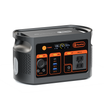
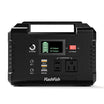
FlashFish A101 documents two USB-C PD outputs rated up to 18W each and two USB-A QC 3.0 outputs rated up to 18W each. T200 documents USB-C1 up to 60W, USB-C2 up to 18W, and two USB-A outputs with different limits. The higher ceiling may matter to a compatible device, but neither model's port label supplies the timed intervals used above.
T200's USB-C1 can also serve as an input. Assign its role deliberately instead of counting it as an available device-charging path while assuming it is replenishing the station. This article does not establish a full-power simultaneous-output budget or pass-through arrangement. Compare available models only after you know which verified path your queue actually needs.
Check energy and packing separately
A queue that fits the clock can still exceed the station's available energy. Confirm the exact setup in advance, begin with the intended station charge state, and retain an energy reserve. Do not assume the examples fit A101's 97.68Wh or T200's 153.6Wh nominal capacity; no device-energy measurements were supplied for them.
Set a final unplug time that leaves room to check devices, inspect and stow cables, and pack the station. If a timed run takes longer than planned, revise the remaining queue immediately. The useful output is a feasible plan or an honest shortfall, not a promise that every device will reach full charge.
FAQ
Which camping device should charge first?
Among available essential devices sharing one verified path, start with the earliest deadline, then calculate every finish time. Late arrivals and different charging durations can require a different order.
Can I use a 60W port rating to predict charging time?
No. Maximum port wattage does not establish constant device draw or charging duration. Use a timed interval from the same device, starting state, target, cable, and output.
What should I do when the queue misses departure?
Record the shortfall, start earlier or precharge, or verify another independent path. Do not mark the plan complete by quietly reducing an essential device target.
Next step: Compare FlashFish A101 specifications with your equipment list.


Leave a comment
เว็บไซต์นี้ได้รับการคุ้มครองโดย hCaptcha และมีการนำนโยบายความเป็นส่วนตัวของ hCaptcha และข้อกำหนดในการใช้บริการมาใช้