

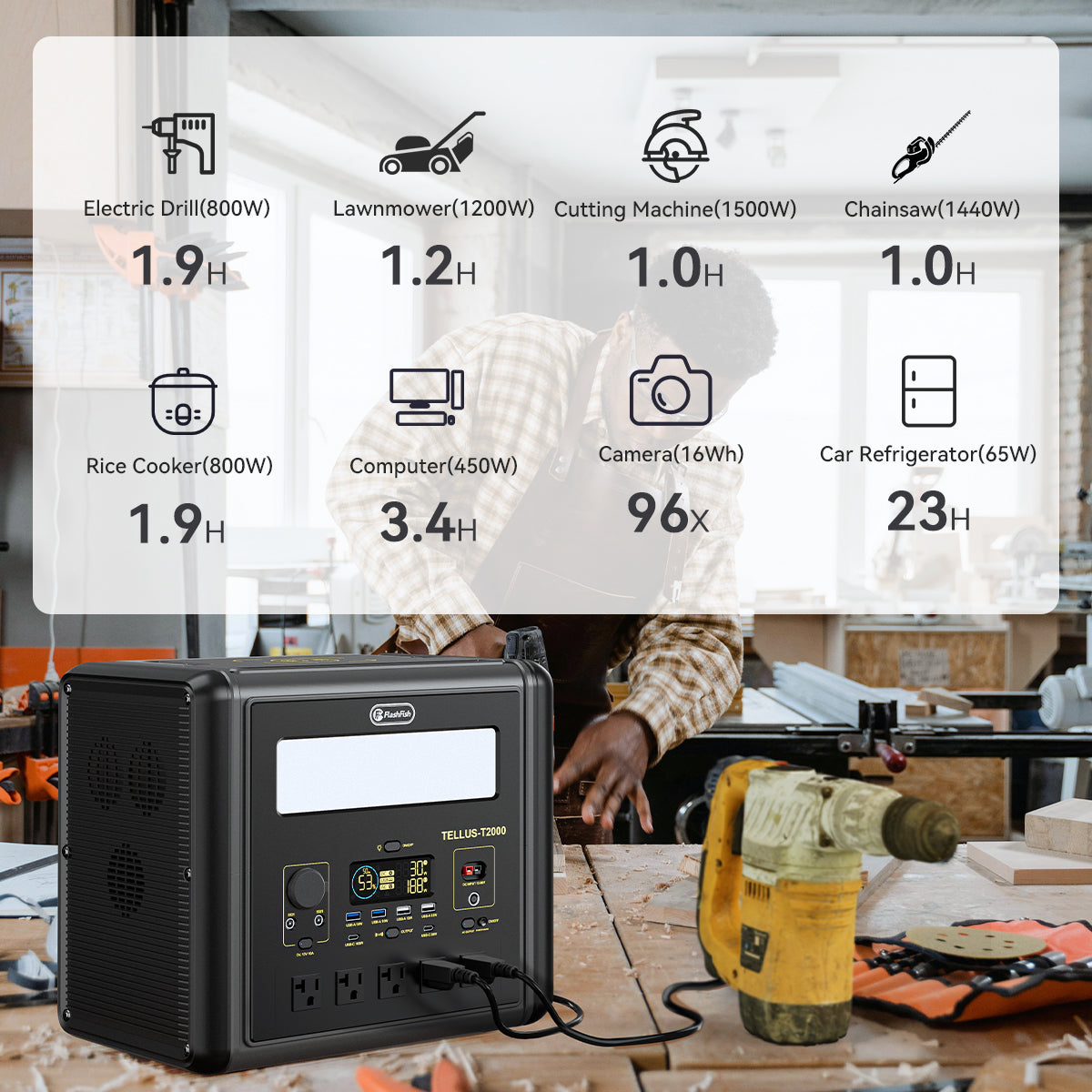
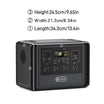



Short answer: No. A cycle-life number alone does not establish how a rarely used portable power station will age over years. Separate evidence about repeated charge/discharge use from evidence about elapsed time and storage conditions. For FlashFish T200 and T300Pro, keep the documented cycle statements, but leave an unsupported calendar-life forecast unanswered.
Why infrequent use does not answer the whole question
Saft's March 2021 energy-storage white paper, printed page 8, distinguishes calendar aging from cycling aging. It associates calendar aging with temperature and state of charge, and cycling aging with the number and depth of cycles, charge rate and charge duration. Its context is stationary energy storage. Those distinctions help classify a claim; its system behavior and curves are not test results for a FlashFish station.
An occasional-use buyer therefore needs two kinds of information. A cycle statement describes a use-related endurance claim. A calendar study would need elapsed time, storage conditions and a defined capacity or performance endpoint for an applicable product. One does not supply the other's missing test conditions.
What the two FlashFish cycle statements establish
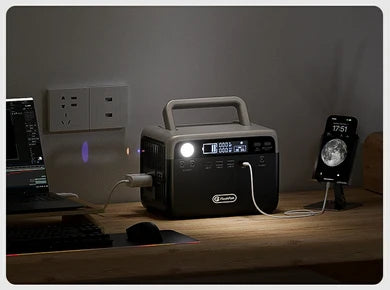
The authoritative specifications for TELLUS-T200 and T300PRO record more than 3,500 cycles with more than 80% capacity remaining. Their public original specifications appear in the TELLUS-T200 manual, printed page 2 and TELLUS-T300Pro manual, printed page 2. Match the model and regional version before applying operating instructions. The cycle statements are not a dated calendar-aging test report.
| Exact model | Cycle statement and endpoint | Cycle test conditions | Calendar evidence | Unsupported inference |
|---|---|---|---|---|
| TELLUS-T200, sold as T200 | More than 3,500 cycles; remaining capacity above 80% | Complete rate, depth and laboratory protocol not provided in the cited specification | No model-specific calendar-aging dataset established here | A guaranteed number of years for an occasional user |
| T300PRO / TELLUS-T300Pro | More than 3,500 cycles; remaining capacity above 80% | Complete rate, depth and laboratory protocol not provided in the cited specification | No model-specific calendar-aging dataset established here | A longer calendar life merely because the station is larger |
The shared cycle statement does not rank these models for calendar durability. Nor does the capacity-retention endpoint mean every function remains usable until that endpoint. Keep the scope of a capacity claim separate from a whole-product service-life promise.
Ask for the record behind a longevity claim
- Identity: Does the document name the complete station, a battery pack or a cell? A chemistry label is not an exact model test.
- Conditions: What temperatures, charge states, charge rates and discharge depths were used? If a field is missing, mark it unknown.
- Endpoint: Is the claim about remaining capacity, another performance limit, failure or contractual coverage?
- Time: Was calendar duration measured, modeled or simply absent? Keep a model projection distinct from an observed result.
Three statements that need different answers
- “I use it only a few weekends a year.” This describes a proposed use pattern. Dividing the cycle number by annual trips cannot establish service life: a trip is not a specified cycle test, and elapsed-time evidence remains missing.
- “The chemistry is the same.” This may identify a broad battery category. It does not make another product's calendar curve a T200 or T300Pro result.
- “The warranty lasts a stated period.” This is a coverage statement subject to its own terms. It is not a measurement of retained capacity at that date or a promise that aging stops during coverage.
Make the comparison useful today
For a rarely used backup kit, request applicable storage instructions and the exact supporting longevity document before making years of service part of the purchase comparison. Follow the matching manual's storage requirements; do not derive a charging schedule from a generic aging curve. If calendar data is unavailable, compare the models on other documented requirements while recording calendar life as unknown. That preserves a usable shortlist without inventing a durability winner.
FAQ
Does 80% remaining capacity mean the battery suddenly stops?
It is a capacity endpoint in the cycle statement, not an automatic shutdown date. It does not establish the condition of every other station component.
Can generic cell research supply the missing station lifespan?
It can explain mechanisms and suggest questions. Without evidence connecting the tested cells, pack, management and conditions to the exact station, it cannot supply that station's lifespan.
Should two equal cycle ratings decide an occasional-use purchase?
They do not resolve the missing calendar comparison. Treat them as one documented field and keep ports, output, size and other actual requirements in separate checks.
Method: this is a document-based claim comparison. No accelerated aging, capacity measurement or lifetime prediction was performed.
Next step: Review the FlashFish T200 product details.

Leave a comment
เว็บไซต์นี้ได้รับการคุ้มครองโดย hCaptcha และมีการนำนโยบายความเป็นส่วนตัวของ hCaptcha และข้อกำหนดในการใช้บริการมาใช้