

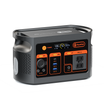
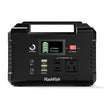

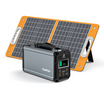
No. A 12V output label does not establish permission to use a portable power station as a car jump starter. The FlashFish E200 and T200 product specifications document DC outputs, but provide no engine-cranking approval for those outputs. Do not infer a battery-clamp connection or a vehicle-starting procedure from the voltage, station capacity, or AC peak rating.
For a car that needs starting assistance, use the vehicle manufacturer's applicable instructions and approved equipment, or contact roadside assistance. This article helps identify which function a document actually authorizes. It does not supply a jump-start method, evaluate a particular vehicle, or recommend an electrical adaptation.
Name the task before comparing the equipment
A request to power a compatible accessory, run a separately documented battery charger, or crank an engine contains three different proposed tasks. Write the exact task at the top of your equipment list. The word “charge” is too ambiguous to settle it: charging the station from a vehicle is also different from supplying power toward a vehicle.
For this guide, “engine starting” means the requested task is cranking the vehicle's engine. “Battery charging” means the proposed task uses a separate charger according to that charger's instructions. These labels organize the documentation question; they do not grant either arrangement permission.
| Proposed function | Documentation needed | Connection and vehicle scope | Inference to reject |
|---|---|---|---|
| Supply an accessory | Exact accessory input and station output instructions | Only the documented equipment and supplied or approved connection | An accessory output must also start an engine |
| Power an external battery charger | Charger input, station output, and charger/vehicle instructions | Separate evaluation of the complete proposed arrangement | Approval for a charger is approval to bypass it |
| Crank an engine | Explicit engine-start purpose, applicable ratings and instructions, and vehicle-OEM authorization | Exact vehicle and approved starting equipment | A matching nominal voltage or a large peak number fills missing authorization |
What the E200 and T200 documentation establishes
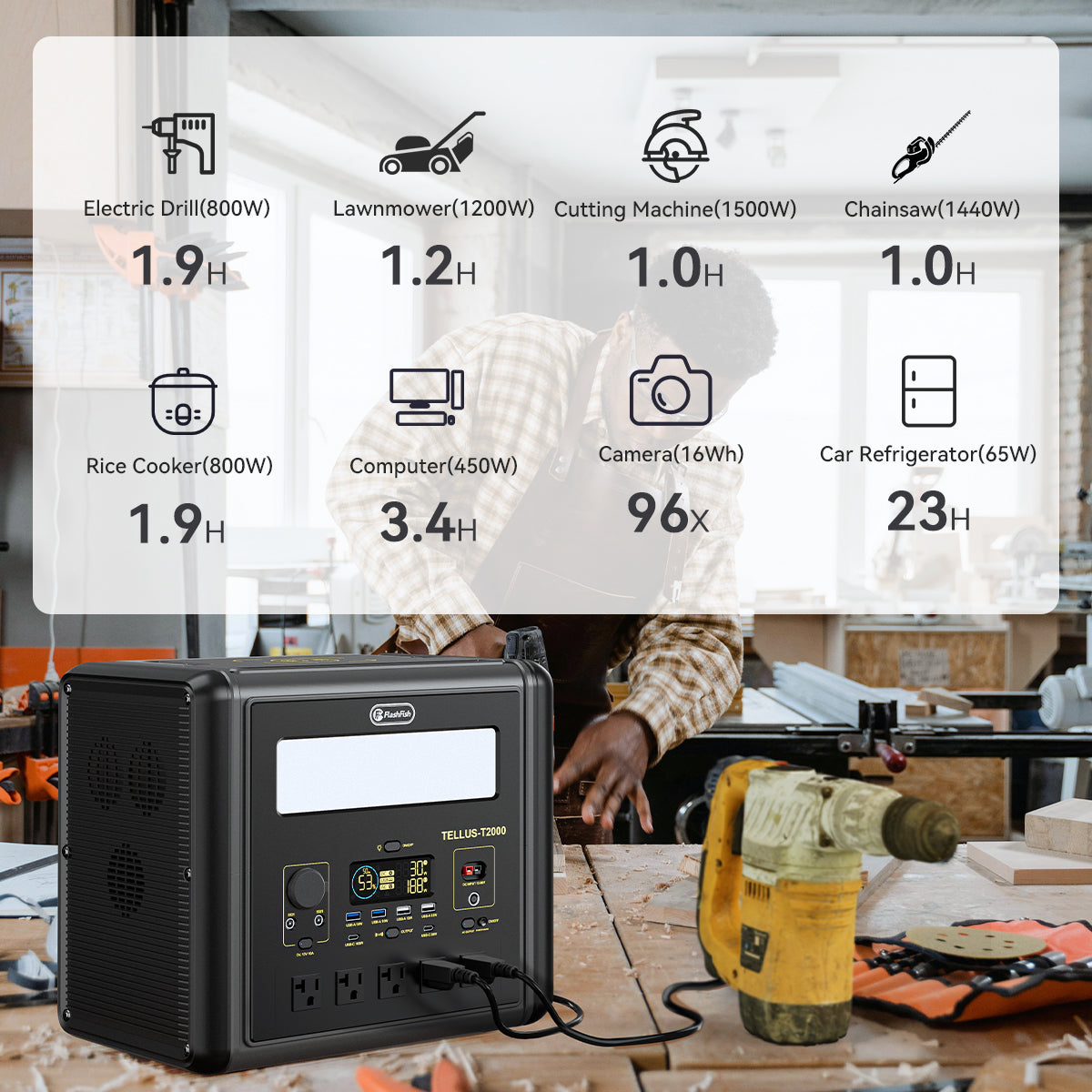
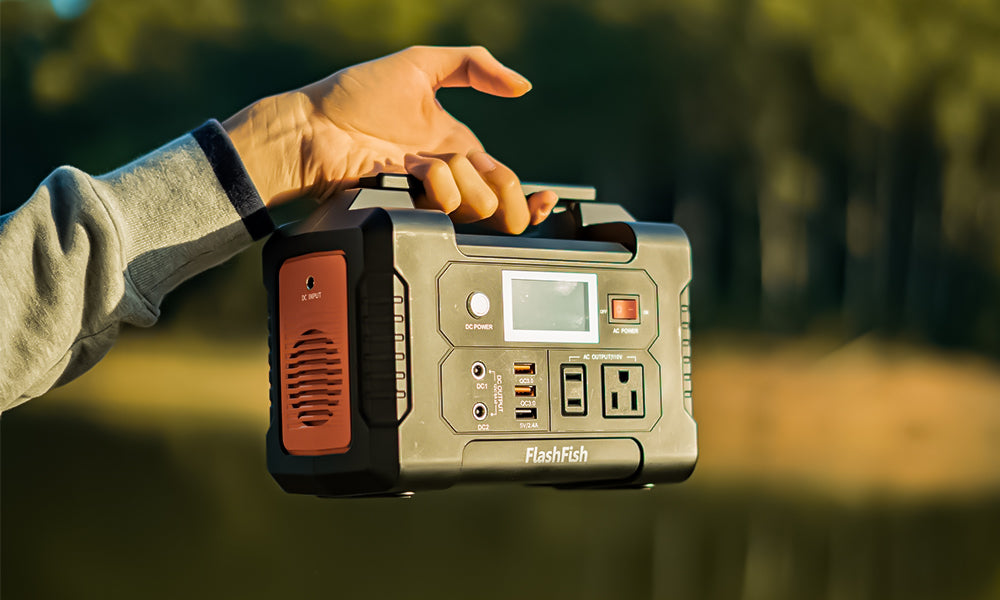
E200 is specified with a 12V DC output, and T200 with a 12V DC5521 output. The E200 reference manual, printed page 20, also identifies a 12V DC output; its other regional ratings must not be substituted for your unit's instructions. Those descriptions identify station outputs. They do not identify a vehicle, approved starting connection, cranking duty, or engine-start rating.
The T200 user manual distinguishes output specifications on printed page 2, USB/DC output controls on printed page 6, and charging inputs on printed page 7. Its charging illustration shows power entering the station; that is not a vehicle-starting authorization. The safety section on printed page 3 directs owners to official components and accessories. Nothing in the reviewed English instructions supplies a clamp-adaptation procedure for cranking a car.
Use the FlashFish U.S. manual directory to match documents to the actual product and electrical version. The available E200 reference PDF includes regional material; it must not be used to infer the AC configuration of your unit. This decision requires no AC specification and makes no claim that all similarly named stations share a design.
Reject the shortcuts that leave the function undocumented
Do not divide an AC wattage by 12V to invent a cranking-current capability. An AC rating is not a documented engine-start rating for a DC connector. Likewise, a watt-hour capacity describes an energy specification, not approval for a connection or a starting task.
A cable or clamp that physically fits cannot supply the missing manufacturer instructions. Do not improvise a connection, probe a vehicle battery, repeatedly attempt a start, or try to discover a station's protection threshold. The useful outcome of an incomplete record is to stop that proposed path, not to create a trial procedure.
Keep the distinction between “not established by these documents” and a claim about every possible product. This review does not declare that dedicated starting equipment cannot exist, or that every power station lacks that function. It establishes that the E200/T200 output information reviewed here does not authorize this engine-start use.
Three hypothetical documentation decisions
These cases are fictional. No vehicle connection, starting test, or equipment compatibility assessment was performed.
Example 1: A shopper finds “12V” beside an output
The shopper wants help starting a car, but has only a station output label. The function row says accessory output; the engine-start purpose, connection system, duty rating, and vehicle authorization remain missing. The shopper rejects the jump-start inference and obtains vehicle-specific help.
Example 2: A separate charger appears in the plan
A trip plan lists a battery charger between a station and a vehicle battery. That is a different documentation task, requiring the charger's own input and use instructions. It supplies no reason to remove the charger or connect the station directly. No match is assumed from the presence of the charger.
Example 3: The vehicle manual identifies starting equipment
An owner finds instructions for approved starting equipment for the exact vehicle. The owner follows that document's scope instead of substituting E200 or T200 because their output label also says 12V. This fictional case makes no claim about an actual vehicle manual or approved product.
Keep a short authorization record
Record the vehicle model and applicable manual revision, the requested function, exact equipment model, document section covering that function, permitted connection system, and unresolved fields. Copy current and time ratings only when the document explicitly assigns them to engine starting; do not manufacture missing values from unrelated output fields.
If you have no vehicle-specific instructions or the equipment's intended purpose remains unclear, ask the relevant manufacturer or roadside provider what approved option applies. Product shopping comes after the function is established. Replacing a station with a larger one does not resolve missing authorization.
FAQ
Does the same 12V label make a station and a jump starter interchangeable?
No. The voltage label does not provide engine-start purpose, applicable duty ratings, an approved connection system, or vehicle-specific authorization.
Can I calculate a starting rating from the station's AC peak watts?
No. The reviewed specifications do not provide that conversion or an engine-start approval. Keep the AC rating separate from the proposed DC task.
What should I do when the documents do not authorize the task?
Do not attempt that connection. Obtain the applicable vehicle-manufacturer instructions and approved equipment guidance, or contact roadside assistance.
Next step: Review the FlashFish E200 specifications for your equipment list.


Leave a comment
เว็บไซต์นี้ได้รับการคุ้มครองโดย hCaptcha และมีการนำนโยบายความเป็นส่วนตัวของ hCaptcha และข้อกำหนดในการใช้บริการมาใช้