

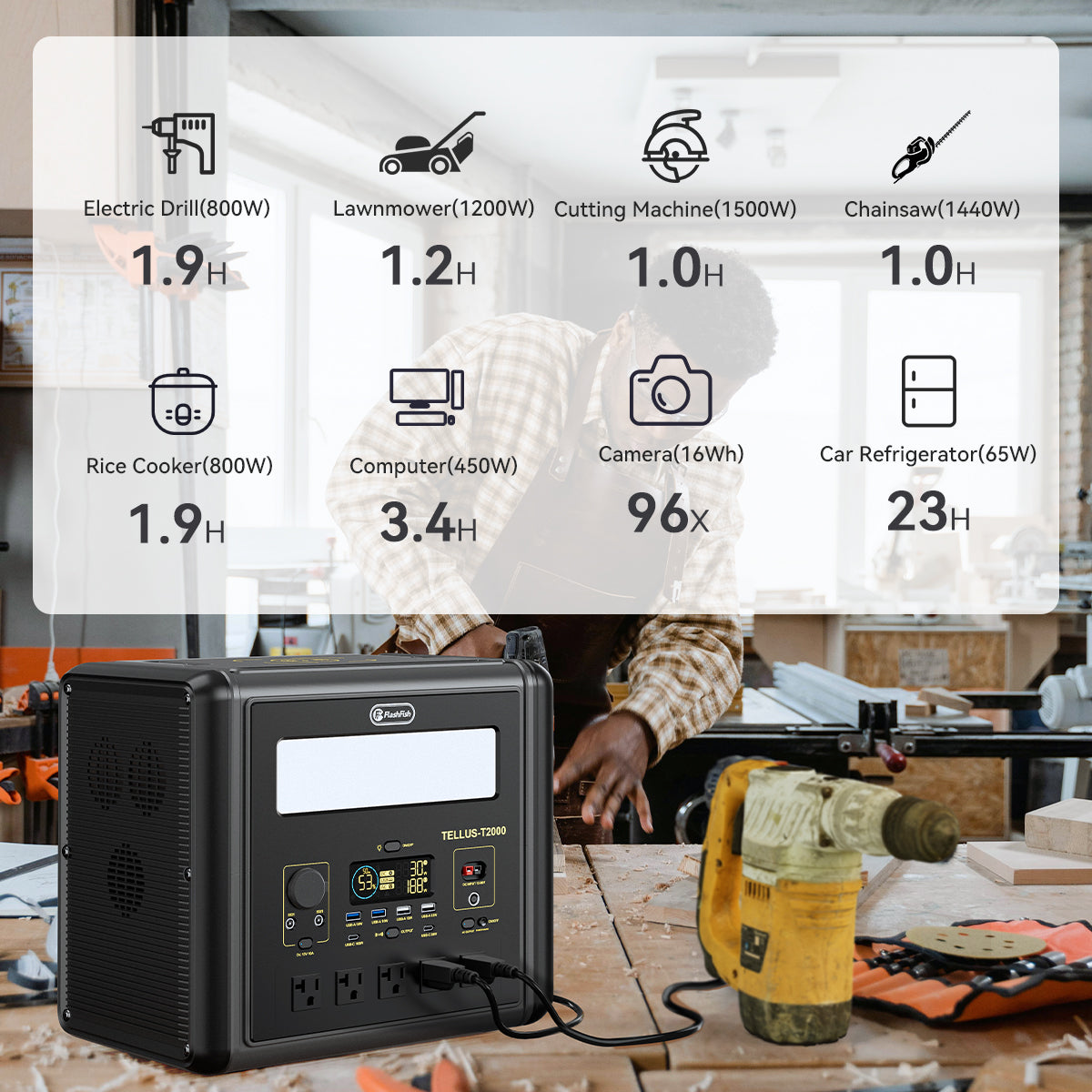
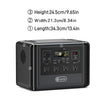
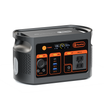
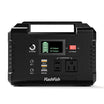

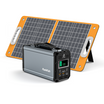
The FlashFish A101 source record lists two USB-C PD outputs up to 18W each, but that record must be compared with the exact camping-headlamp label, supplied charging path, and manufacturer instructions before making any device claim. The output figure alone does not establish charging or runtime.
Read the A101 as a station-side record
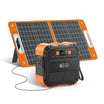
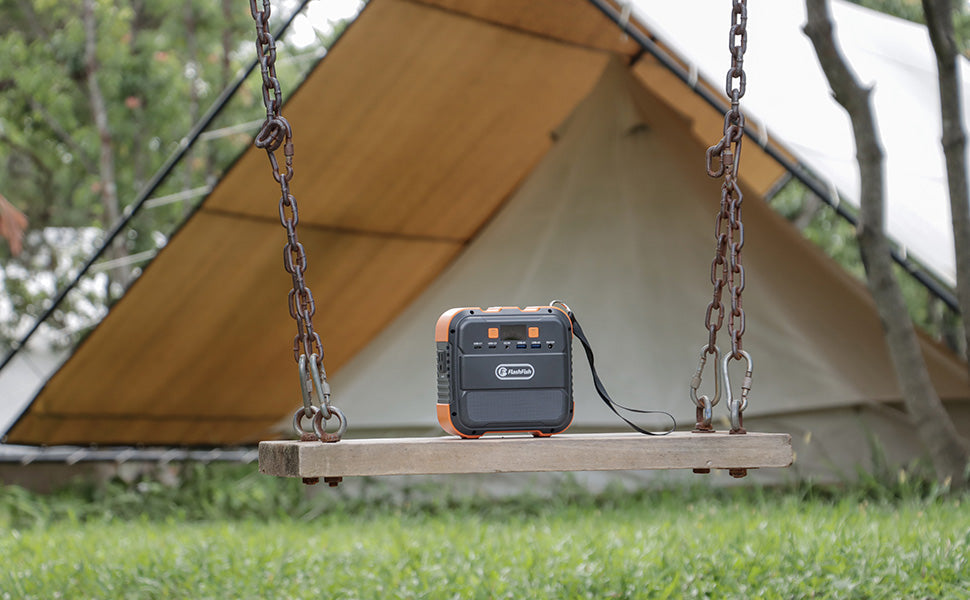
The current FlashFish A101 Mini Portable Power Station product page identifies it as a 120W / 98Wh model. The A101 manual records 97.68Wh capacity, 120W continuous AC output, a 240W peak figure, two USB-C PD outputs up to 18W each, and two USB-A QC 3.0 outputs up to 18W each.
These are station fields. They are useful for a comparison only after the exact device-side record exists. They are not a promise about a camping headlamp, its cable, a charging result, or a runtime result.
A101 fields to record - and their limits
| A101 source field | What it describes | What it does not establish |
|---|---|---|
| Two USB-C PD outputs, up to 18W each | A documented USB-C output record | That a specific headlamp accepts that path or will charge. |
| Two USB-A QC 3.0 outputs, up to 18W each | A documented USB-A output record | That a cable, adapter, or headlamp is suitable. |
| 97.68Wh manual-recorded capacity | A station capacity field | Any headlamp runtime or number of recharges. |
| 120W continuous AC output; 240W peak | Manual-recorded AC output figures | A U.S. outlet specification or a headlamp charging path. |
The referenced A101 manual is regional; it lists a 230V AC specification and notes that socket versions vary. This article does not use that regional value as a U.S. outlet claim. Review the applicable current product information and the exact device documentation before considering an AC-related path.
What to bring from the headlamp side
A station record cannot supply missing device information. Before comparing anything with the A101, collect the headlamp's exact model, its label or manual input information, the supplied cable or adapter details, and the manufacturer's charging instructions. If any item is unclear, the correct outcome is a no-verdict outcome.
In particular, do not infer a result from the connector shape. "USB-C" on a station and a USB-C-shaped port on a headlamp do not by themselves document a complete charging path. The same is true for USB-A, adapters, or a higher number on a station specification.
A conditional comparison process
- Identify the exact headlamp and locate its original instructions.
- Record its stated charging input and the cable or adapter supplied for that model.
- Record the relevant A101 output field from current, applicable source material.
- Check the headlamp manufacturer's instructions for the proposed path.
- Stop when documentation is absent, unclear, or limited; do not convert the A101 record into an operating recommendation.
For broader A101 product selection, read FlashFish A101 vs. E200: Compact Power Station Comparison. It addresses a different question: selecting between station records. For pre-trip organization, keep the device label, cable, and manufacturer instructions with the station record.
Frequently asked questions
Which A101 output fields are relevant to a headlamp-label comparison?
The documented output type, count, power limit, protocol where sourced, port direction, and regional-variant context are the fields to compare with complete headlamp documentation.
Does the A101's USB-C output confirm a camping-headlamp recharge result?
No. It is a station-side output record only. It does not establish a result for an unidentified or undocumented headlamp.
Why must the U.S. product variant be checked before discussing a port path?
The referenced manual is regional and notes that socket versions vary. Current applicable product information must be checked instead of carrying a regional AC specification into U.S. guidance.
What headlamp information is still needed after reading the A101 record?
You still need the exact headlamp model, its documented input or charging path, the supplied cable or adapter information, and the manufacturer's instructions.

Leave a comment
เว็บไซต์นี้ได้รับการคุ้มครองโดย hCaptcha และมีการนำนโยบายความเป็นส่วนตัวของ hCaptcha และข้อกำหนดในการใช้บริการมาใช้