

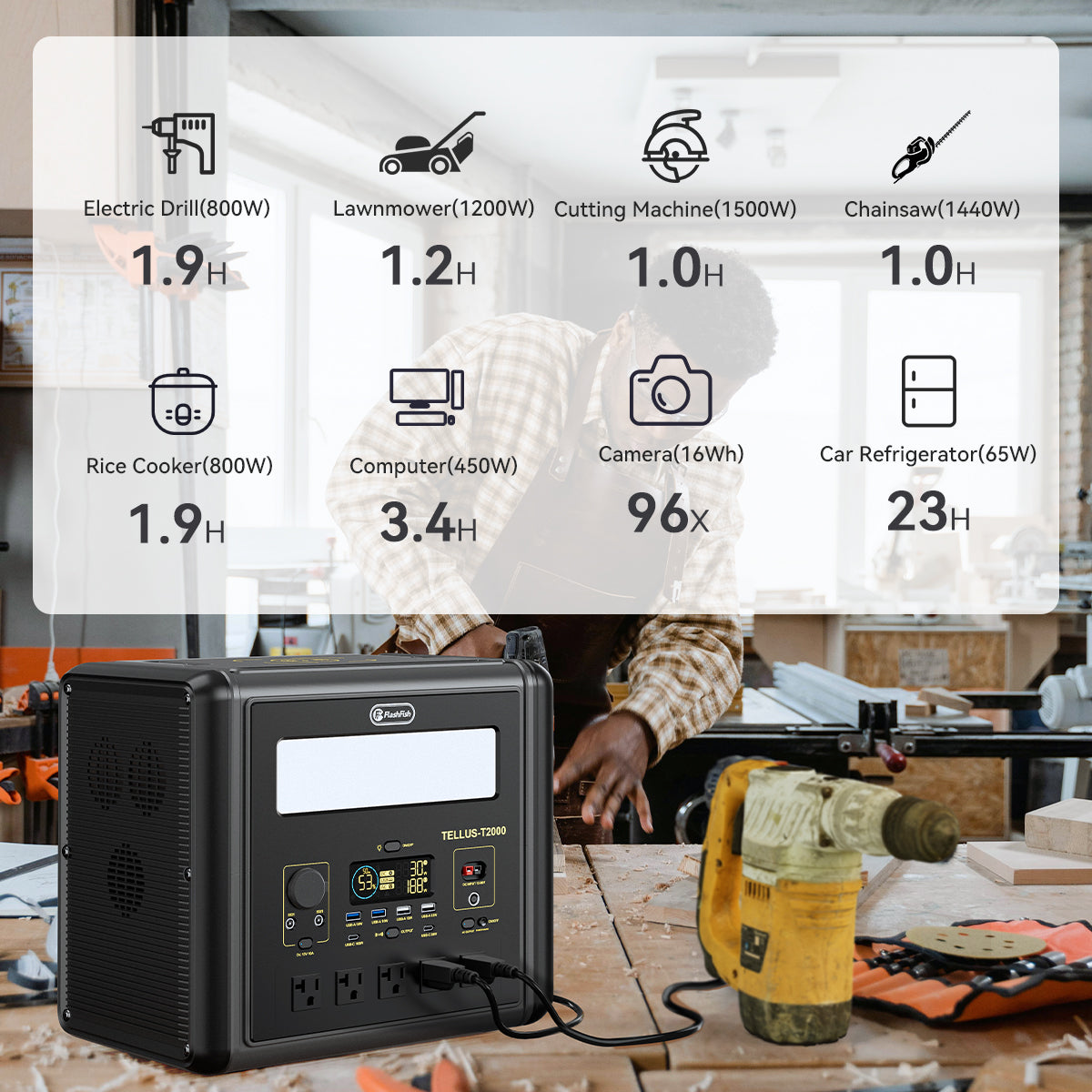
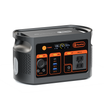
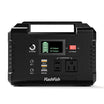

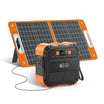
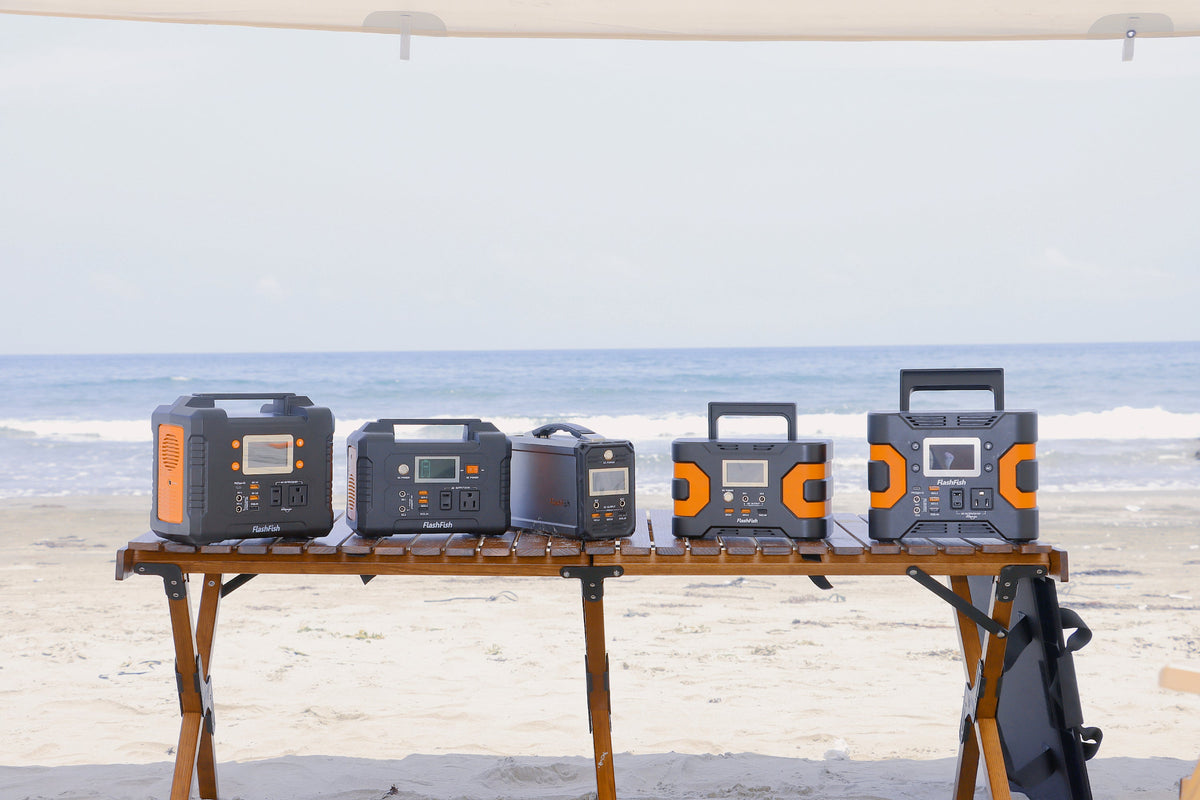
To compare a portable power station's purchase price per watt-hour, divide the standalone station price by its stated battery capacity in Wh. Using U.S. prices checked October 1, 2026, FlashFish E200 is $99.99 / 151Wh, or about $0.66 per nominal Wh; A201 is $109.99 / 172.8Wh, or about $0.64 per nominal Wh. This measures the price of stated storage capacity, not electricity cost, delivered energy, or guaranteed runtime.
What the price-per-Wh calculation actually measures
A dollar-per-Wh figure answers a narrow buying question: how much purchase price is attached to each unit of stated battery capacity? It can help compare differently sized stations after you have established that both can power your equipment. It cannot establish the best station for everyone.
The U.S. Energy Information Administration's explanation of electricity measurement distinguishes watts, which measure power, from watt-hours, which measure energy. That distinction matters here: divide by the battery's Wh figure, not its AC output in watts. A 200W output rating is not a 200Wh battery. EIA supplies the unit definition, not a product review or endorsement.
Nominal purchase cost per Wh = standalone station price in USD / stated battery capacity in Wh. Use the exact capacity rather than rounding 172.8Wh down to 172Wh. Keep both the unrounded calculation and the rounded display figure in your comparison notes.
Two current FlashFish calculations, with a consistent price basis
| Standalone U.S. variant | Price checked October 1, 2026 | Stated capacity | Calculation | Rounded nominal $/Wh |
|---|---|---|---|---|
| FlashFish E200 | $99.99 | 151Wh | 99.99 / 151 = 0.6622 | $0.66 |
| FlashFish A201, A201-110V-US variant | $109.99 | 172.8Wh | 109.99 / 172.8 = 0.6365 | $0.64 |
These are identified standalone variants, not station-and-panel packages. The prices exclude tax, shipping, discounts, optional panels, and additional equipment; they may change. Check the current A201 U.S. product page and the E200 link below before recalculating.
E200 has the lower entry price. A201 costs $10 more and has 21.8Wh more stated capacity, which produces the lower nominal price-per-Wh figure in this two-model comparison. Those statements are arithmetic, not evidence that A201 delivers more usable energy at every output or will run a particular device longer.
Why usable energy changes the denominator
Stated battery energy and energy delivered to equipment are different quantities. Output conversion, operating overhead, reserve behavior, temperature, battery condition, and the load can affect delivery. An AC result cannot automatically stand in for a USB result. A percentage selected from a generic buying guide is not a measured result for your station.
For a delivered-energy comparison, use a documented test of energy delivered through the relevant output under specified conditions. The product database used for this article does not provide comparable measured delivered-Wh results for E200 and A201. Therefore, their actual purchase cost per usable Wh remains unknown here. We do not fill that gap with an assumed efficiency.
Illustrative example, not a FlashFish test: suppose a hypothetical $100 station has a stated capacity of 150Wh and a documented output test delivers 120Wh. Its nominal purchase cost is $100 / 150 = $0.67 per Wh; its purchase cost per measured delivered Wh is $100 / 120 = $0.83. The price did not change. Only the denominator changed. The 120Wh figure is invented solely to show the calculation and makes no claim about either model.
Check output fit before ranking by price
A lower $/Wh figure is useful only among stations that meet the same job. First identify your device's input connector, electrical requirements, charging protocol, and any AC waveform requirements. Check simultaneous loads and startup demands against the exact U.S. unit's documentation. Battery capacity alone does not answer these questions.
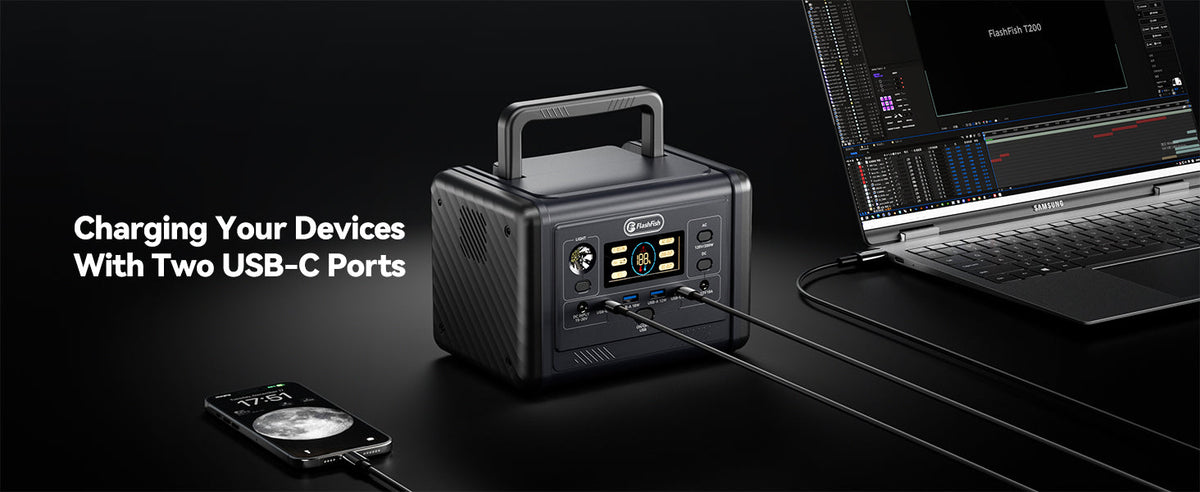
For example, E200's local product record documents USB-A outputs but no USB-C output. A buyer who needs direct USB-C charging cannot treat the lower E200 purchase price as proof of a suitable connection. Conversely, a larger battery is not a reason to pay more when an existing, verified equipment arrangement already meets the task with the smaller unit.
The A201 technical source available to us is a regional EU manual, while the U.S. store identifies the A201-110V-US variant. Its 172.8Wh capacity agrees with the U.S. listing. That agreement does not transfer EU AC voltage, socket configuration, or undocumented waveform details to a U.S. purchase. Check the exact U.S. manual and unit label for electrical fit.
Do not confuse this number with an electricity bill or lifetime value
A station's purchase price divided by capacity is a capital-cost comparison. It is not the price charged by a utility for electricity. Dividing by nominal kWh instead of Wh only changes the units: the E200 calculation is about $662.19 per nominal kWh of storage capacity, not $662.19 to recharge it.
Recharge expense needs electricity drawn from the wall and the applicable electricity rate. Lifetime cost per delivered kWh needs defensible cycle-life, capacity-retention, delivered-energy, usage, and replacement assumptions. This article does not supply those missing measurements. Warranty duration and cycle count are also not interchangeable evidence.
A comparison sheet that makes unknowns visible
- Record the exact market, model, standalone variant, current price, and check date.
- Copy stated capacity in Wh, then calculate nominal $/Wh without rounding the inputs.
- Reject options whose verified outputs do not meet the equipment requirements.
- If usable energy matters, record the test source, output path, load, temperature, battery state, and measured Wh. Leave this field unknown if comparable evidence is unavailable.
- Compare the final checkout totals separately; do not mix a panel package price with a station-only capacity calculation.
The useful outcome is a shortlist with an honest price basis and a clear evidence boundary. Nominal $/Wh can expose an expensive capacity premium, but output fit and a relevant delivered-energy test should decide whether that premium buys anything useful for your equipment.
FAQ
How do I calculate portable power station cost per watt-hour?
Divide the current standalone station price in dollars by its stated battery capacity in Wh. Label the result nominal purchase cost per Wh, and record the variant and price-check date.
Does a lower price per Wh guarantee longer runtime?
No. Nominal price per Wh does not measure delivered energy or device runtime. Comparable output tests and the device's actual demand are needed for that decision.
Which has the lower nominal price per Wh, FlashFish E200 or A201?
At the U.S. standalone prices checked October 1, 2026, A201 is about $0.64 per nominal Wh versus E200's $0.66. E200 still has the lower purchase price. Neither calculation establishes measured usable-energy value.
Is purchase cost per Wh the same as the cost to recharge?
No. Purchase cost per Wh divides the equipment price by capacity. Recharge cost depends on electricity drawn during charging and your electricity rate.
Next step: Check the current FlashFish E200 product details and price.

Leave a comment
เว็บไซต์นี้ได้รับการคุ้มครองโดย hCaptcha และมีการนำนโยบายความเป็นส่วนตัวของ hCaptcha และข้อกำหนดในการใช้บริการมาใช้