

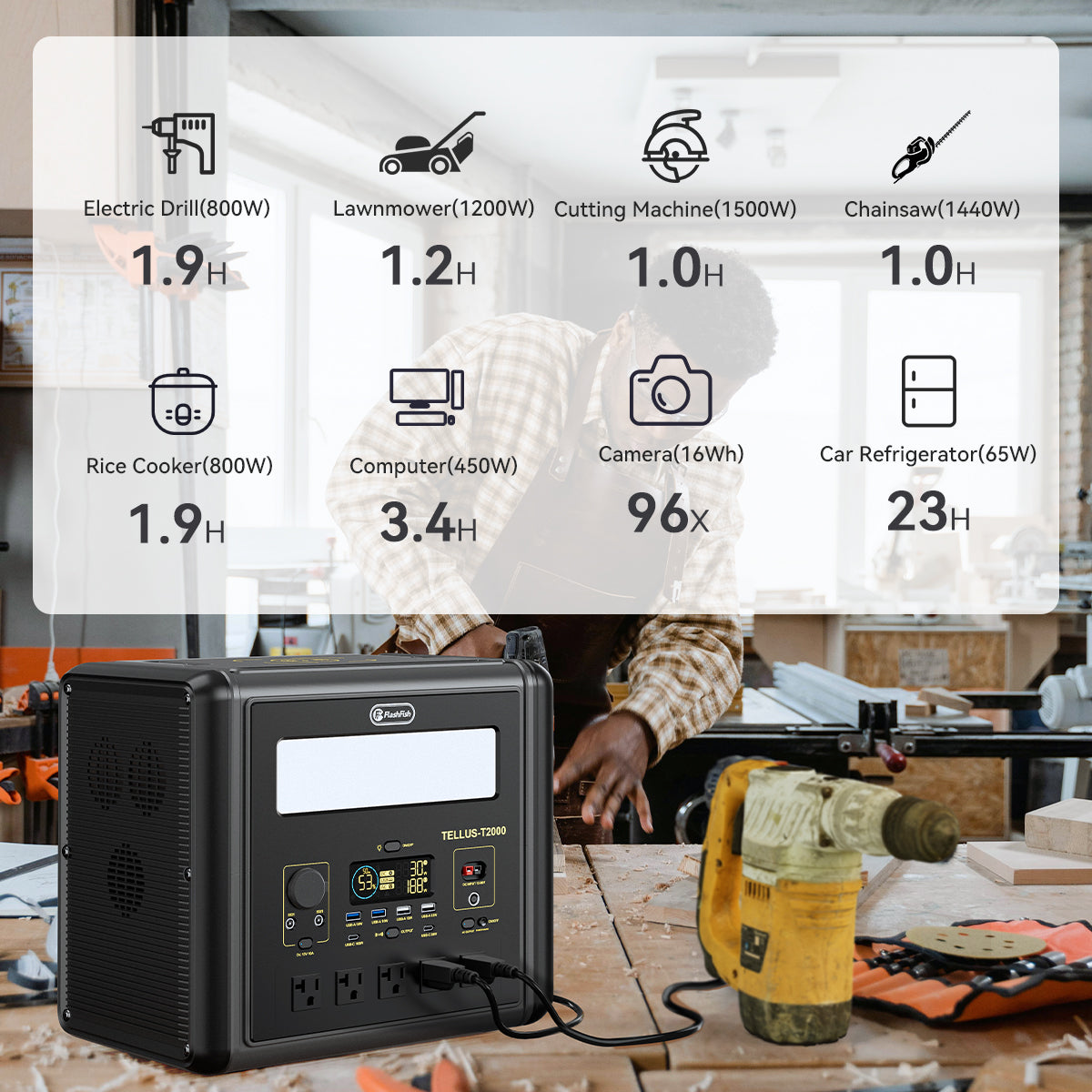
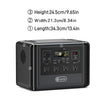
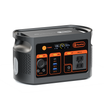
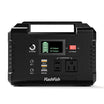

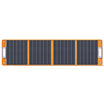
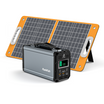
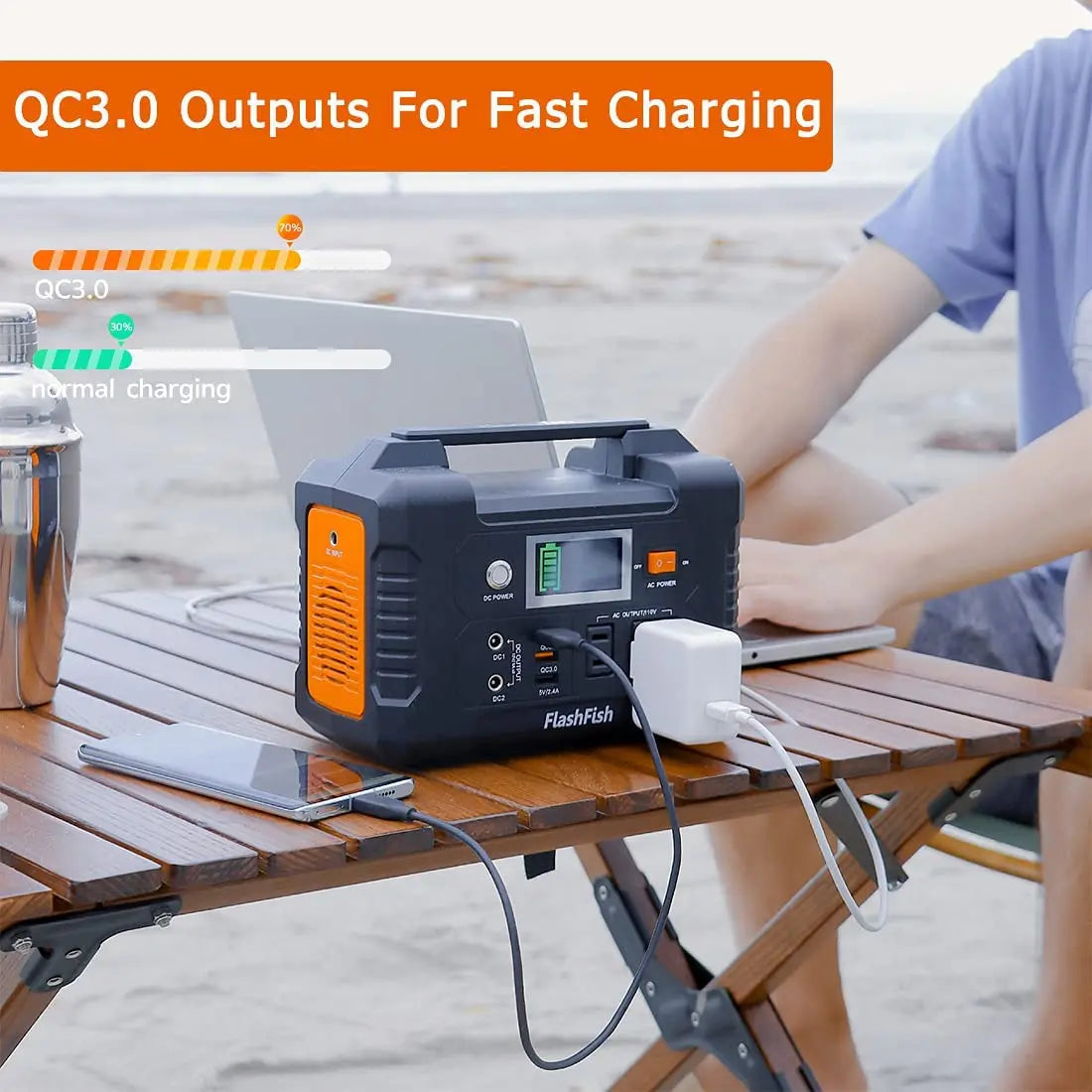
Do not plug a device into a portable power station just because the plug fits. First check the device's running watts, startup surge, expected hours, the station's continuous and peak output, watt-hours, manual restrictions, and safe-use conditions. A FlashFish portable power station can fit selected essential loads such as phones, laptops, routers, LED lights, and some small fans when those checks pass, but it should not be treated as a whole-home, medical, hardwired, or food-safety backup system.
Quick exclusion table
| Load type | Why it is risky | Safer decision |
|---|---|---|
| Electric heaters, hot plates, kettles, and other heat loads | They often draw high continuous power and can drain batteries quickly. | Avoid treating heat-producing appliances as normal portable-station loads. |
| HVAC or window AC units | Running watts and startup surge can be high or variable. | Only consider after checking the appliance label, surge, and station manual. |
| Sump pumps and other motor loads | Startup surge may exceed the station's peak output. | Do not promise pump compatibility without exact manufacturer data. |
| Medical devices | Backup needs may involve medical, manufacturer, or clinician guidance. | Do not position a general portable station as medical backup equipment. |
| Whole-home wiring or backfeeding | Hardwired use can create serious safety and code issues. | Do not provide wiring instructions; keep the article to plug-in portable loads. |
| Wet-location outdoor loads | Water and electrical equipment create unsafe-use conditions. | Keep stations dry, ventilated, and used according to the manual. |
| Refrigerator or freezer food-safety reliance | Powering a refrigerator does not automatically prove food remains safe. | Avoid food-safety guarantees unless a dedicated source and assumptions are logged. |
What to check before plugging anything in
Start with the device label. Look for watts, amps, volts, or a power rating. If the label gives amps and volts, the user may need to calculate watts or check the manual. Then compare the result with the power station's continuous AC output. If the device has a motor, compressor, pump, or other startup surge behavior, compare that surge against the station's peak output as well.
Next, check watt-hours. A station with enough output to start a device may still have too little stored energy for the user's expected hours. Treat runtime as an estimate based on measured device draw and conversion losses, not as a guaranteed appliance run time.
Finally, check manual restrictions and safe-use conditions. Cable condition, dry placement, ventilation, temperature, device compatibility, and the station's manual matter. Manufacturer instructions take priority over general guidance.
FlashFish product-fit table
| FlashFish tier | Key specifications | Best-fit framing |
|---|---|---|
| E200 | 151Wh, 200W continuous AC, 400W peak, lithium-ion, modified sine AC, 1.85kg. | Compact context for small electronics after compatibility checks. |
| T200 | 153.6Wh, 200W continuous AC, 400W peak, LiFePO4, pure sine AC, 60W max solar input, 2.5kg. | Compact LFP/pure sine context for small selected loads. |
| T300PRO | 230Wh, 300W continuous AC, 600W peak, LiFePO4, pure sine AC, 120W max solar input, 4.5kg. | 300W-class fit for small essential loads with more headroom than 200W-class models. |
| T1200S | 768Wh, 1200W continuous AC, 2400W peak, LiFePO4, pure sine AC, 400W max solar input, 12.45kg. | Larger selected-load planning after wattage and surge checks. |
| T2000 | 1536Wh, 2000W continuous AC, 4000W peak, LiFePO4, pure sine AC, 600W max solar input, 19.2kg. | Higher tier for larger selected loads, not a blanket appliance guarantee. |
When FlashFish fits during an outage
The best outage fit for a portable power station is usually a selected essential-load list. That can include phones, tablets, laptops, a Wi-Fi router, LED lights, camera batteries, and some small fans when their labels fit the station's limits. This is where the FlashFish portable power stations collection can help users compare output and capacity tiers.
Compact stations such as the FlashFish E200, FlashFish T200, and FlashFish T300PRO are most defensible as small-electronics options. Larger models such as the FlashFish T1200S and FlashFish T2000 can support broader selected-load planning, but only after checking the specific device requirements.
When FlashFish may not fit
A portable power station may not fit when the device has a high continuous draw, large startup surge, special safety requirements, or a use case that depends on uninterrupted operation. Do not assume compatibility with electric heaters, hot plates, HVAC units, pumps, whole-home circuits, transfer-switch use, medical devices, or refrigerator food-safety requirements.
It is also important not to contrast battery stations with fuel generators in a way that creates unsupported safety claims. A battery station avoids fuel combustion during normal battery operation, but the article can simply remind readers to follow official power outage and carbon monoxide guidance for fuel-burning equipment rather than making broad superiority claims.
Portable power station outage checklist
- List the devices you actually need, not every device you might want.
- Check each device's running watts.
- Check startup surge for motors, compressors, pumps, and similar loads.
- Compare those numbers with the station's continuous and peak output.
- Compare expected hours with watt-hours without treating the result as a guarantee.
- Read the station and device manuals before use.
- Keep the station dry, ventilated, and used only in safe conditions.
- Do not connect a portable power station to home wiring unless a qualified professional and approved equipment are involved.
FAQ
What should I avoid plugging into a portable power station?
Avoid loads that exceed the station's continuous output, startup surge limit, watt-hour capacity, manual restrictions, or safe-use conditions. Heat-producing appliances, HVAC, pumps, whole-home wiring, wet-location loads, and medical reliance are common caution areas.
Can I plug an electric heater into a portable power station?
Do not treat an electric heater as a normal portable-station load. Many heaters draw high continuous power and can quickly exceed practical battery use. Check the heater label and station manual, and avoid making the article sound like a heater recommendation.
Can a portable power station run a refrigerator during an outage?
It depends on the refrigerator's running watts, startup surge, the station's output limits, stored watt-hours, and operating conditions. Do not rely on an estimated runtime as a food-safety guarantee.
Can I connect a portable power station to my home's wiring?
Do not use this article to explain home wiring, backfeeding, or transfer-switch setup. Keep the guidance to portable plug-in loads and direct readers to qualified professionals and official safety guidance for hardwired systems.
What loads are better fits for a portable power station?
Phones, laptops, routers, LED lights, camera batteries, and some small fans are generally better-fit categories when their device labels and usage time match the station's limits.

Leave a comment
เว็บไซต์นี้ได้รับการคุ้มครองโดย hCaptcha และมีการนำนโยบายความเป็นส่วนตัวของ hCaptcha และข้อกำหนดในการใช้บริการมาใช้