

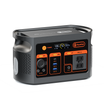
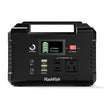

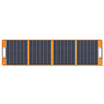
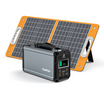
After a naturally occurring sunlight interruption, confirm charging at the receiving device before recording that a TSP100 direct USB session has resumed. Brighter sunlight or a source indicator alone does not establish the device's charging state. Record resumed, not resumed, or unknown from the device's documented indication, and follow only the exact manufacturers' recovery instructions if action is needed.
This guide starts with an already documented, permitted connection between a FlashFish TSP18V100W panel, cable, and non-critical USB device. It does not establish initial compatibility, promise automatic restart, or provide a reset sequence. Without the matching device and cable instructions, the appropriate result may remain unknown.
Record the setup before interpreting a change
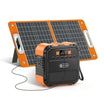
Write down the full panel model, USB port, device model, cable, and relevant manual revisions. TSP100 is the short label in this guide; the specification record is TSP18V100W. Confirm that this is the panel on your label before applying its specifications.
Identify the device's documented charging indication and, separately, any documented source indication. If a symbol's meaning is unclear, do not rename it charging. A visible display, an illuminated source light, and a receiver reporting charging are different observations.
Keep the same device, cable, and port in the observation record. If you change one, start a new setup entry. Otherwise you will not know whether a later indication belongs to the original path or a different connection.
Use a transition log, not a sunlight forecast
During an attended session permitted by the equipment instructions, note a naturally occurring change if one happens. Do not create a fault, cover the panel to force an interruption, expose equipment to unsuitable weather, or repeatedly reconnect it as an experiment. This is a way to record an ordinary session, not a stress test.
| Field | What to record | What it supports |
|---|---|---|
| Observation time | Clock time for each visible state | Order of observations, not a promised recovery interval |
| Light conditions | Plain description of the naturally observed change | Context, not measured panel output |
| Exact charging path | Panel, port, device, cable, manual revision | Which setup the record describes |
| Source indication | Documented meaning, or no interpretable indication | Source-side information only |
| Device indication | What the device shows and what its manual says it means | Whether device-side charging is indicated |
| Result | Resumed, not resumed, or unknown | A bounded session observation |
| Authorized action | Exact applicable instruction, or none established | Whether a recovery action is documented |
Use resumed when charging was previously established, an interruption was observed, and the device again shows its documented charging indication. Use not resumed when the device explicitly indicates that charging has not resumed at the observation time. Use unknown when the indication cannot establish the state, or nobody observed the transition.
If there is no documented meaning for an indicator, leave that field uninterpreted. Do not convert unknown into not resumed solely because you cannot see a charging symbol. Conversely, do not count an unattended gap as resumed because a charging symbol is visible later.
Three hypothetical observation traces
The following traces are illustrative, not panel tests or reported device behavior. They assume that the initial connection and the meanings of any described device indications have already been established by the applicable instructions.
Example 1: Device-side resumption is observed
At 11:10 a.m., the receiver shows its documented charging state. At 11:18, during a natural light change, it reports charging stopped. At 11:24, with no setup change, its documented charging state returns. Record resumed at 11:24 for this hypothetical session. The trace supplies no general six-minute recovery specification.
Example 2: Sunlight returns, but charging does not
The observer notes brighter conditions after an interruption. The receiver still explicitly reports not charging. Record not resumed at that time, even if a source-side indication is present. Look for an applicable manufacturer instruction; do not invent a reconnect sequence from the timing of the sunlight change.
Example 3: The device state cannot be established
Someone sees brighter conditions and a panel-side light, but cannot interpret the device's current display. Record unknown. If the device instructions later clarify the display, record a new observation. Do not retrospectively label the earlier period as confirmed charging.
What the TSP18V100W ratings can establish
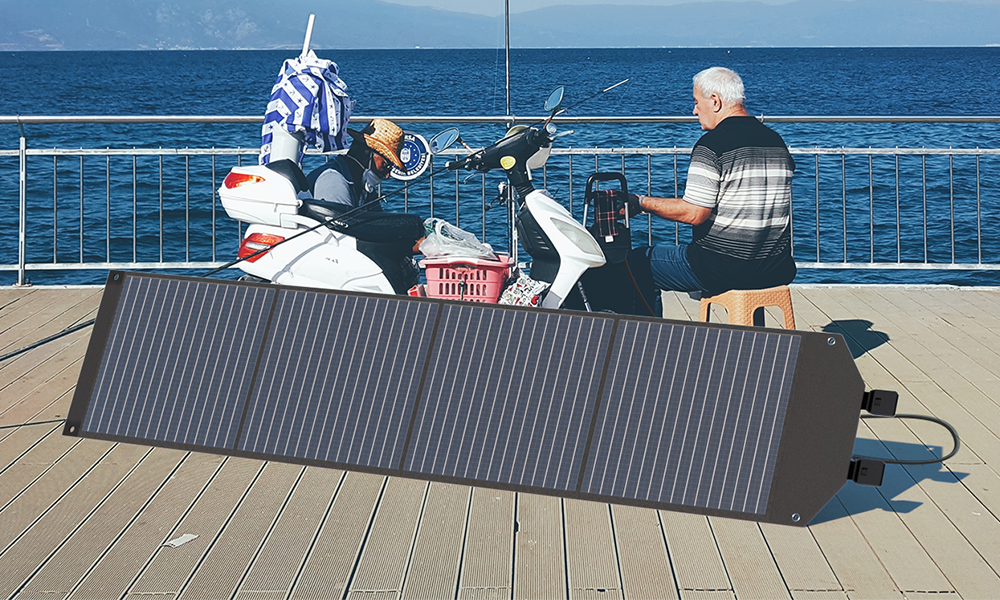
The manufacturer's specification record lists USB-C PD output up to 65W and USB-A QC 3.0 output up to 18W. The panel is rated 100W. These ratings describe different outputs and do not promise those amounts at a connected device, or specify what that device does after an interruption.
The panel converts sunlight to electricity and does not store energy. Its source record notes that conversion depends on sunlight angle, temperature, weather, and charging time. Those dependencies do not supply a restart rule. A charging indication also does not quantify the energy stored in the receiving device or prove that a planned charge target has been reached.
TSP18V100W may be a relevant source to compare when your device and cable documentation already support the exact direct USB path. If your task requires confirmed uninterrupted charging, this observation worksheet cannot establish that requirement from an unobserved session or a maximum port rating.
When recovery instructions are missing
Record the interruption and the device indication, then consult the matching panel and device documentation. If no applicable recovery action is established, leave the action field blank and request guidance for the exact combination. This guide does not authorize resets, repeated plug cycling, protection bypasses, or disassembly.
The FlashFish U.S. manual directory explains model, regional-version, and manual-revision matching. Use that matching process alongside the receiver and cable instructions. It does not itself establish an automatic-restart specification for your setup.
Method: this is a manufacturer-record-based observation worksheet. No direct USB recovery test has been performed for this article, and no exact receiver-specific recovery procedure is established here.
Frequently asked questions
Does resumed mean the device gained a known amount of energy?
No. Here it means the documented device-side charging indication returned in the observed session. An energy quantity requires appropriate evidence of its own. Do not assign watt-hours or a completed charge target to the interval from an icon alone.
Can the next sunlight interruption behave differently?
This log does not establish repeat behavior. Keep each observation tied to its setup and conditions. One recorded resumption cannot supply a general restart guarantee or justify leaving a later session unattended.
What if I swap cables while checking the state?
Record the cable change and treat the resulting observation as a different setup. Follow the relevant connection instructions. A later charging indication cannot show whether the original path would have resumed without the change.
Decide what the session actually established
Complete the transition record before counting the session toward a charging plan. If the direct USB path remains relevant, compare your exact panel's TSP18V100W details with the device and cable requirements. Resolve missing instructions first, and retain resumed, not resumed, or unknown as an observation rather than a product promise.
For the separate initial-connection decision, use the TSP100 direct USB-C matching guide. Initial fit does not establish charging resumption after an interruption.
Next step: View the current FlashFish TSP18V100W product details.

Leave a comment
เว็บไซต์นี้ได้รับการคุ้มครองโดย hCaptcha และมีการนำนโยบายความเป็นส่วนตัวของ hCaptcha และข้อกำหนดในการใช้บริการมาใช้