



Stop a load-sizing decision when a missing label or manual prevents you from identifying the exact device, required input, charging method, or relevant startup and combined-load requirements. You can continue gathering information and comparing documented power-station specifications, but leave the proposed connection unconfirmed. A familiar plug, a guessed wattage, or a larger power station cannot establish the missing requirements.
Distinguish a shopping shortlist from a connection decision
You do not need every answer to start a shortlist. You can compare listed capacity, weight, and port types while deciding what information to collect. Approving a device connection requires a different level of detail: the exact device, its supply or charger, and the intended station output must all be identified.
Write “unknown” where information is missing. Do not replace it with the wattage of a similar appliance or a number from another model's review. The useful output of an incomplete worksheet is a precise question, such as “Does this laptop accept this documented USB-C power profile?”
Use a missing-information checklist
| What is missing? | Why the decision is incomplete | What to collect |
|---|---|---|
| Exact device model | A similar name may refer to a different power configuration | Model number and matching manufacturer manual |
| Device or adapter label | The intended power path has no documented input requirements | Clear photos of the device and original adapter labels |
| USB charging details | A port shape does not specify an accepted charging profile | Device charging instructions and documented cable requirements |
| DC connection details | Connector appearance leaves electrical requirements unresolved | Required voltage, current, polarity, connector details, and manufacturer instructions |
| Startup or simultaneous use information | An individual running-power figure does not describe the proposed group | Relevant device behavior and station shared-output limits |
| Exact station version | A regional record may describe a different AC configuration | Unit label and manual for the version you are considering |
Keep units and headings with every copied value. An adapter may list AC input on one line and DC output on another. Copying only the largest number strips away the context you need to understand what it describes.
Pause at these three common gaps
- A laptop marked only with a charger wattage: record the charger information, then obtain the laptop's supported charging method. Do not assume the charger rating proves support for a station's USB-C port.
- A router with a barrel connector and an unreadable adapter: find the exact router manual or obtain the original supply details. Do not treat a physically similar connector as a completed match.
- Several devices with individual labels: document which devices will operate together and review the station's shared-output rules. Having every individual label is progress, but it does not complete the group assessment.
In each case, the next step is specific and achievable: identify a manual, recover a label, or finish the simultaneous-use worksheet. That is more useful than repeatedly comparing larger battery capacities.
What E200 and T300Pro specifications can tell you
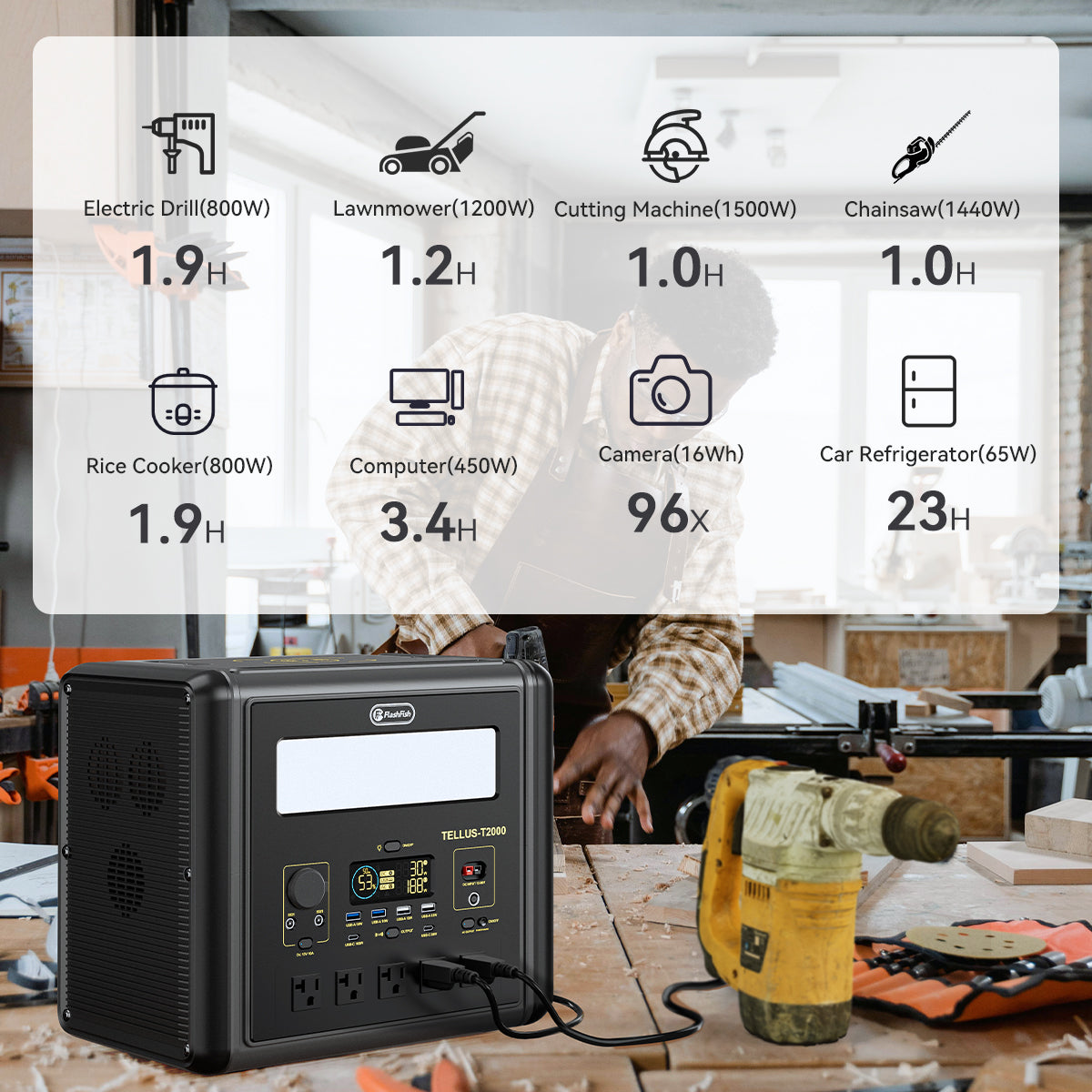
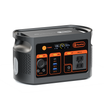
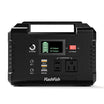
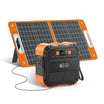
The FlashFish E200 record lists 151Wh capacity and a 200W rated modified-sine AC output. It lists two USB-A outputs up to 18W each and another up to 12W. The record distinguishes 110V U.S. and 230V regional AC versions; it does not supply an AC frequency value. If frequency matters to the proposed device, the database does not provide the value needed to finish that check.
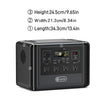
The FlashFish T300Pro record, under TELLUS-T300Pro, lists 230Wh capacity, 300W continuous pure-sine AC output, 120V at 60Hz, and USB-C ports up to 100W and 30W. These facts let you ask more precise device questions. They do not establish that a particular laptop accepts either port's available profiles or that a group of AC and USB loads fits all limits.
E200 and T300Pro therefore offer different documented port and AC characteristics to compare. Neither model resolves a missing device label. Treat the capacity and output values as inputs to the assessment, not as a substitute for the assessment.
Do not confuse sizing with a complete setup review
A load worksheet answers only part of the decision. It does not establish that the proposed placement, cables, charging arrangement, or operating environment follows the exact manuals. Keep those questions separate and resolve them before treating the setup as confirmed. This article does not approve a wiring method or certify a connection as safe.
For runtime, leave the answer open until you have actual demand and operating-pattern information. A power station's Wh rating is a stored-energy specification, not a measured runtime for your devices. A device's maximum input rating is also not a measurement of its consumption throughout a task.
Start today with photos of the equipment you already own, a list of missing fields, and the matching manuals. Once the gaps are closed, compare the exact FlashFish model's documented outputs with those requirements and retain only supported options on your shortlist.
Frequently asked questions
Can I use wattage from a similar device?
It may help you identify what to look for, but it cannot confirm the requirements of your own model. Keep that value outside the confirmed worksheet.
Does a connector that fits prove compatibility?
No. The connector shape alone does not establish the required electrical or charging details. Obtain the exact documentation.
Can I add the maximum rating of every port?
Do not treat separate port maxima as a confirmed simultaneous-output allowance. Review the exact station's shared limits for the intended combination.
What if the product database leaves a value blank?
Leave it unknown and obtain the exact manual or manufacturer clarification. For example, the E200 record does not provide AC frequency; this article does not fill in that value.
Next step: Review the FlashFish E200 specifications for your equipment list.


Leave a comment
เว็บไซต์นี้ได้รับการคุ้มครองโดย hCaptcha และมีการนำนโยบายความเป็นส่วนตัวของ hCaptcha และข้อกำหนดในการใช้บริการมาใช้