

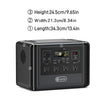
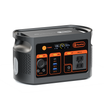
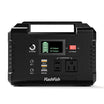

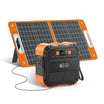
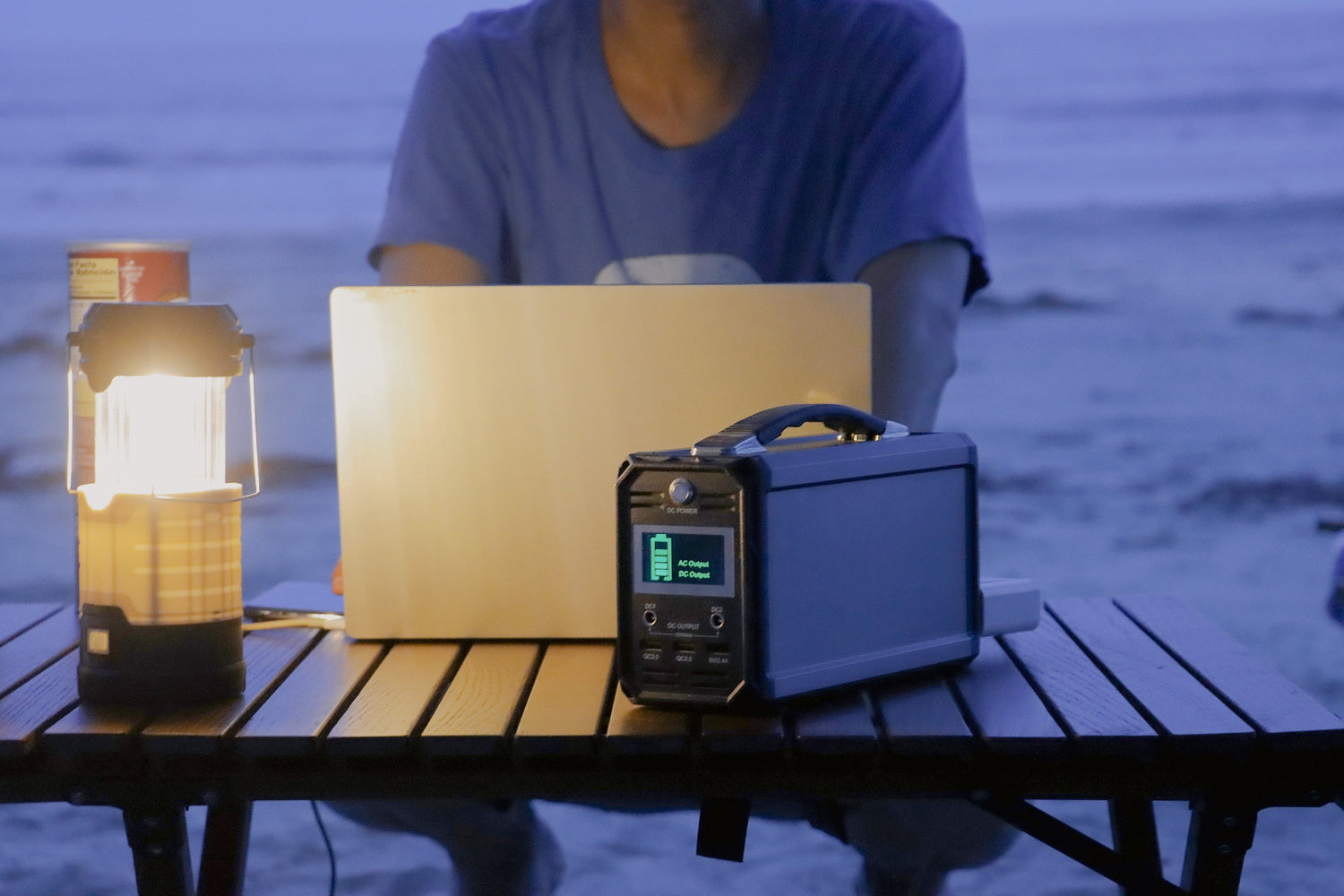
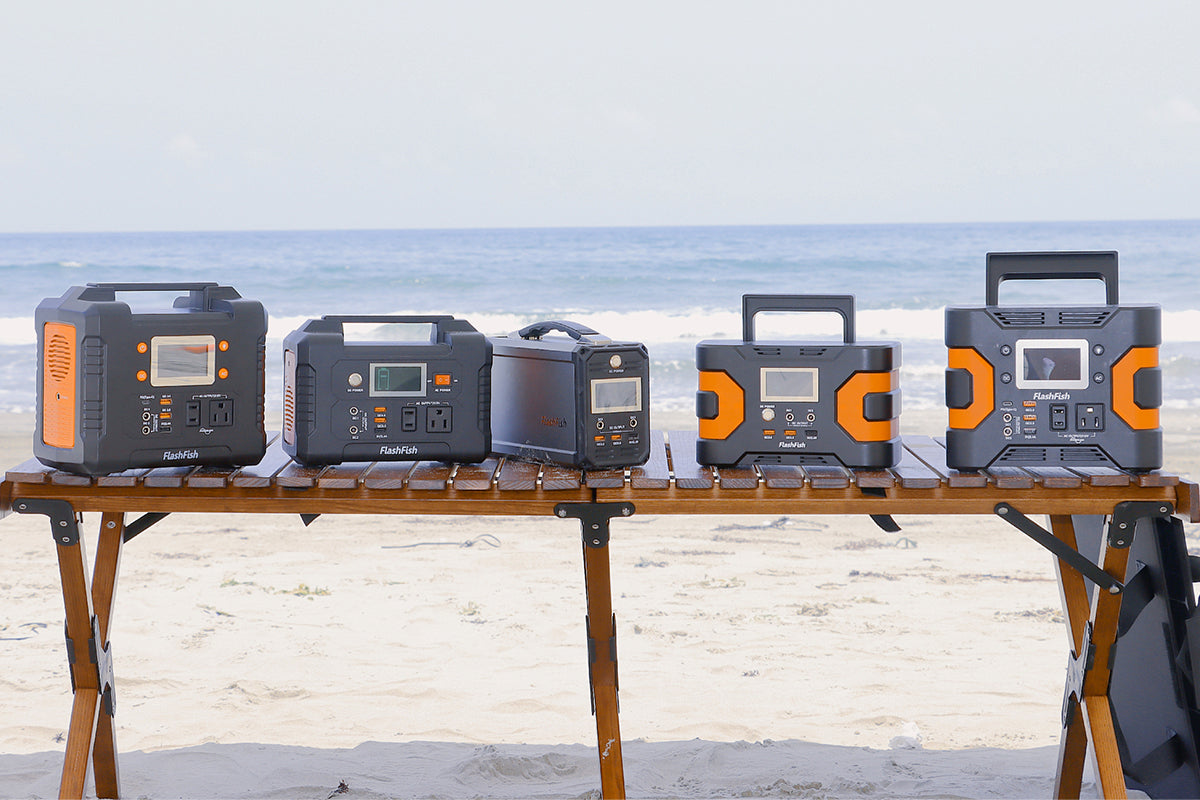
Short answer: Choose FlashFish A101 when minimum size, 1.2kg carry weight, USB-C charging, and a sub-100Wh energy budget are the priority. Choose FlashFish E200 when you need 151Wh, 200W continuous AC output, and more output headroom, while accepting a heavier 1.85kg station, modified sine AC, and no documented USB-C output.
A101 vs E200 at a glance
| Feature | FlashFish A101 | FlashFish E200 |
|---|---|---|
| Capacity | 97.68Wh | 151Wh |
| Continuous AC | 120W | 200W |
| Peak AC | 240W | 400W |
| AC waveform | Not provided in the manual-derived record | Modified sine wave |
| USB-C | Two ports, up to 18W each | Not documented |
| USB-A | Two ports, up to 18W each | Two 18W QC ports plus one 12W port |
| Solar/DC input | 40W maximum | 40W maximum |
| Weight | 1.2kg | About 1.85kg net |
Choose A101 for lighter, USB-first travel
The FlashFish A101 is the better fit when the station will be carried often and the load plan is mostly phones, tablets, small lights, cameras, and low-watt accessories. Its 97.68Wh capacity keeps the energy budget compact, while two 18W USB-C ports and two 18W USB-A ports reduce dependence on an AC adapter for compatible devices.
The A101's 120W continuous and 240W peak AC figures are modest. Do not judge fit by device category alone. A small appliance can still exceed the limit, and the available A101 specifications do not provide the AC waveform. Waveform-sensitive equipment should not be assumed compatible.
The record notes that the capacity is below 100Wh, but airline and airport rules still control whether a battery may travel. Approval can depend on the carrier, route, terminal, labeling, and current regulations. Treat the product-page travel wording as a reason to verify, not as universal boarding permission.
Choose E200 for more energy and AC headroom
The FlashFish E200 raises stored energy to 151Wh and continuous AC output to 200W, with a documented 400W peak. That makes it more flexible for selected low-watt AC adapters and longer multi-device charging plans than A101, provided the load accepts modified sine AC.
E200 does not have documented USB-C output in the record used here. USB-C devices may need their AC charger or a compatible USB-A path. That is an important tradeoff: E200 offers more capacity and AC output, while A101 offers a lighter USB-C-first setup.
The E200 manual warns against treating it as normal household power and specifically cautions against long-term AC motor loads such as refrigerators, microwaves, and compressors. It is a compact station for selected electronics, not a substitute for a larger backup system.
Which is better for common scenarios?
Day trips and device charging
A101 usually makes more sense when every gram matters and the plan centers on USB devices. E200 is useful when the extra 53.32Wh of nominal capacity and higher AC ceiling matter more than weight.
Tent and car camping
Either can support phones, lights, and selected accessories after label checks. A101 is easier to carry; E200 gives more energy reserve. Neither should be exposed to rain or used to imply guaranteed overnight runtime.
Laptop charging
A101's USB-C ports are limited to 18W each, which may be below a laptop's requirement. E200 can use a compatible laptop's AC charger if the charger and startup behavior fit its output, but its modified sine waveform matters. For many laptops, a model with documented higher-power USB-C may be a cleaner choice.
Solar top-up
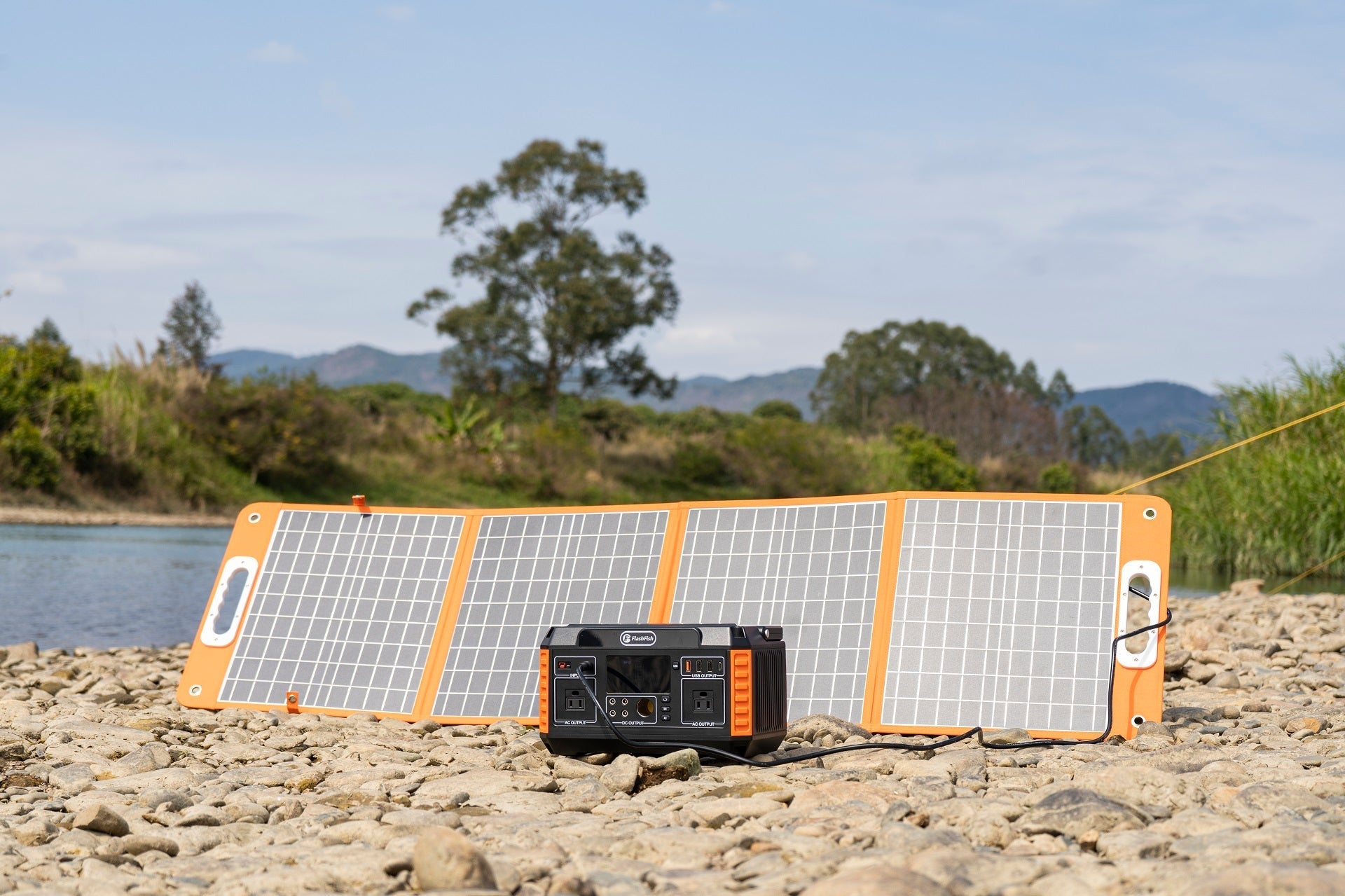
Both records document a 40W maximum DC input. Solar results depend on panel compatibility, sunlight, angle, shade, temperature, and conversion losses. A larger panel label does not mean the station will accept more than its input limit.
Decision checklist
- List every device and its official charging or running watts.
- Separate AC, USB-C, USB-A, and DC loads.
- Choose A101 only if 120W AC and 97.68Wh are enough.
- Choose E200 only if devices accept its available ports and modified sine AC.
- Move to another model when higher-power USB-C, pure sine AC, or more capacity is required.
Capacity and output answer different questions. Watt-hours describe the energy budget; watts describe how large a load can be supported at one time. The watt-hours guide explains that distinction, and the port guide helps map cables and adapters.
FAQ
Is A101 or E200 more portable?
A101 is lighter at 1.2kg and smaller at 158 x 158 x 90mm. E200 is about 1.85kg and stores more energy.
Which has more power, A101 or E200?
E200 has the higher continuous AC rating at 200W versus A101 at 120W, and it stores 151Wh versus 97.68Wh.
Does E200 have USB-C?
USB-C output is not documented in the E200 record used here. A101 documents two USB-C ports up to 18W each.
Which is better for a laptop?
It depends on the laptop's official charger. A101 USB-C may be too low at 18W, while E200 requires a compatible AC path and consideration of modified sine AC.
Can A101 or E200 run a refrigerator?
Do not plan either model for refrigerator backup. Output, startup demand, waveform, runtime, and food-safety requirements make that use unsuitable for a generic compatibility claim.

发表评论
此站点受 hCaptcha 保护,并且 hCaptcha 隐私政策和服务条款适用。