

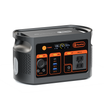
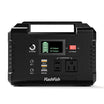

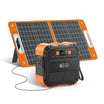
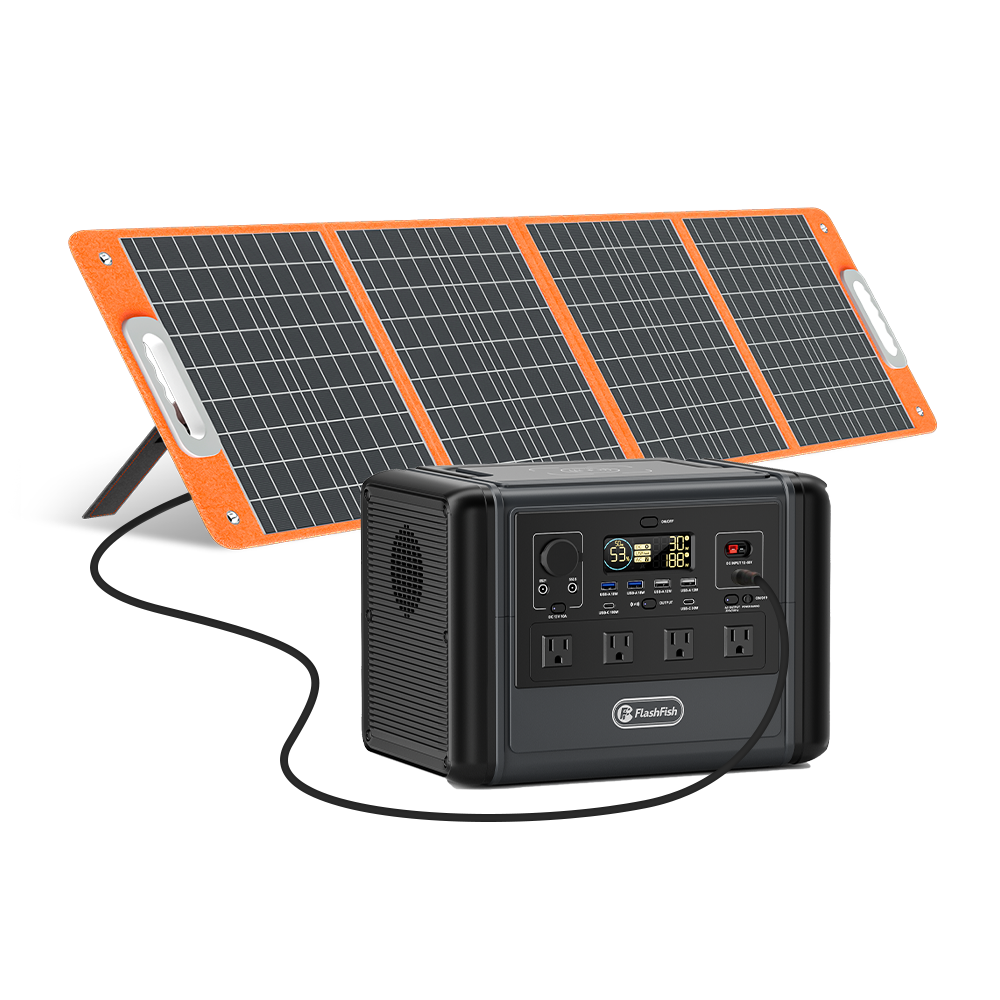
Short answer: a home-office outage setup should start with the total running watts of the devices you need and the number of hours you want to cover. The FlashFish T1200S has 768Wh capacity and 1200W AC continuous output, so it can fit selected essential loads when your router, laptop, phone, light, fan, or monitor stay within those limits. It is a portable essential-load power station, not a hardwired whole-home backup battery.
That distinction matters during a power outage. A portable station can help keep a workday moving, but it should be planned around specific devices instead of broad promises like running a whole apartment or every appliance in a home.
FlashFish T1200S Facts to Use First
| T1200S fact | Verified value | Why it matters |
|---|---|---|
| Battery capacity | 768Wh | Sets the energy reserve before real-world losses. |
| AC output | 1200W continuous, 2400W peak | Connected devices must stay within the output limit. |
| Battery chemistry | LiFePO4 | Supports the product-fit message for a modern portable battery station. |
| AC waveform | Pure sine AC output | Useful for many electronics when device requirements are checked. |
| Solar input | 400W max solar input | Supports solar top-up planning without guaranteeing recharge time. |
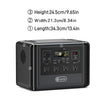
| Weight | 12.45kg | Portable, but better suited to planned placement than pocket-sized carry. |
Essential Loads Worth Planning First
| Home-office load | What to check | T1200S fit logic |
|---|---|---|
| Wi-Fi router or modem | Adapter label watts or volts x amps | Usually a strong essential-load candidate when total setup watts are modest. |
| Laptop | Charger wattage and real workload | Good fit when the charger and other devices stay within station output limits. |
| Phone | USB cable and charger needs | Small load, but still part of total energy planning. |
| LED desk light | Rated watts | Useful for short outage work without adding much load. |
| Small fan | Running watts and startup behavior | Can be considered when the fan is modest and compatible. |
| Monitor or small TV | Actual label wattage | Possible only when the display's draw fits the overall budget. |
How to Estimate Runtime Without Guessing
Start with the device label or power adapter. If the label lists watts, use that number. If it lists volts and amps, multiply volts by amps to estimate watts. Then add the running watts of every device you plan to use at the same time.
The simple planning formula is: device watts multiplied by hours equals watt-hours. A setup drawing 100 watts for 4 hours needs about 400Wh before conversion losses and buffer. Because real-world performance changes with inverter losses, device behavior, battery condition, temperature, and charging methods, avoid promising exact runtime.
When T1200S Fits a Home-Office Outage
- You want to keep a router, laptop, phone, and desk light available during a short outage.
- You live in an apartment or rental where a hardwired battery system is not the plan.
- You want one station that can cross over between home-office outage use and camping power.
- You are comfortable checking watts before plugging in a monitor, fan, or small TV.
- You want a portable station with room above the smallest phone-and-laptop battery class.
When T1200S May Not Fit
- Whole-home backup, hardwired circuits, or transfer-switch use.
- HVAC, space heaters, electric kettles, large kitchen appliances, or other high-draw loads.
- Medical-device backup guarantees or emergency-service replacement.
- Long refrigerator or food-safety promises.
- Automatic switchover or UPS-style behavior unless a verified product source explicitly supports it.
T1200S or T2000?
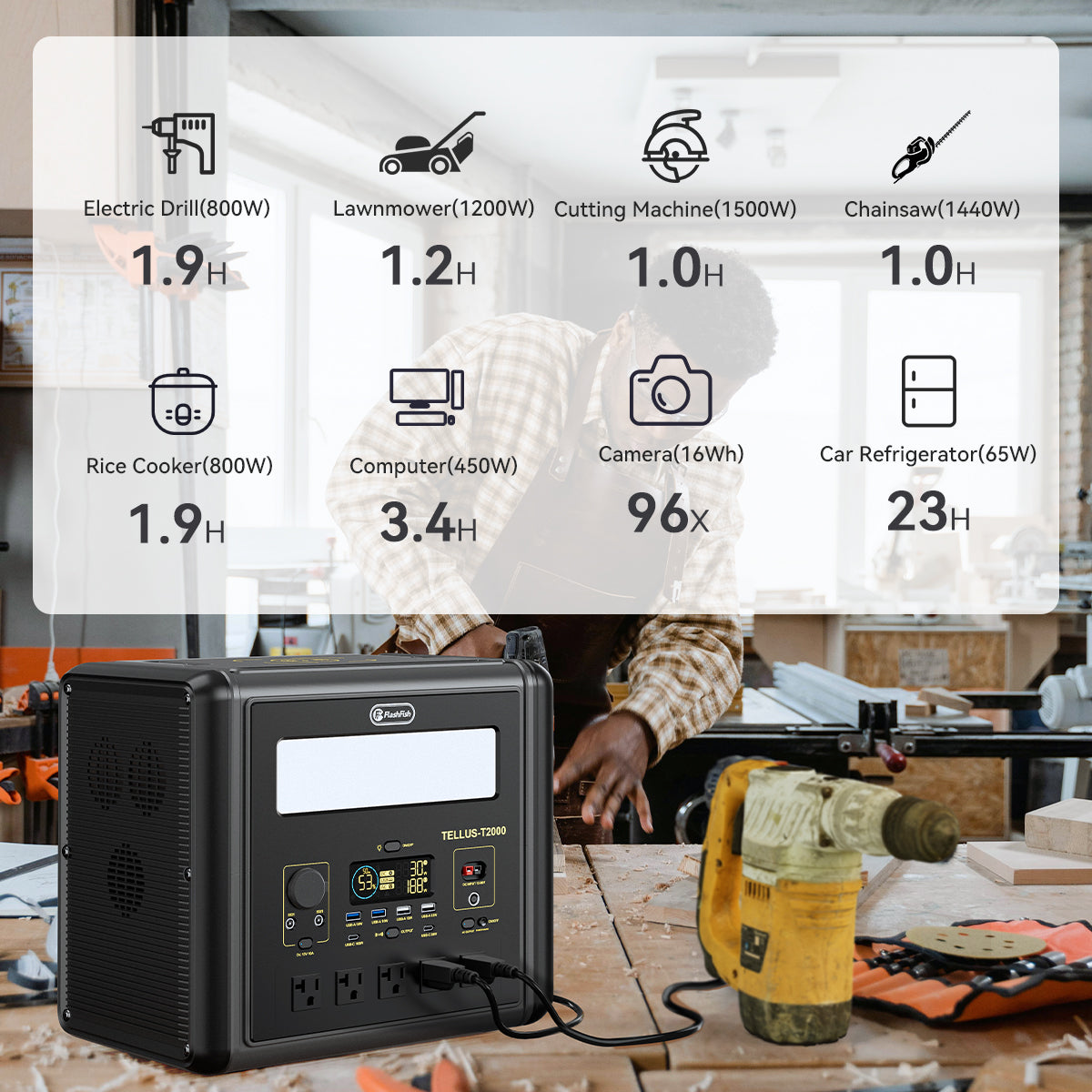
Use the decision as a load tier, not a better-or-worse ranking. T1200S is the narrower home-office and selected-essential-load fit: 768Wh capacity, 1200W AC output, and 12.45kg. T2000 moves up to 1536Wh capacity and 2000W AC output, with a heavier 19.2kg body, so it belongs in the conversation when the user has more devices, higher output needs, or longer planned coverage.
Solar Top-Up Planning
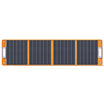
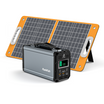
The T1200S manual-level data lists 400W max solar input. A portable panel such as the FlashFish TSP100 can support solar top-up planning, but solar is variable. Sun angle, clouds, shade, temperature, cable setup, and the station's input limit all affect results, so solar should be presented as a recharge aid rather than a guaranteed outage-runtime solution.
Related FlashFish T1200s and home-office checks
Use these current FlashFish pages and guides to continue your comparison:
- View the current FlashFish T1200s product page
- Build a router and laptop outage plan
- Check whether a router and laptop can run together
FAQ
Can FlashFish T1200S power a router and laptop during an outage?
It can be considered for a router and laptop when their combined running watts, plus any other connected devices, stay within the T1200S output limits. Runtime still depends on actual device wattage and real-world losses.
How do I estimate runtime for T1200S?
Add the watts of the devices you plan to run, multiply by the hours you want, and compare that need with the 768Wh battery capacity while leaving room for efficiency losses and buffer.
Can T1200S run a monitor or small TV?
Possibly, but only after checking the monitor or TV wattage and the total load of the full setup. Do not assume all displays are low-draw devices.
Is T1200S a whole-home backup battery?
No. T1200S is a portable power station for selected essential loads, not a hardwired whole-home backup system.
Can solar panels recharge T1200S during an outage?
Solar panels can help top up the T1200S when conditions and cables are suitable, but recharge time depends on sunlight, panel setup, and the station's 400W max solar input.

发表评论
此站点受 hCaptcha 保护,并且 hCaptcha 隐私政策和服务条款适用。