

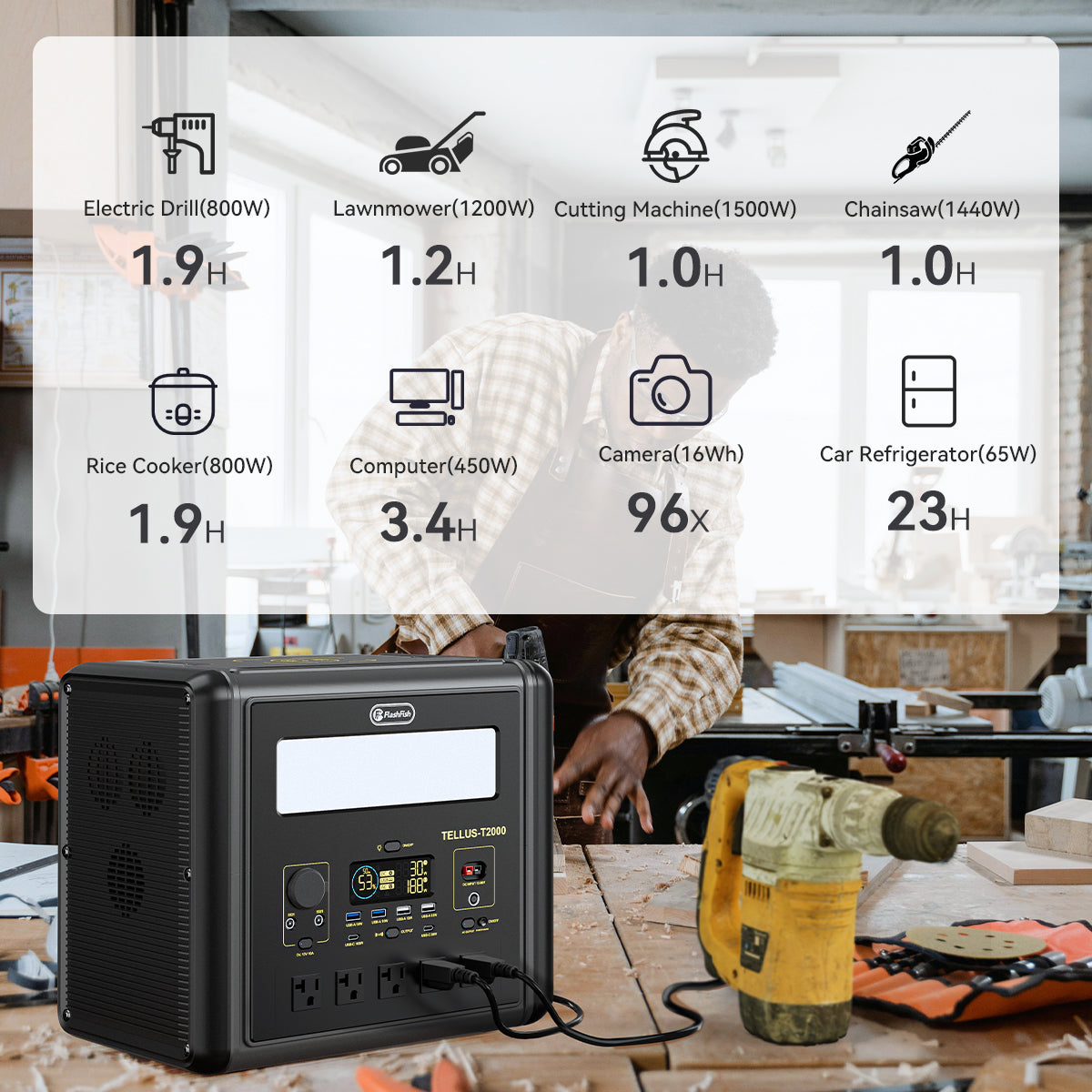

Falling input watts before full do not prove a fault. Charging current may taper, but source changes and warnings also matter. Record the exact setup and display trend; follow your model's manual rather than diagnosing it from watts alone.
It is tempting to compare every reading with the input's maximum rating. That rating is a limit rather than a promise of constant intake throughout a recharge. The more useful question is what changed alongside the watts and whether the manufacturer identifies the observation as expected behavior or an error.
Why charging power may decline
Charging-chip manufacturer Texas Instruments describes constant-current and constant-voltage stages in a typical lithium-ion charging example. Its application material explains that current can taper when voltage regulation takes over. This offers a general mechanism for declining charging power; it does not identify the controller, thresholds or algorithm inside E103 or T200.
An external input display is also a different observation from a measurement inside the battery. The available model records does not provide a calibrated relationship between displayed input watts, battery-side current and remaining energy for these models. Do not translate a low reading into an exact battery percentage, remaining charge time or fault diagnosis.
Keep alternatives open until there is evidence. A changing source, an indicated temperature condition, a changed charging arrangement or a model-specific control action may be relevant. “It must be tapering” is too strong when the source and error information have not been recorded.
Collect four kinds of context
- Charge state: record the displayed percentage or bars, time and whether the indication is changing. Copy the indication without treating it as a laboratory energy measurement.
- Input source: identify the adapter, cable and station input. Note a source change or observed change in conditions rather than assuming the same supply throughout.
- Temperature indication: copy any displayed temperature symbol or warning and the manual section that explains it. Do not invent a threshold from a generic article.
- Error guidance: copy the exact code, message or symbol and follow the original model instructions. An error indication takes priority over an assumption based on watts.
Record connected outputs too. If any device was connected or removed, include that change in the log without assuming the setup permits simultaneous charging and use. This article does not establish that permission for your unit.
Use an observation log instead of a diagnosis
| Observation | Recorded context | Manufacturer instruction | Stop or escalate condition |
|---|---|---|---|
| Input watts decline | Time, displayed charge, exact input source, connected outputs | Check whether the manual describes a charging trend | Ask support if behavior remains unexplained; do not assign a fault from watts alone |
| Input source changes | Adapter or source identity and when the change happened | Verify the new setup is documented for the model | Do not continue an unsupported setup merely to compare readings |
| Temperature or error symbol appears | Exact symbol, time, charge indication and source | Follow the corresponding original-manual instruction | Apply the manufacturer's stop or support direction; do not override it with a taper assumption |
| Charge indication appears unchanged | Timestamped readings and observation gaps | Check display and completion guidance | Request model-specific advice if the manual does not resolve it |
Keep missing observations visible. Two snapshots separated by an hour do not prove what happened throughout the interval. A log should describe what you saw, where you saw it and what you cannot establish.
Three hypothetical logs and what they support
The numbers below are invented observations, not a measured FlashFish charge curve, expected range or troubleshooting threshold.
Example 1. Lower watts accompany a higher charge indication
At 2:00 p.m., a fictional display shows 70% and 40W. At 2:20 p.m., it shows 85% and 20W, with the same recorded adapter and no observed error symbol. This supports the statement that the two readings changed together. It does not prove normal tapering, establish how long the last part will take or exclude an unobserved issue.
Example 2. Watts fall after the source changes
A fictional log shows 35W before a documented source change and 12W afterward. The changed source is an important confounder. Compare its exact documentation and conditions before attributing the reduction to battery charge state. The difference alone does not diagnose either the source or the station.
Example 3. A warning accompanies a low reading
A fictional log shows 8W and an unidentified warning symbol. The first unresolved question is the symbol's meaning in the exact manual. A nearly full battery indication does not cancel a warning. Follow the manufacturer's direction rather than continuing an experiment to see whether the watts recover.
Product fit: E103 and T200
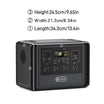
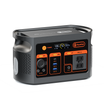
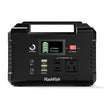
FlashFish's product records list E103 at 179.2Wh and T200, also named TELLUS-T200, at 153.6Wh. Both have documented charging inputs, but these capacity entries do not define the rate at which either model should charge at a particular displayed percentage.
The available model records does not provide their charge-state-to-input-watt curves, taper thresholds, display calibration or a complete error-code interpretation for this question. The E103 manual source is a 230V regional record, so verify the original documentation for your exact U.S. unit and charging setup. T200's record includes a U.S.-spec manual source, but that still does not supply a validated charging curve.
For an owner, the useful next step is a model-specific support log. For a shopper, the useful comparison is whether the documented input arrangement meets the intended charging plan. Neither decision needs an invented rule that input watts must remain at their maximum until full.
Frequently asked questions
Is every decline near full normal?
No. A general taper mechanism explains a possibility, not the cause of every reading. Source context and model-specific warnings still matter.
Can I calculate remaining charging time from the low watts?
Not from a snapshot and a displayed percentage. This method does not establish remaining battery energy or future charging power.
What should I send to support?
Send the exact model and variant, original charging setup details, timestamped display observations, any error symbols and the relevant manual instructions. Label gaps and source changes so support can distinguish observations from your interpretation.
Make the next decision from the record
Find the exact model's original charging instructions first. Organize your observations around the four context categories, then request support guidance for anything the manual leaves unresolved. When comparing E103 or T200 for a future purchase, review the documented input setup rather than assuming a constant maximum-watt recharge.
Use the FlashFish support contact page to send the model-specific log. Include the original manual section and observed symbols rather than labeling the behavior as a confirmed taper or fault.
Next step: Review the FlashFish E103 specifications for your equipment list.



コメントを書く
このサイトはhCaptchaによって保護されており、hCaptchaプライバシーポリシーおよび利用規約が適用されます。