


Quick answer: Outdoor photo and video power planning starts by mapping each device to its official charger or input label, then checking whether it needs AC, USB-C PD, USB-A, or DC power. The station must cover the highest simultaneous watts and enough watt-hours for the shoot plan. FlashFish examples come after the charging map, not before it.
Build a shoot-day charging map
List every device that needs power during the shoot: camera battery chargers, LED panels or tube lights, monitors, recorders, laptop or tablet review gear, phones, hotspots, and any optional drone battery charger. For each one, write down the official charger input, connector, wattage, and whether it needs to run continuously or only recharge between takes.
This map prevents the most common field-power mistake: assuming that all small electronics can share one port type. A camera charger may need AC. A laptop may accept USB-C only at certain Power Delivery profiles. A light may have a DC barrel connector, AC adapter, or battery plate. A physical connector does not prove electrical compatibility.
| Shoot-day device | Preferred evidence | Station check | Boundary |
|---|---|---|---|
| Camera battery charger | Official charger input label | AC or USB path and wattage | No camera-brand compatibility claim |
| LED light | Official power draw or spec sheet | Continuous AC or DC need | No runtime promise |
| Laptop or tablet | Official charger wattage and PD profile | USB-C PD or AC charger path | Port max is not guaranteed device draw |
| Monitor or recorder | Official input spec | AC, DC, or USB path | No universal DC-barrel fit claim |
| Drone battery charger | Official charger spec | AC output and wattage | No flight, transport, or airline advice |
Separate direct USB-C charging from AC charger use
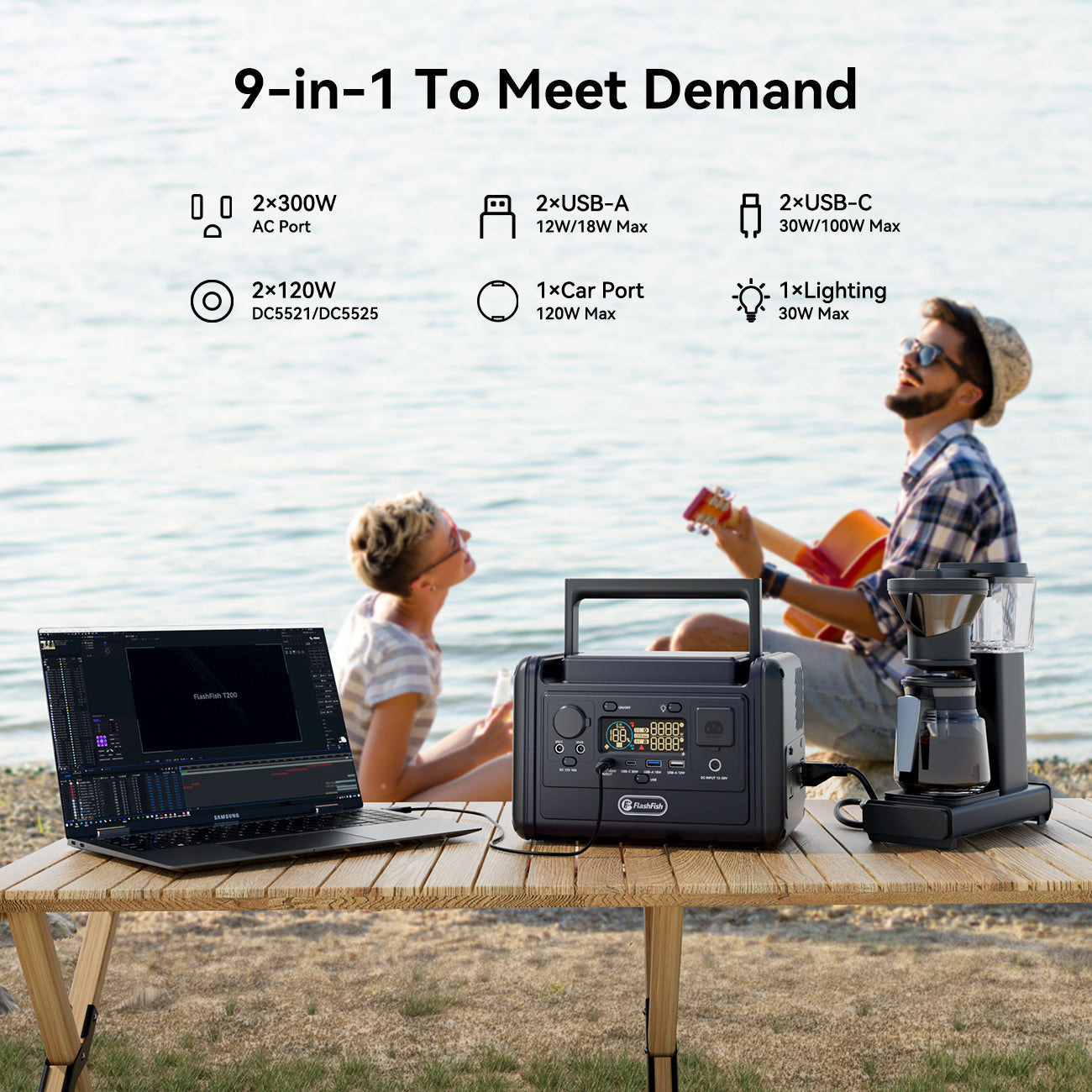
Use direct USB-C only when the device, cable, and station support the required charging profile. USB-C is a connector and a family of charging capabilities, not a universal guarantee. A 100W USB-C port does not mean every laptop, tablet, light, or charger will accept 100W from that port.
Use AC when the official charger requires a wall-style plug or when the USB-C requirements are unclear. Add the running watts of any devices that need AC at the same time and compare that total with the station's continuous AC output. Peak output is for short startup demand, not normal operation.
Check continuous watts, peak demand, and watt-hours
Watts and watt-hours answer different questions. The U.S. Energy Information Administration's electricity guide explains that watts measure power and watt-hours measure energy over time. For creators, that means a station must be able to support the load at the moment it is used and have enough stored energy for the shoot plan.
A lighting setup is a good example. An LED panel may be modest at one brightness setting and higher at another. A laptop review station may draw differently while editing, charging, or idling. Use the official power information and build in margin instead of turning station capacity into a guaranteed production-day runtime.
Plan port count and cable redundancy
Field shoots fail on small details: the wrong cable, one AC outlet too few, a USB-C cable that does not support the required power, or an adapter that does not match the device. Count ports by actual simultaneous use, not by every device in the bag. Decide what must charge during capture and what can wait until a break.
Keep essential charging paths simple. For example, camera batteries and phones may be separate from lighting, laptop, and monitor loads. If a device is mission-critical, carry a backup cable or charger that matches the official input requirements. A power station should support the plan; it should not be the only plan for every production risk.
Choose a compact, mid-tier, or higher-capacity station class
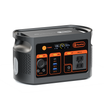
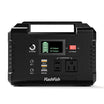
For compact creator kits, the FlashFish T200 provides 153.6Wh capacity, 200W continuous AC output, 400W peak AC output, LiFePO4 battery chemistry, pure sine AC output, 60W maximum solar/DC input, 60W USB-C input/output, and a 2.5kg listed weight. It can be a candidate for documented USB-C and light AC charging paths.
The FlashFish E103 provides 179.2Wh capacity, 300W pure-sine AC output, 90W maximum DC charging input, 60W USB-C output, and a 3.0kg listed weight. The bundle does not provide battery chemistry or separate solar-input details for E103, so keep those values unspecified unless verified later.
The FlashFish T300PRO provides 230Wh capacity, 300W continuous AC output, 600W peak AC output, LiFePO4 battery chemistry, pure sine AC output, 120W maximum solar/DC input, 100W USB-C input/output, and a 4.5kg listed weight. It may fit a small team with mixed camera charging, phones, and modest lighting when the charger map supports it.
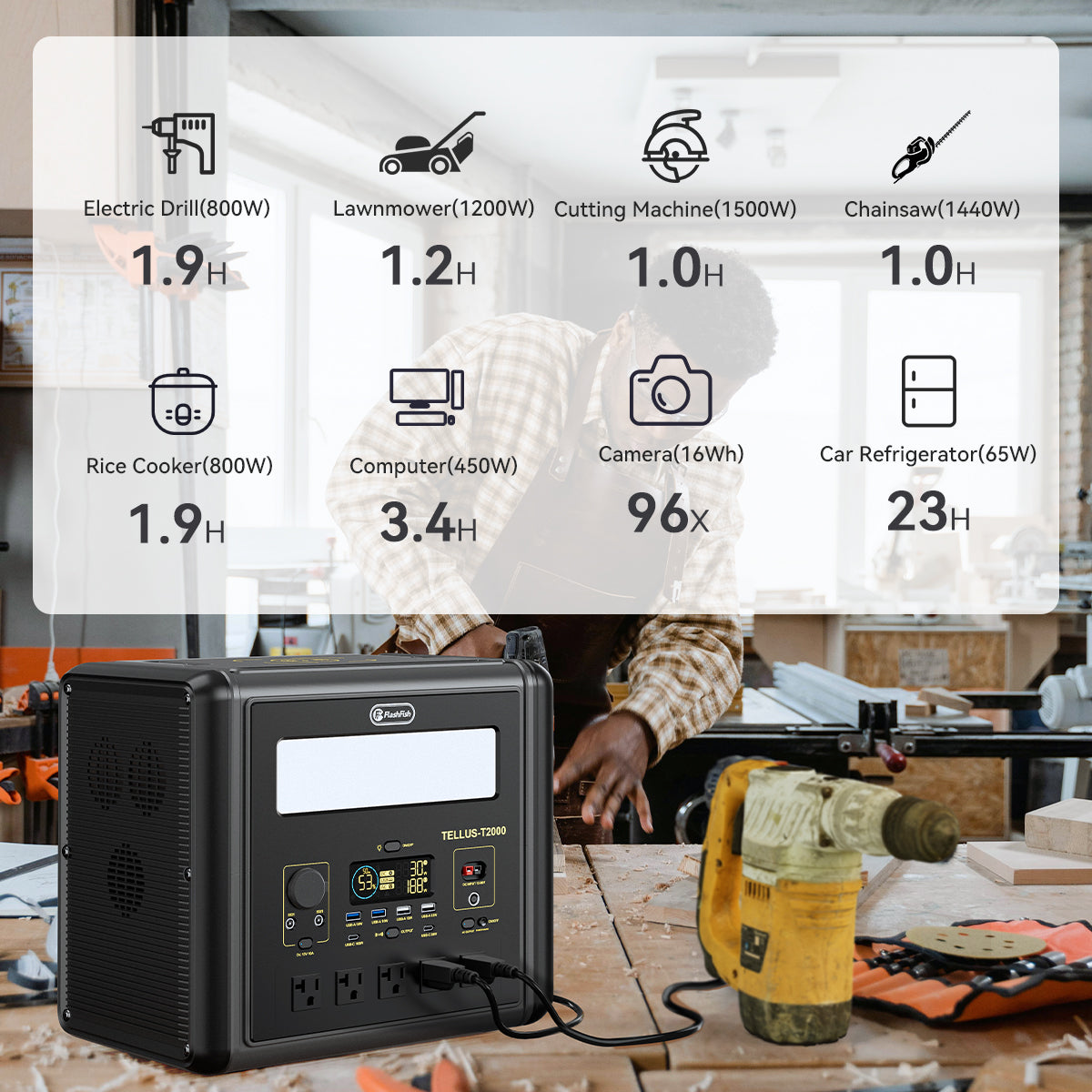
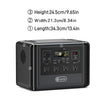
For larger LED-light, laptop, monitor, or multi-person charging setups, review the load before stepping up. The FlashFish T1200S provides 768Wh and 1200W continuous AC output, while the FlashFish T2000 provides 1536Wh and 2000W continuous AC output. Their higher output comes with heavier listed weights of 12.45kg and 19.2kg, respectively, so they make the most sense for vehicle-adjacent or crew-managed setups.
When solar top-up helps and when it does not
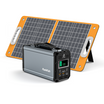
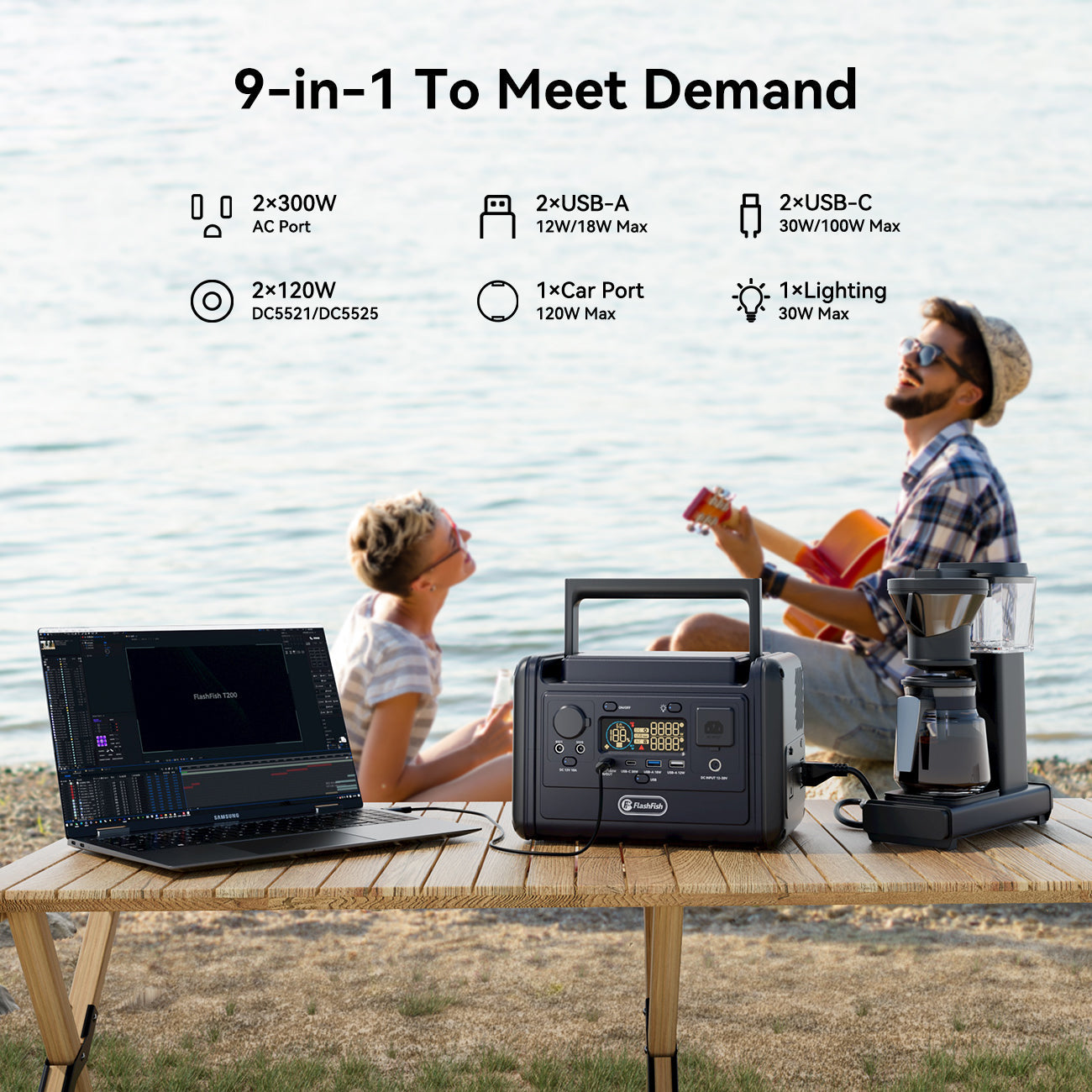
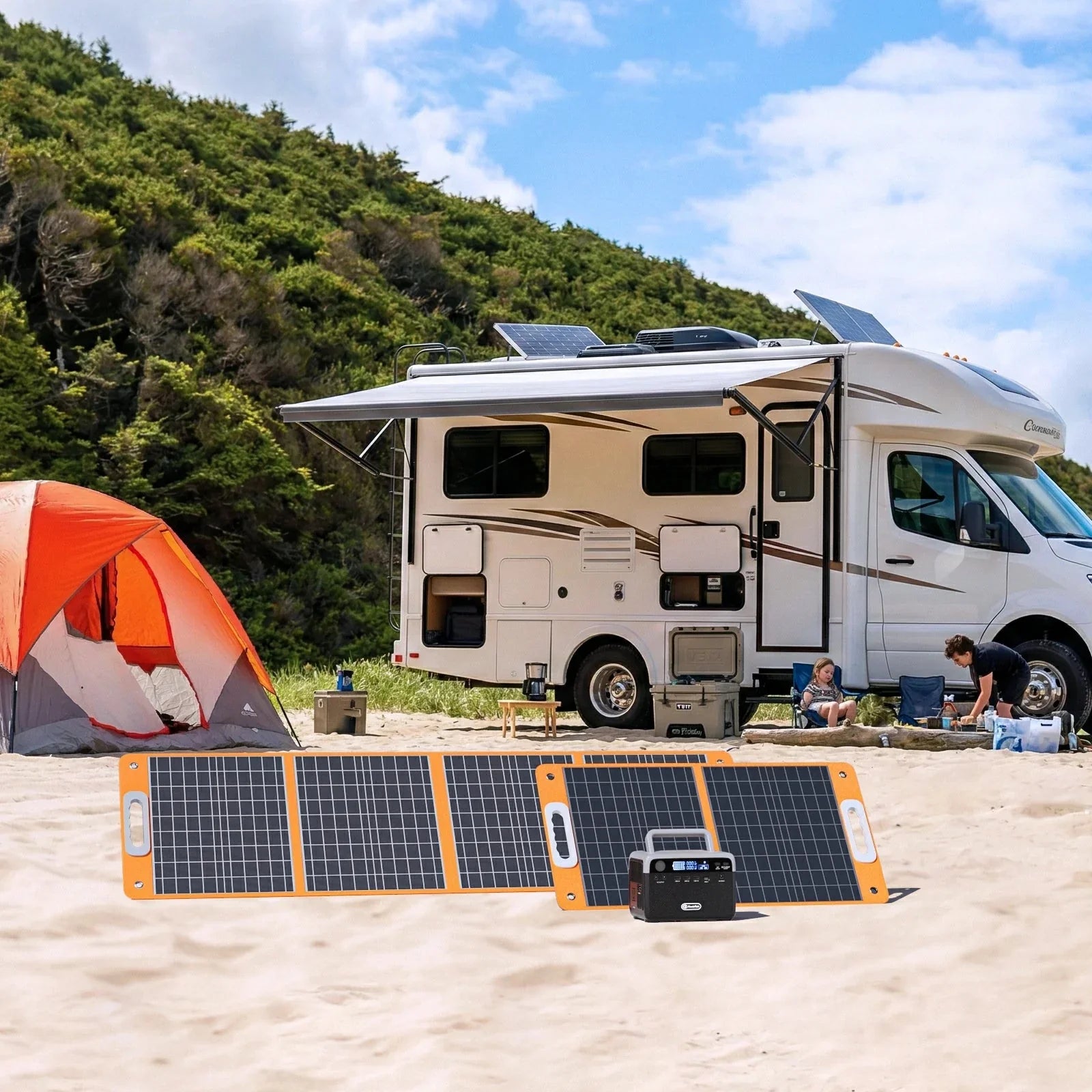
Solar can help on long outdoor shoots when there is open space, steady sun, time between setups, and compatible input hardware. It is less useful when the shoot moves quickly, shade is unavoidable, weather changes, or the production needs guaranteed power at a precise time. The Department of Energy's solar radiation overview explains why available solar energy changes by location, time, season, weather, landscape, and angle.
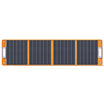
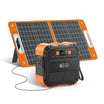
The FlashFish TSP60 is a 60W, 18V panel with 45W USB-C output and 18W USB-A output. The FlashFish TSP100 is a 100W, 18V panel with 65W USB-C output and 18W USB-A output. Panels can convert sunlight to electricity but do not store energy on their own.
When FlashFish fits
FlashFish can fit outdoor creator work when the device map is clear, the highest simultaneous watts fit within continuous output, the required AC and USB ports are available, the station weight works for the location, and the crew has a backup plan for mission-critical chargers or cables.
When FlashFish may not fit
FlashFish may not fit high-draw lighting, rain exposure, unsupported battery chargers, travel-rule questions, drone regulation questions, or productions that need guaranteed uptime without a backup plan. Named camera, drone, laptop, monitor, and light compatibility should be confirmed from official device documentation before publication.
Related planning guides
Creator setups often benefit from the same checks used in broader power planning. Review the FlashFish T200 USB-C guide, the FlashFish T200 vs T300PRO guide, and the running watts vs surge watts guide before matching a field kit. If the shoot is campsite-adjacent, the camping power station guide can help with carry and recharge tradeoffs.
Frequently asked questions
Can a portable power station charge camera batteries outdoors?
Yes, when the camera battery charger's official input, plug type, and wattage match the station's supported output. Do not assume compatibility from the camera brand name alone.
Can I power LED video lights from a portable power station?
A station can be a candidate when the LED light's documented power draw and connector match the station's continuous output and port path. Brightness settings and light models vary, so exact runtime needs device data.
Is USB-C enough for a laptop on a shoot?
Only if the laptop, cable, and station support the required USB-C Power Delivery profile. If that is unclear, use the official AC charger path and check its wattage against the station's continuous AC output.
Should I use a solar panel during an outdoor shoot?
Solar is useful as a conditional top-up when sunlight, space, timing, and compatibility line up. It should not be treated as guaranteed production-day power.
What size station should a small creator kit start with?
Start with the smallest class that supports your confirmed chargers, highest simultaneous watts, required ports, and planned watt-hours with margin. For many small kits, the charging map matters more than a headline capacity number.

Leave a comment
เว็บไซต์นี้ได้รับการคุ้มครองโดย hCaptcha และมีการนำนโยบายความเป็นส่วนตัวของ hCaptcha และข้อกำหนดในการใช้บริการมาใช้